Bondage Restraints for Beginners: Cuffs, Ties and Under-Bed Systems
 13 min read
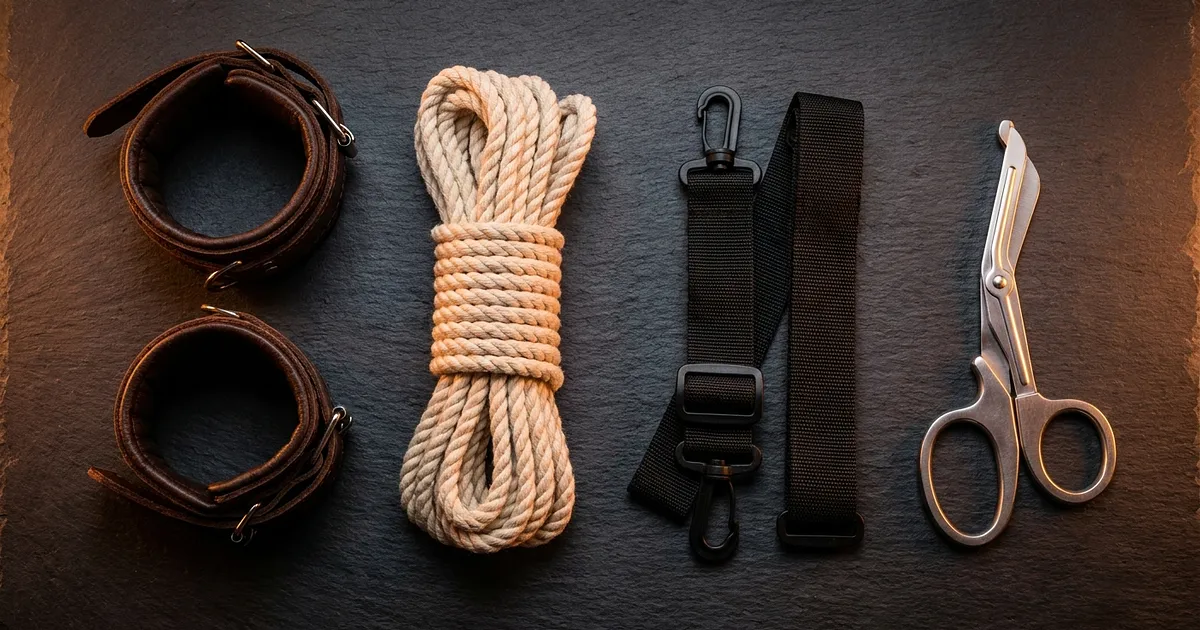
Bondage restraints for beginners are easier, and safer, than most first-timers expect, as long as you treat the planning and the safety kit as seriously as the fun part. This guide covers the fundamentals: how to talk about it first, how to keep blood and nerves happy, how to get someone free fast if you need to, and which starter gear is genuinely forgiving. It is not a knot tutorial. It is not medical advice either.
So you are curious about tying up a partner, or about being the one who gets tied up, and the whole thing feels a little intimidating. Good. That caution is exactly the right instinct. The truth is that beginner bondage leans far more on clear communication and a couple of physical safety habits than on any rope skill.
One thing up front, because it is the single rule with no exceptions: the neck is never a restraint point. We will get to why.
Talk it through before anything gets tied
Here is the part that most product-driven guides rush past. The conversation comes first, and it is not a mood-killer. It is what makes the rest relaxing instead of tense.
Before you touch any gear, agree on what is on the table and what is off it. What sounds fun? What is a hard no? Are there areas of the body, words, or positions to avoid? You are not signing a contract. You are just making sure two people want the same thing, at the same time, for the same reasons.
Two frameworks anchor these conversations in kink education: SSC (Safe, Sane, Consensual) and its evolution, RACK (Risk-Aware Consensual Kink). Championed by advocacy and education groups like the National Coalition for Sexual Freedom, RACK asks partners to be honest about the real risk involved rather than pretending any physical activity is risk-free. That honesty is the whole point. Nobody can promise "totally safe." What you can do is understand the risk and agree to it with open eyes.
Safewords, and a plan for when talking is off
A safeword is any word that means stop, no questions asked. Pick something you would never say by accident. The traffic-light system is popular because it is quick to remember:
Green means keep going, this is good.
Yellow means slow down, ease off, or check in.
Red means stop everything, right now.
And here is the detail people forget. What if the person being restrained can't speak, because of a gag or because they are simply overwhelmed? Agree on a non-verbal signal in advance. A common one is holding a set of keys or a small object and dropping it, or a clear tap pattern on your partner's arm. The safeword still works when words don't.
Then there is aftercare, the wind-down once the scene is over. Some people want closeness and quiet talking. Others want water, a blanket, and space. Neither is wrong. Ask beforehand what your partner tends to need, and treat it as part of the session rather than an afterthought.
Circulation and nerves: the part that actually matters
This is the section to read twice. Restraints work by limiting movement, and anything that limits movement can also limit blood flow or press on a nerve if you get it wrong. The good news is that the warning signs are easy to spot once you know them.
Start with the rule that has no exception. As Acibadem Hospitals Group's health library puts it, no neck restraint can be considered fully safe. Pressure there can interfere with breathing or blood flow and lead to sudden collapse, even without visible marks. So collars worn loosely for looks are one thing. Anything that actually restrains or tightens around the throat is off the table for beginners, full stop.
Now the fit. A cuff should be snug enough not to slide off, loose enough that it isn't cutting in. The simple test everyone uses: you should be able to slip two fingers between the cuff and the skin. If you can't, it's too tight.
During the scene, keep checking. One quick self-check, described by the community-maintained safety reference RACKWiki, is pressing a thumbnail briefly into each finger to confirm sensation returns evenly. Isolated numbness, tingling, or an inability to move a finger means it is time to adjust or release. Cold, pale, blue, or noticeably swollen skin means the restraint comes off immediately, and per Acibadem's guide, a restrained person should never be left alone.
Two nerves are worth knowing by name. Per RACKWiki, pressure on the radial nerve can cause wrist drop and trouble straightening the limb, while pressure on the ulnar nerve shows up as a weakened grip in the ring and pinky fingers. You don't need to be an anatomist. You just need to treat any of those symptoms as a stop signal, not something to push through for the sake of the mood.
On timing: check in often, keep early sessions short, and take restraints off well before anyone gets uncomfortable. RACKWiki notes a limb can lose circulation for a while without lasting harm, but nerve pressure is far less predictable than simple circulation loss, which is exactly why frequent check-ins beat guessing. Short and attentive wins over long and impressive every single time.
Always have a way out fast
Picture the setup working perfectly, and then picture needing everyone free in ten seconds. A cramp, a knock at the door, a wave of anxiety. Your exit plan is not optional gear. It is the first thing you buy.
The tool for the job is a pair of trauma shears, also called EMT or bandage shears. Not a knife. Not kitchen scissors. The reason is their design: a wide, blunt tip built to slide across skin rather than cut it, the same feature that lets paramedics cut clothing off an injured person without adding a second injury. A blade near skin under time pressure is precisely the failure the blunt tip is built to prevent.
Keep them within arm's reach of the bed, every time, before you start. A cheap, dedicated pair lives in the nightstand and never migrates to the kitchen. Something like the stainless steel shears below does the job for the price of a couple of coffees.
REMOS Verbandschere Edelstahl rostfrei 11,5 cm
If you want a spare for the other side of the bed, a second budget pair such as Nurse is Love Mayo Schere, Verbandsschere Pflege works fine too. Two pairs, two sides, zero fumbling.
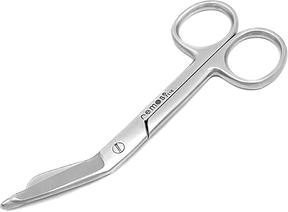
REMOS Verbandschere Edelstahl rostfrei 11,5 cm
View at Amazon (as of Aug 11)Affiliate link. Buying through it earns us a commission; the price stays the same for you.
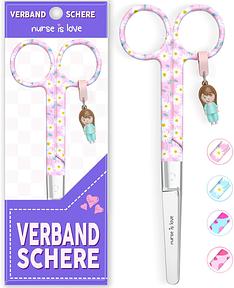
Nurse is Love Mayo Schere, Verbandsschere Pflege
View at Amazon (as of Aug 11)Affiliate link. Buying through it earns us a commission; the price stays the same for you.
Beginner-friendly restraints, and one to save for later
Now the fun part. When people picture bondage, they picture rope, but rope is honestly the least beginner-friendly option there is. The gear that is kindest to a first-timer distributes pressure across a wide area and releases in seconds. Here is how the main starter categories compare.
Wrist and ankle cuffs
For most beginners, a set of padded wrist and ankle cuffs is the sweet spot. Unlike metal handcuffs, which are built for immobilization rather than comfort, padded bondage cuffs are typically wide, lined with soft material, and designed to spread pressure rather than concentrate it on a thin band of skin. They fasten and release quickly, they adjust to fit, and there is nothing to learn beyond "does two fingers fit."
A basic four-piece set with hand and foot cuffs gives you everything you need to start, without spending much.
Fessel „Bondage Set“ mit Hand- und Fußmanschetten
One caution worth repeating: standard beginner cuffs are for holding someone in place, not for bearing their weight. Suspension, taking a body off the ground, is a different discipline with purpose-built gear and real training behind it. That is well out of scope for a first session.
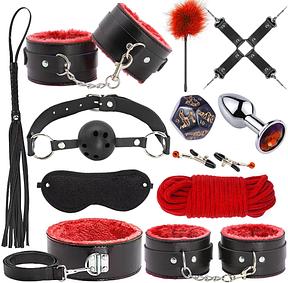
Not available in your region — closest match
View at Amazon (as of Aug 15)Affiliate link. Buying through it earns us a commission; the price stays the same for you.
Soft ties and bondage tape
If cuffs feel too much like equipment, soft ties and bondage tape are a gentler entry. Soft restraints, wide fabric strips, sashes, or specialised tape that sticks only to itself and not to skin, are forgiving because the wide surface spreads pressure and there is no hard edge. Tape peels off instantly. Fabric ties undo with a pull if you keep the knot simple and accessible. The trade-off is that a fabric knot can tighten if you tie it badly, so keep it loose and keep those shears close.
Under-bed restraint systems
An under bed restraint system might be the single most underrated beginner buy. The idea is simple: a set of straps runs under the mattress and connects to four padded cuffs at the corners, so the bed itself becomes the anchor. No bed-frame drilling, no knots, no rig to learn.
One independent review notes checking fit by confirming a finger slides easily between the cuff and the skin, the same check worth applying to any restraint. Setup takes a few minutes, most systems fit standard mattresses, and the velcro or buckle cuffs release in an instant, which is a big part of why these come up so often as a first purchase.
A three-piece kit with an adjustable central strap and two cuffs covers a simple wrists-together or ankles-together setup, and expands from there.
3-teiliges Set „Bett-Fesseln“ mit verstellbarem Gurt und 2 Fesseln
Not available in your region — closest match
View at Amazon (as of Aug 15)Affiliate link. Buying through it earns us a commission; the price stays the same for you.
Rope, and why it can wait
Rope is beautiful, and it is where a lot of people eventually want to go. It is also the option with the steepest learning curve, so it belongs a few sessions in, not on night one. Bare cord concentrates pressure on a narrow line of skin, and both tying it well and releasing it quickly under stress take practiced technique. If you are set on trying, get a soft beginner rope, learn from a proper class or a reputable in-person teacher rather than a random clip, and keep the whole thing loose while you are learning.
A soft starter rope set like this one is a reasonable place to begin once the fundamentals above are second nature.
3-teiliges Bondageseil-Set "Bondage Ropes", 1 x 20 m, 2 x 3 m
Not available in your region — closest match
View at Amazon (as of Aug 15)Affiliate link. Buying through it earns us a commission; the price stays the same for you.
A fuller adjustable kit
If you would rather buy once and grow into it, a broader adjustable restraint set bundles several attachment points and lengths so you can mix wrists, ankles, and connecting straps as you get more confident. It gives you room to experiment without a drawer full of half-used gear.
Not available in your region — closest match
View at Amazon (as of Aug 15)Affiliate link. Buying through it earns us a commission; the price stays the same for you.
Body-safe materials, quickly compared
Material matters for comfort, for cleaning, and for how fast a restraint comes off. Padded and lined options beat bare thin cord for a beginner nearly every time. Here is the short version.
| Material | Feel on skin | Cleaning | Release speed | Beginner fit |
|---|---|---|---|---|
| Leather (lined) | soft, padded | wipe only | buckle, seconds | high |
| Neoprene | soft, cushioned | washable | velcro, instant | high |
| Silicone | smooth, firm | fully washable | clip, seconds | medium |
| Velcro straps | soft edge | washable | one pull, instant | high |
| Bare thin cord | thin, digs in | not stated | knot, slow | low |
The pattern is clear. Wide and padded is comfortable and quick to remove. Thin and bare is the opposite, which is why cord sits at the bottom of the list for anyone just starting out. Whatever you choose, pick something you can wipe or wash, because shared body gear needs cleaning between uses.
Start slow, keep talking
If you take three things from this, make them these. Agree on limits and a safeword before anything begins. Keep a pair of quick-release restraints and blunt-tip shears within reach the whole time. And start with padded cuffs, soft ties, or an under-bed system rather than rope.
Bondage is not about how elaborate the setup looks. It is about two people trusting each other enough to hand over a little control, safely, and hand it back. Go gently, check in often, and let the confidence build session by session. There is no rush, and that is kind of the point.
All products from this post
The ones we named above are marked; the rest are alternatives in the same category.
Affiliate notice: As an Amazon Associate, we earn from qualifying purchases. Product prices and availability are subject to change.
Frequently Asked Questions
Are bondage restraints safe for beginners?
They can be, when you follow a few habits. Agree on limits and a safeword first, keep quick-release shears within reach, never restrain the neck, check that two fingers fit under each cuff, watch for numbness or colour change, and never leave a restrained person alone. Padded cuffs and under-bed systems are the most forgiving starting points.
What is the safest restraint type to start with?
Padded wrist and ankle cuffs, soft ties, and under-bed systems are the gentlest first choices because they spread pressure across a wide area and release in seconds. Rope and metal handcuffs are harder to use safely as a beginner, so most people leave rope for later and skip rigid metal cuffs entirely.
Why do I need trauma shears instead of scissors?
Trauma shears have a wide, blunt tip designed to slide across skin rather than cut it, so you can free someone fast without a blade catching skin under pressure. A knife or kitchen scissors carries exactly the injury risk the blunt tip is built to avoid. Keep a dedicated pair within arm's reach every time.
How tight should a restraint be?
Snug enough that it will not slip off, loose enough that two fingers slide comfortably underneath. If you cannot fit two fingers, it is too tight. Check the skin often during a scene, and release immediately if you see numbness, tingling, cold, pale, or bluish skin.
What is a safeword and do I really need one?
A safeword is an agreed word that means stop, no questions asked, and yes, you need one. Pick something you would not say by accident. The traffic-light system, green for go, yellow for slow, red for stop, is easy to remember. Agree on a non-verbal signal too, such as dropping a held object, in case speech is not possible.
Can beginners use an under-bed restraint system on any bed?
Most under-bed restraint systems fit standard mattresses without any bed-frame modification, since the straps simply run under the mattress and anchor at the corners. Check the product details for your mattress size, and always apply the same two-finger fit check and quick-release habits you would with any other restraint.