Primal Play: A Safety-First Guide to Animalistic Kink
 17 min read
Most guides to primal play spend nine hundred words describing growling and chasing, then hand you one line about safewords and call that the safety section. That line is where the whole thing quietly falls apart. Primal play is one of the few kink registers deliberately built to work without talking, so "just say red" is a bit like handing someone a fire extinguisher that's been bolted shut.
So this guide runs the other way round. Definitions first, because you do need them. But the load-bearing part sits in the middle: how two people agree on stop signals that survive a chase, how a partner tells real fear from the good kind, and what happens to a body and a head once the adrenaline drains out.
One thing before the definitions, since plenty of people arrive at a page like this quietly worried about themselves. A 2013 study in The Journal of Sexual Medicine compared 902 BDSM practitioners against 434 controls and found the practitioners scored less neurotic, more extraverted and more open to experience, with higher reported well-being. That research is about BDSM broadly. Nobody has studied primal play as its own category, as far as anyone in this research pass could find, so treat the number as reassurance about kink in general rather than a portrait of primal players specifically.
The stigma runs the other direction, and it's just as measurable. A 2022 Belgian survey published in European Psychiatry found roughly 86% of its general-population comparison group held stigmatising views about BDSM interests. Common enough to be ordinary. Judged anyway.
What primal play actually is
Strip out the marketing and primal play means playing from instinct instead of from a script. No protocol, no honorifics, no "yes Sir." Movement, sound, and reaction carry everything the words usually carry.
As David Khalili, LMFT of Rouse Relational Wellness describes it, primal play "tends to be less choreographed and more responsive to in-the-moment impulses." That responsiveness is the appeal. It's also, honestly, the risk, because a scene nobody scripted is a scene nobody can predict from the inside.
Where it sits next to rough sex and scripted CNC
Intensity and register are different things, and primal play sits on the register side of that line. Rough sex simply turns the volume up; primal play changes how two people relate to each other for as long as the scene runs. Plenty of primal scenes are barely sexual at all: wrestling on a mattress, being chased around a flat, curling up somewhere small and being found.
Scripted consensual non-consent has a plot. Someone wrote the story, both people know the beats, and the tension comes from performing them. Primal play throws the plot out and keeps the tension, which is why the negotiation before it has to carry more weight, not less.
A quick note on the vocabulary, because it confuses everyone at first: "primal" attaches to other labels rather than replacing them. Primal dominant, primal submissive, primal switch, primal prey who's also a brat. The kink community treats it as a flavour that layers on top of whatever dynamic already exists, and SparkChambers' kink encyclopedia covers the individual terms in more detail than a single guide can.
The primal play family tree
People searching for primal play usually land on four or five neighbouring terms within a day and assume they're all separate hobbies. They're branches of one tree. The rough split: pet-play is headspace-led and relationship-shaped, predator-and-prey play is adrenaline-led and scene-shaped, and a lot of people do both.
Puppy play
Puppy play is the biggest branch by search interest and by community size. A pup's headspace tends toward enthusiasm, loyalty, short attention span, physical affection. Handlers or trainers hold the human end of the dynamic, and the distinction matters: handler leans toward companionship and protection, trainer toward structured commands and rituals.
Twin Cities Puppy Pack, a community education resource, is blunt about the point most worth repeating here. Titles like handler, trainer, or alpha don't grant automatic access to anyone's body. Power exchange still gets negotiated explicitly, every time, whatever the pack hierarchy says. That's worth reading twice, because power-exchange language has a way of sounding like consent when it isn't.
Kitten play
Kitten play brings cattier energy, and structurally differs from pup play in ways that surprise people. Kittens tend toward aloofness, selective affection, teasing, sitting somewhere they've been told not to sit. Where pup dynamics often run pack-shaped, kitten dynamics usually run one-to-one.
Collars sit at the centre of a lot of pet-play iconography, and they carry more meaning than the hardware suggests: for some people a collar is a scene prop, for others it marks a relationship, and those two readings colliding mid-conversation causes more hurt feelings than almost anything else in this corner of kink. Something light and decorative like a rhinestone collar reads as playful rather than heavy, which is often what a first-timer wants.
Pony play
Pony play is the most physical branch, and the one with the highest injury ceiling. Pony headspace is proud and disciplined rather than cuddly, and the play often involves posture work, tack, carting, or dressage-style movement.
Practitioners across the pony community converge on the same warning: posture-restrictive gear and sustained quadrupedal positions put real strain on knees, wrists, shoulders and lower back over a session, and regular play tends to need actual conditioning behind it. Nobody's kidding about this part. Gear failure mid-scene is the other recurring theme, which is why inspecting stitching and hardware before every use gets mentioned so often.
Predator and prey
The branch that draws most of the "is this safe?" searches, and fairly so. One person hunts, one person is hunted. The chase, the capture, the pin.
Khalili offers the clearest explanation of why it hits so hard: our bodies "can't always distinguish between different types of arousal," and the fear response and the sexual response share enough physiology to bleed into each other. That blur is the whole point of the kink. It's also precisely why a partner can't rely on reading arousal to know whether someone's still enjoying themselves.
Negotiation, and the safeword problem almost nobody solves
Here's the gap. Nearly every primal play article says the same two things in the same breath: this kink strips away verbal protocol, and also, use your safeword. Those instructions contradict each other, and the contradiction rarely gets acknowledged, which is exactly what good kink negotiation is supposed to resolve before anyone growls.
This guide deliberately sets aside verbal safewords to focus on the non-verbal problem primal play creates. For the traffic-light system and yes/no/maybe lists underneath it, see SparkChambers' guide to BDSM safewords and communication.
Two things make front-loading that conversation non-negotiable rather than nice-to-have. Consent Culture frames the stakes plainly: communication and consent are what keep primal play's "potentially intense and cathartic nature" safe, so boundaries and stop signals belong in the conversation before the growling starts. Headspace itself works against you too. Kink educator Quinn B. of Unearthed Pleasures points out that subspace "can significantly affect the submissive's ability to communicate and interpret their limits," and if altered headspace already degrades communication in ordinary BDSM, primal play compounds it further by removing speech from the toolkit on purpose. The pre-scene conversation isn't the first of several. It may be the only reliable one you get.
Four non-verbal signals that work
Community and educator sources keep circling back to the same short list, and the practical advice is to pick two rather than memorise all of them. One signal to slow down, one to stop dead.
A tap-out pattern. Two or three deliberate taps on any reachable part of your partner, repeated. Borrowed from grappling for good reason: it works while pinned, works while breathless, and doesn't look like play resistance.
A dropped object. Something held in one hand for the whole scene, and letting go means stop. Keys, a soft toy, a ball. Useful when someone might be gagged, hooded, or too far into headspace to organise a tap.
A distinct sound. Not a growl, not a whine, nothing that belongs in the scene. Three sharp claps. A bell on a collar shaken hard. The trick is picking something the animal register would never produce by accident.
A freeze cue. Going completely still and limp, agreed in advance to mean full stop. This one needs the most discussion, because it's the signal most easily mistaken for play, and some people find it useless for exactly that reason.
Two more things belong in that conversation and get skipped constantly: what happens if a signal is missed, and who calls the scene when nobody signalled anything but something feels off. Both partners get to stop a scene. That's not a submissive's privilege.
Rehearse the signal cold
A primal play signal you've only discussed is one you haven't tested. Practitioner-facing advice is consistent that partners should run through the physical signals sober, clothed, and unaroused, then again briefly during warm-up, so the response becomes muscle memory instead of a decision.
The rehearsal also catches the failures you can't predict on paper. A tap-out that lands on a shoulder nobody can feel through a jacket. A dropped-object cue where the object bounces silently onto a rug. Better to find that out on a Tuesday afternoon than mid-chase.
Reading distress that isn't a signal
The hardest job in a primal play scene belongs to whoever's on top, and it isn't strength. It's watching.
Khalili's pre-scene and mid-scene guidance covers hazard removal, force-level control and off-limits activities, and the mid-scene half amounts to noticing changes in a partner rather than waiting for a formal signal. The tells that educators name most often: uncharacteristic stillness, a sudden change in breathing, resistance that goes rigid instead of playful, eyes that stop tracking. Engaged struggle has rhythm and reciprocity to it. Genuine distress usually goes quiet.
When in doubt, the answer is boring and correct. Break character, ask, and accept that breaking character costs you thirty seconds of atmosphere.
Physical safety: teeth, nails, joints
None of this is medical advice for primal play specifically, and a healthcare provider is the right person for anything specific to your body. What follows is general harm reduction, the same stuff that gets passed around at munches.
Bites and scratches that break skin
Most primal biting stays on the safe side of the skin. Some doesn't, either on purpose or because a scene got away from someone.
Any bite or scratch that breaks skin carries the same general considerations as any other blood-to-blood contact, which is the framing the CDC's bloodborne pathogen guidance uses for occupational exposure. That guidance isn't about kink and doesn't pretend to be, so extrapolate conservatively: broken skin is a route, testing conversations belong in negotiation alongside everything else, and human bites in particular are worth having a clinician look at because mouths carry a lot of bacteria.
Practical side, and none of it is exotic. Short nails, filed rather than clipped, before a scratchy scene. Something to clean a wound with, kept where you can find it without getting dressed. A basic antibiotic ointment sitting in the same drawer as everything else, so nobody's rummaging through a bathroom cabinet at 1am.

Affiliate link. Buying through it earns us a commission; the price stays the same for you.
Knees, wrists, and the all-fours problem
In primal play, twenty minutes on hands and knees on hardwood is not twenty minutes of anything else. Wrists take load at an angle they're not built for, knees take bodyweight without cushioning, and the whole thing hurts more the next morning than it did in the moment.
Knee pads help. Rugs and mattresses help more. So does building in position changes rather than staying quadrupedal for an entire scene, which most pet-play sources suggest and most beginners ignore.
Stairs deserve their own sentence. Paw mitts, hoods with restricted vision, and any gear that blocks hands or sightlines turn a staircase into a genuine hazard, so a lot of packs simply rule stairs out of bounds while gear is on.
Gear inspection
Anything load-bearing gets checked before it's worn. Frayed stitching, a stressed D-ring, a buckle that's started to bend. Leather and hardware fail slowly and then all at once, and a scene is a bad place to discover which stage yours is at.
Aftercare built for this kink, not borrowed from generic BDSM copy
Blankets and water are fine. They're also where most primal play articles stop, and primal aftercare has two jobs that generic aftercare doesn't.
The crash, and why it can arrive on Tuesday
During an intense primal play scene the body floods with adrenaline and endorphins. When it ends, those clear. The clinical team at Modern Intimacy describes the resulting drop as an intense physical and emotional experience that can emerge "within moments, hours, or days" after play, which is the part people are least prepared for.
A 2008 physiological review, cited in Healthline's guide to subspace, found cortisol rising significantly during consensual SM play, which is roughly the hormonal mechanism underneath all of this. Delayed drop catches people out because nothing bad happened. The scene was great. Thursday is just inexplicably grim.
Drop doesn't stay confined to bottoms. Tops drop too. Predators drop. Whoever was running hot can crash afterward, and the person who was in charge often feels least entitled to say so. SparkChambers covers why both partners need an aftercare plan in more depth than the primal-specific notes below.
The body, afterwards
Muscles worked in odd positions, joints held under load, whatever the teeth and nails got up to. Sequence that most sources land on: check for skin breaks first while adrenaline still masks pain, get gear off before anyone falls asleep in it, then water, then something with sugar in it.
Gentle stretching helps with the next-day version of this, especially hip flexors and shoulders after any length of time on all fours. Some people like something warming worked into the sore bits afterwards, which is where an arnica-based massage oil earns its place in the drawer. For the rest of what belongs in that same drawer, SparkChambers' BDSM aftercare kit guide covers it beyond the primal-specific gear here.
NOW Solutions, Arnica Soothing Massage Oil, Comforting Antioxidant Blend, 8-Ounce
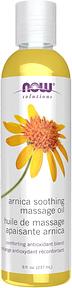
NOW Solutions, Arnica Soothing Massage Oil, Comforting Antioxidant Blend, 8-Ounce
View at Amazon (as of Aug 28)Affiliate link. Buying through it earns us a commission; the price stays the same for you.
De-animaling
This is the piece that's genuinely specific to primal play, and generic aftercare copy has nothing to say about it.
Animal headspace can sit further from baseline than standard subspace does. Coming out of it isn't a switch. Khalili's aftercare guidance centres on reconnecting as your everyday selves, and practitioners describe a graded exit: staying non-verbal but calm for a while, then sounds, then names, then normal speech. Rushing someone straight from feral to conversation tends to leave them foggy and irritable for hours.
Small things help the transition more than they should. Putting your own clothes back on. Being called by your actual name. Something mundane and human, like making toast.
Getting started with primal play without buying anything
Pet-play communities keep repeating the same correction: headspace carries the kink, while gear only supports it. People play with no equipment at all, and a first attempt at primal play honestly works better that way, because there's less to think about and less to feel self-conscious in. If primal play is also your first time getting started with BDSM more broadly, that guide covers the on-ramp this one assumes you've already crossed.
If a first scene needs a shape, most educators suggest something small and mundane. Fifteen minutes. One room. A slow chase around furniture, or being pinned and held, then stopping while it's still fun rather than at the point of exhaustion.
Gear comes later, and it earns its way in. A leash is a control item as much as a symbolic one, useful for guiding a partner who can't see well through a hood, and worth handling with the same care as any other restraint: never attached to something that could tighten, never left on an unattended person.
Sensory kit, which does more than gear does
Restricting sight does more for animal headspace than almost any amount of leather. It cuts the social cues that keep people in their human register, and it makes sound and touch louder by comparison.
A soft sleep mask is the low-commitment version of a hood, cheap, washable, and easy to pull off in a second if headspace goes somewhere unexpected.
Alaska Bear Mulberry Silk Sleep Mask, Cool and Smooth (Original Black)
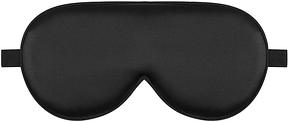
Alaska Bear Mulberry Silk Sleep Mask, Cool and Smooth (Original Black)
View at Amazon (as of Aug 28)Affiliate link. Buying through it earns us a commission; the price stays the same for you.
One last thing
If you take one idea out of all this, take the boring one: the conversation you have before a primal play scene is the only conversation you can count on. Everything else, the growling, the chase, the teeth, works because that conversation happened first.
And if a partner ever tells you that negotiating in advance ruins the spontaneity, they've misunderstood what spontaneity costs.
All products from this post
The ones we named above are marked; the rest are alternatives in the same category.
Affiliate notice: As an Amazon Associate, we earn from qualifying purchases. Product prices and availability are subject to change.
Frequently Asked Questions
Is primal play the same thing as rough sex?
They get lumped together, but no. Rough sex is a dial you turn up or down. Primal play swaps out the whole way two people relate, and it doesn't have to be sexual at all: plenty of scenes are just chasing, wrestling, or hiding. Some primal scenes run rough, others slow and quiet. What defines it is instinct over script, not how hard it gets.
Do you need gear to try primal play?
No, and buying gear before a first scene is the most common way people overcomplicate this kink. Headspace carries it; masks, tails, collars and mitts just add immersion for anyone who wants more. Plenty of practitioners never touch equipment. A bare-bones first scene is usually easier, since there's less to manage and less to feel self-conscious about.
What happens if my partner misses my safeword signal?
Plan for it before it happens, because it will eventually. Most partners agree on a backup: a second, louder signal, and a rule that any signal repeated twice means the scene stops regardless of context. Whoever's on top also carries a standing duty to break character and check in on their own initiative. A missed signal is a system failure, not somebody's fault.
Is biting safe during primal play?
Biting that leaves marks without breaking skin is generally low risk. Broken skin changes the picture, since it carries the same considerations as any blood contact, and human bites specifically are worth having a clinician look at because of bacteria. Testing status and boundaries around biting belong in the negotiation conversation, alongside where on the body is fine and how hard is too hard.
How long does primal drop usually last?
There's no fixed timeline, which is exactly why it catches people off guard. Onset can hit within minutes or wait several days, then last anywhere from a few hours to a couple more days. Treat it as ordinary aftercare math: food, sleep, water, and a check-in message the next day. The one thing worth memorizing beforehand is that a late crash doesn't mean the scene went wrong.
Sources
- *The Journal of Sexual Medicine* pubmed.ncbi.nlm.nih.gov
- *European Psychiatry* pmc.ncbi.nlm.nih.gov
- David Khalili, LMFT rousetherapy.com
- Twin Cities Puppy Pack tcpuppypack.org
- Consent Culture consentculture.community
- Quinn B. of Unearthed Pleasures healthline.com
- CDC's bloodborne pathogen guidance cdc.gov
- Modern Intimacy modernintimacy.com