
The No-Upsell Strap-On and Harness Guide for Beginners
 13 min read

So you're curious about a strap-on harness, and every guide you've opened so far has felt like a sales pitch with a comment section. I get it. Most of what's out there is written by shops that want you to check out with something in your cart, whatever your body looks like or whoever you're playing with.
This isn't that. We don't sell harnesses. We're not steering you toward one brand. What we can do is explain how this gear actually works, so you can walk into the decision knowing what matters and what's just marketing.
A quick note before we start. This is education, not instruction, and definitely not medical advice. If you have a health question, ask a professional. Everything here is about gear, fit, safety, and talking honestly to the people you share it with.
What a strap-on harness even is, and who reaches for one
Strip away the mystique and a harness is a wearable holder. It's a garment or a set of straps that keeps a dildo positioned against the wearer's hips so their hands stay free. The dildo sits in a ring at the front, usually called an O-ring. That's the whole idea.
Who wears one? Anyone who wants to.
And this is where I'll push back on the biggest myth in the whole category: that strap-ons belong to one kind of couple. They don't. Two women, a man and a woman, two men, nonbinary partners, any mix you can picture. The gear doesn't care about the wearer's anatomy or gender, and neither should a guide. A harness for a trans man and a harness for a cis woman are, functionally, the same purchase, answering the same handful of questions. Does it fit. Is it comfortable. Is it made of something safe.
Per GenderGP, the priorities when choosing one are the same for everybody: comfort, functionality, and feeling like yourself while you wear it. Hold onto that. It's the thread through everything below.
Harness types, side by side
There isn't one right harness. There are a few common builds, and they trade off differently on comfort, adjustability, and how gear-like they feel.
Two-strap harnesses put a strap around your waist and one on each side of the buttocks, leaving the center free. Lots of people find these comfortable because nothing runs directly between the legs. Single-strap designs run one strap down the middle instead, which some wearers love and others find is right in the way. And then there's the briefs or boxer style, basically underwear with a reinforced O-ring pouch built in. These look the least like equipment, and a lot of them go in the wash like normal clothes.
There's also the strapless kind, a dildo with a bulb the wearer holds internally, no straps at all. Different animal. Worth knowing it exists, probably not where a first-timer starts.
Which do you begin with? Sex educator Sarah Sloane makes the case for adjustable strap-style harnesses when you're starting out: they fit snugly to more bodies and tend to outlast the underwear kind. (Her reasoning, laid out at Healthline, is worth a read.) That said, I've heard plenty of people say a soft briefs-style was the thing that finally let them relax, because it felt familiar. Both can be right.
A word on the O-ring. It's that ring at the front that holds the dildo, and it comes in sizes, or swaps out for different ones. The rule that matters: the ring has to be smaller than the flared base of the toy, so the toy can't slip through. That flared base isn't decoration, it's the safety feature. Match the ring to the toy's neck, not to its widest part.
If assembling pieces sounds like homework, a starter set takes the guesswork out by bundling a harness with attachments that already fit its ring. Something like the Umschnalldildo-Set „Strap on”, mit 3 Dildos zum Austauschen gives you a matched harness plus a few interchangeable sizes in one box, which is a gentle way in when you're not sure yet what you'll like.
Umschnalldildo-Set „Strap on”, mit 3 Dildos zum Austauschen
View at ORIONAffiliate link. Buying through it earns us a commission; the price stays the same for you.
Getting a harness fit that actually holds
Here's the unglamorous truth. Buying a harness is closer to buying shoes, or well-fitted underwear, than buying a gadget. Fit is the whole game. A harness in the wrong size either digs in or slides around, and neither is any fun.
Measure your hips, not your clothing size. RodeoH's beginner guide recommends sizing underwear-style harnesses by hip measurement, because dress or waist sizing lies to you here. Adjustable straps give you room to dial it in, which is a big reason people steer beginners toward them.
One variable most guides skip: some wearers want a harness that can double as everyday wear, not just intimate-use gear. New York Toy Collective notes that neoprene and jock-style harnesses are easy to care for and comfortable for longer wear, which matters when the same piece is doing double duty. If that's you, weight comfort-over-hours more heavily than maximum adjustability. If it's strictly bedroom gear, you can flip that priority.
And bodies aren't one shape. Plus-size wearers in particular get shortchanged by "one size" listings that quietly assume a narrow range. Look for a stated size range and extenders rather than a vague "fits most." If a product page can't tell you the range, that tells you something too.
A ready-to-wear one-piece can shortcut a lot of this. The Umschnalldildo „Silicone Strap-On“ is a single silicone unit rather than a harness-and-dildo you have to match yourself, so there's less to get wrong on a first attempt. Simple isn't a downgrade here.
Umschnalldildo „Silicone Strap-On“
View at ORIONAffiliate link. Buying through it earns us a commission; the price stays the same for you.
On size, smaller is the smart start
Nearly every educator says the same thing, and they've got a point: people tend to buy too big for a first go. Sarah Sloane's often-quoted starting range (details at Healthline) is modest on purpose. You can always size up once comfort is there. Going the other way is a waste of money, and a good way to put yourself off the whole thing entirely.
Treat something like the Umschnalldildo „Strap On“, 20 cm, a 20cm model, as a "grow into it later" option rather than a day-one buy. It's a perfectly good toy. It's just not where I'd send a nervous first-timer. Start smaller, build from there.
Umschnalldildo „Strap On“, 20 cm
View at ORIONAffiliate link. Buying through it earns us a commission; the price stays the same for you.
Body-safe materials, actually decoded
This is the section where the marketing gets loudest and the facts get quietest, so let's slow down.
"Body-safe." "Medical-grade." Both phrases sit on half the products you'll see, and here's the uncomfortable part: neither is a regulated, verified claim on sex-toy packaging. A 2023 Duke University study, covered by ScienceAlert, found products literally labeled "phthalate-free" that still contained phthalates. The label isn't the signal. The material name is.
Read for the material, not the adjective. Healthline lays out the non-porous, safer choices plainly: silicone, stainless steel, glass, and ABS plastic. Non-porous means the surface has no microscopic pockets for bacteria to hide in, so it cleans up properly. The ones to be wary of are the porous, soft materials sold as TPE, TPR, jelly, or PVC, which can cling to bacteria no matter how well you wash them.
For a first toy, most educators point at silicone, and specifically platinum-cured silicone if the listing bothers to say so. Silicone's the material clinical sexologist Megan Stubbs keeps coming back to for beginners: lighter and easier to control than glass or steel, with a bit of give that's kinder to the receiving partner. (She makes that case in Healthline's guide.) Glass and steel have their fans, mostly for temperature play and heft, but that's an acquired preference, not a starting point.
A concrete example of the safe-and-simple category: the Naturdildo „Silicone Dildo M“, 18 cm mit Saugfuß, sehr biegsam is a fully silicone dildo with a suction base that also works with most harness O-rings, so it pulls double duty and ticks the material box without any fuss. One body, harness-compatible. That's a practical first pick.
Naturdildo „Silicone Dildo M“, 18 cm mit Saugfuß, sehr biegsam
View at ORIONAffiliate link. Buying through it earns us a commission; the price stays the same for you.
Lube, and the one rule that protects your gear
If you remember one technical thing from this whole guide, make it this. Silicone lube degrades silicone toys. Over time it can leave the surface tacky, or start breaking it down. The safe, universal pairing for a silicone toy is water-based lube, full stop. That's the default, and for most people it's the only lube they'll ever need with this gear.
Which raises a fair question. Then why do silicone lubes exist, and why are they any good? Because they shine everywhere silicone toys aren't involved. Silicone lube lasts far longer without reapplying, doesn't dry out, and holds up in water. That makes it lovely for skin-on-skin, for glass or stainless steel toys, which it can't harm, and for shower play where water-based rinses away in seconds.
There's a real place, then, for a quality silicone glide like the Gleitgel „PREMIUM glide“ auf Silikonbasis. Just be honest with yourself about where it goes. On you, on a glass or steel toy, in the shower. Not paired with your silicone dildo. Keep a water-based bottle for that, and keep the silicone one for everything else. Two bottles, no ruined toys.
Gleitgel „PREMIUM glide“ auf Silikonbasis
View at ORIONAffiliate link. Buying through it earns us a commission; the price stays the same for you.
Sharing a toy, and covering it
Two quick, practical notes that fall under safer play rather than technique.
If a toy moves between partners, or between different kinds of contact, the clean and simple move is to cover it with a condom and swap the condom between uses. It's the same barrier logic you'd apply anywhere else, and it saves a lot of cleaning anxiety in the moment.
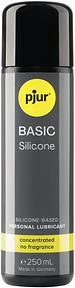
Condoms and lube interact, so this is the one spot where a silicone lube's condom compatibility earns a mention. A condom-safe silicone lube such as pjur BASIC Silicone - Silikon-Gleitgel ideal für Einsteiger - kondomgeeignet und nicht klebend - für Männer & Frauen (250ml) works fine over a covered toy, because the lube meets the condom, not your silicone. Prefer to keep life simple? A water-based lube is condom-safe too. Either way, check the label actually says condom-compatible and you're set.
None of this is about doing it "right" in some performance sense. It's just gear hygiene. The boring stuff that keeps the fun part fun.
Affiliate link. Buying through it earns us a commission; the price stays the same for you.
Cleaning, care, and where to stash it
Cleaning isn't one rule, it's a match-the-method-to-the-material thing, and getting that wrong can wreck a toy.
The baseline that's safe for almost everything: warm water and a mild, unscented soap after every use, then dry it fully before it goes away. For most silicone, glass, and steel toys, that's genuinely enough.
You'll read that you can boil or bleach silicone to sanitize it. Sometimes true, often misapplied. PASS Certified's cleaning guide, which leans on CDC disinfection guidance, is careful here: those harsher methods are only appropriate for unembellished, 100% silicone toys with no motor, no electronics, and nothing that traps water. Anything with a battery, or a seam that hides moisture, don't boil it and don't soak it. When in doubt, soap and water wins.
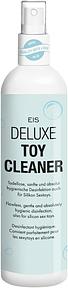
A dedicated toy cleaner earns its keep for the in-between, when a full wash isn't practical or you just want something quick and purpose-made. A spray like the EIS Deluxe Toy Cleaner | Desinfektionsmittel für Silikon & Latex geeignet | Desinfektionsspray für Sexspielzeug | 300ml is formulated for silicone and latex gear, which takes the guesswork out. It doesn't replace the occasional proper wash, but it's a sensible everyday companion.
As for storage: let things dry completely, then keep them separate and breathable. A cotton pouch beats a sealed plastic bag, and keeping softer materials from touching each other avoids that odd reaction where two toys stick or discolor where they meet.
Affiliate link. Buying through it earns us a commission; the price stays the same for you.
Talking about it without making it weird
Gear is the easy part, honestly. The conversation is what most people actually stall on, so here's a way to think about it that isn't a script and isn't a lecture.
Treat communication as three moments, not one big Talk.
First, choosing together. "Make sure the purchase is a joint effort, you're both going to be using it, so you should both have a say," is how sex expert Jill McDevitt puts it (via Healthline). Picking it out together turns an awkward reveal into a shared decision, and it's a low-stakes way to open the whole subject.
Second, a check-in before anything happens. What you're each curious about, and where the firm "no"s are. Nobody needs a spreadsheet. "I'd like to try this, I'm a bit nervous, can we go slow and stop whenever" covers most of it.
Third, during. Keep the door open. A quick "still good?" costs nothing and means everything. Consent isn't a gate you pass through once, it's the thing you keep checking. If any of this feels new, our kink encyclopedia walks through negotiation, boundaries, and aftercare in plainer detail.
And going slow isn't a beginner's consolation prize. It's how most people who enjoy this stuff describe the good version. There's no clock running.
Where that leaves you
Here's the whole guide in a breath. A harness holds a toy against your hips so your hands stay free. Fit matters more than anything else, so measure, and start smaller than your ego wants. Read the material name, not the "body-safe" sticker. Water-based lube with silicone toys, every time. Clean by material, store dry and separate. And talk, before and during, in that low-key ongoing way.
That's it. No brand you have to buy, no rush, no right way to look while doing any of it. If you're curious, you're already through the hardest part, which is being honest about what you want. The gear is just gear.
Take your time. Ask questions. Enjoy it.
All products from this post
The ones we named above are marked; the rest are alternatives in the same category.
Affiliate notice: As an Amazon Associate, we earn from qualifying purchases. Product prices and availability are subject to change.
Frequently Asked Questions
Are strap-on harnesses only for certain couples?
No. A harness works the same regardless of the wearer's gender or anatomy. Couples of every combination use them, and the buying decision, fit, comfort, and material, is identical for everyone. The idea that they belong to one type of couple is just an old myth worth dropping.
What size should a beginner start with?
Smaller than most people expect. Educators consistently recommend a modest size for a first toy, then building up later as comfort grows. Buying too big is the single most common first-timer mistake, and it's easy to avoid. You can always size up. You can't un-spend on something that intimidates you.
Does "body-safe" on the label actually mean anything?
Not reliably. It isn't a regulated term for sex toys, and testing has even found "phthalate-free" labels that were inaccurate. Trust the material name instead: 100% silicone, stainless steel, glass, or ABS plastic are non-porous and genuinely cleanable. Soft "jelly," TPE, TPR, and PVC are the ones to approach with caution.
Can I use any lube with a silicone toy?
No, and this one matters. Silicone lube can degrade a silicone toy over time. Water-based lube is the safe, universal pairing for silicone. Save silicone lube for skin, for glass or steel toys, and for shower play, where it does a great job and can't harm a thing.
How do I actually clean a harness and toy?
Warm water and a mild, unscented soap after every use covers almost everything, then dry fully before storing. Harsher methods like boiling are only safe for plain, non-motorized 100% silicone. Anything with electronics should never be submerged. Store pieces dry, separate, and somewhere breathable.
How do I bring this up with a partner?
Start by choosing the gear together, which makes it a shared decision rather than a big reveal. Have a relaxed check-in about what you're each curious about and where the limits sit, then keep checking in while you play. Slow and talkative is the version most people actually enjoy.