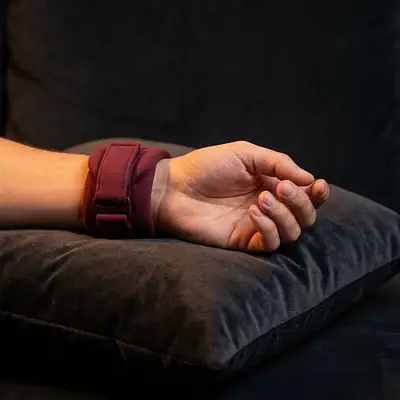
Understanding Sub Drop: Why Both Partners Need Aftercare
 4 min read

After the most intense scene of your life, your dom might need as much recovery as your sub.
Most people think aftercare is one-directional. The dom plays the caregiver, the sub gets cared for, done. But the neuroscience doesn't work that way, and neither do real doms. After hours of intensity, they're facing chemical crashes, self-doubt, and emotional exhaustion too.
Research from Portland State University shows that 72.73% of BDSM practitioners rate aftercare as important to very important. For both sides. Understanding what aftercare means and why it matters can transform your dynamic.
What Happens During Sub Drop and Top Drop?
During a BDSM session, your brain floods with adrenaline, dopamine, and endorphins. These highs create euphoria and the trance-like state some know as "subspace."
Then it stops. The session ends and so does the chemical party. Your cortisol spikes, your endorphins vanish. Researchers at the Journal of Sexual Medicine have measured this exact pattern. Your nervous system realizes the danger has passed. It's time to crash. And it does—hard.
The same thing happens to doms experiencing top drop. Doms report guilt after striking, humiliating, or dominating their partner. The thought "Did I go too far?" isn't weakness. It's a natural physiological response to intense emotional and physical exertion.
Mutual Support: Managing Sub Drop and Top Drop
When your sub is crashing, don't ask what they need. They can't think clearly yet—their nervous system is still recalibrating. Move to touch instead. Hold them. Wrap them in something soft. Let your body communicate what words can't yet: You're safe. This is over. I'm here.
Prepare physical comfort before the scene starts: water, food, a soft blanket. During drop, decisions feel impossible. Make comfort effortless.
Use specific words. "You were incredible." "You trusted me, and I kept you safe." Don't wait for them to respond. Just speak truth while their brain is too flooded to fight it.
When your dom experiences top drop:
Give reassurance before they ask. "You were a good dom. That was exactly what I wanted." Doms carry responsibility for your safety—and that weight can feel crushing after a session. Explicitly confirm that boundaries were respected.
Offer physical contact, but don't force it. Some doms need space to process, others need closeness. Ask: "How are you feeling?" Not "What do you need?" The first question allows honesty. The second demands clarity they might not have yet.
Aftercare should always go both ways. Both partners experience the hormonal crash. Both deserve care. Learn more about communication in BDSM relationships and power dynamics in our encyclopedia section.
Planning Aftercare: Preventing Sub Drop and Top Drop
The BDSM community considers aftercare non-negotiable. The scene isn't over until aftercare has happened.
Discuss before you play:
What does each of you need afterward?
Cuddling, space, or both at different times?
Which words help you most?
Drop can hit hours or days later. Plan check-ins, not just immediate care. Open communication about fantasies, boundaries, and mutual support helps both partners feel safe.

Not available in your region — closest match
View at Amazon (as of Aug 15)Affiliate link. Buying through it earns us a commission; the price stays the same for you.
All products from this post
The ones we named above are marked; the rest are alternatives in the same category.
Not available in your region — closest match
Anker Powerbank, 20.000mAh tragbares Ladegerät mit integriertem USB-C-Kabel, 87W Max Schnellladung, kompatibel mit MacBook, iPhone, Samsung und mehr
View at Amazon (as of Aug 15)Affiliate notice: As an Amazon Associate, we earn from qualifying purchases. Product prices and availability are subject to change.
Frequently Asked Questions
What's the difference between sub drop and aftercare?
Sub drop is the emotional and physical crash after an intense session. Aftercare is the intentional care that softens this crash and helps both partners return to everyday life.
Do dominants experience top drop too?
Yes. Many doms report feelings of guilt, self-doubt, and emotional exhaustion after sessions. The stigma that "real doms" don't need care often prevents them from seeking support.
Is aftercare after sub drop really necessary?
In the BDSM community, aftercare is considered essential. Without proper aftercare, both partners can experience psychological distress. The scene isn't truly over until aftercare has happened.
Is aftercare for sub drop and top drop just cuddling?
No. Aftercare includes physical affection, verbal affirmation, and practical acts like getting water or bringing a blanket. What you need depends on your personal preferences.
How long does aftercare after sub drop last?
It varies widely. Some people need 30 minutes, others need hours. Drop can also hit days later, which is why check-ins over the following days matter.
Sources
- Research from Portland State University pdxscholar.library.pdx.edu
- Researchers at the Journal of Sexual Medicine have measured this exact pattern pubmed.ncbi.nlm.nih.gov
- The thought "Did I go too far?" isn't weakness mysteryvibe.com
- Aftercare should always go both ways womenshealthmag.com
- BDSM community considers aftercare non-negotiable bemorekinky.com