
BDSM for Beginners: An Honest Guide to Getting Started in 2026
 12 min read

Two out of three adults have had BDSM fantasies. That's not my opinion. A systematic review analyzing multiple population studies found that 65 to 69 percent of people have imagined bondage, being dominated, or taking control at some point.
And yet almost nobody talks about it. That's the problem.
I started exploring BDSM years ago. Completely clueless. Had no idea about safewords, thought aftercare was optional, assumed you could just dive in. Spoiler: that's not how this works. I made mistakes. Learned from them. This guide exists so you don't have to repeat mine.
What BDSM Actually Means
BDSM is an umbrella term for practices centered around power, trust, and intense sensations. The acronym stands for:
Bondage and Discipline
Dominance and Submission
Sadism and Masochism
Sounds intense. Often it isn't.
BDSM can mean blindfolding your partner and tracing a feather across their skin. It can mean one of you giving instructions while the other follows. Or it can go deeper, with ropes, spanking, or elaborate roleplays.
What it isn't: dangerous, pathological, or a sign of damage.
The Institute for Sex Education Research analyzed a Spanish replication study with 1,884 participants. The findings? BDSM practitioners showed better mental health than the comparison group. More openness to experience, better attachment styles, higher wellbeing.
The stereotype of the messed-up BDSM enthusiast? Wrong. Science says the opposite.
Safety Comes First
Before we get to the exciting parts: safety is non-negotiable.
SSC and RACK: The Two Core Principles
SSC stands for Safe, Sane, Consensual. Every activity needs to meet all three criteria. That's the entry point for most beginners.
RACK means Risk-Aware Consensual Kink. This principle acknowledges that some practices carry risks you can't fully eliminate. The focus shifts to informed consent.
For your BDSM journey, SSC works perfectly fine. RACK becomes relevant once you're more experienced.
The Traffic Light Safeword System
A safeword is an agreed code that stops any activity immediately. Why not just say "stop" or "no"? Because those words might be part of roleplay.
The traffic light system is straightforward:
| Color | Meaning | Response |
|---|---|---|
| Green | Everything's good, keep going | Continue |
| Yellow | Slow down, adjust | Reduce intensity |
| Red | Stop immediately | Stop everything, provide aftercare |
I recommend the traffic light system for BDSM beginners. No complicated safeword to remember, and your partner instantly understands.
What You Should NOT Do as a Beginner
A literature review of BDSM fatalities examined 17 deaths between 1986 and 2020. That sounds alarming, but context matters: BDSM deaths made up only 0.018% of all cases examined.
What stood out: 88.2% of those deaths involved breath control. Choking, strangling, breath play.
Breath control is not for beginners. Period. Not "just a little." Not "very carefully." The risk of something going wrong is real.
What else belongs on the no-go list:
Suspension (hanging from ropes)
Complex bondage techniques without training
Anything under alcohol or drugs (64.3% of fatal cases involved substances)
Communication: The Real Key to Learning BDSM
I know couples who can spend hours discussing Netflix shows but won't talk about sex for five minutes. That doesn't work with BDSM.
How to Start the Conversation
Many people don't know how to bring up BDSM. Here are approaches that actually work:
"I've been thinking about something I'd like to try with you..."
"I've noticed certain things turn me on. Can we talk about it?"
"I read an article about BDSM recently and found it interesting. What do you think?"
No pressure. No expectations. Just an open conversation.
The Yes/No/Maybe List
One of the most practical exercises for couples exploring BDSM for beginners. You each fill out a list independently:
Yes: This interests me, I want to try it
No: This is a hard limit, not happening
Maybe: Curious but unsure, let's discuss
Then compare your lists. Where both said yes, you can proceed. Where one said no, that gets respected. Where there's maybe, you keep talking.
You can find printable lists online.
Check-ins During Sessions
Even in the middle of a scene, communication matters. Quick questions like:
"How are you feeling right now?"
"Can you tell me your color?"
"Should I continue or take a break?"
This doesn't kill the mood. It shows you care about your partner.
Beginner BDSM Practices: Where to Start
You don't need whips and chains on day one. Honestly, most experienced practitioners started with simple things.
Sensory Play
Your body has countless nerve endings. Sensory play takes advantage of that.
Blindfold: One of the simplest and most effective tools. When you can't see, every other sense intensifies. Every touch, every sound becomes amplified.
Temperature: An ice cube gliding slowly across skin. Warm (not hot!) massage oil. Alternating between cold and warm.
Textures: Feathers, silk, velvet. Light scratching with fingernails. A fur glove against rough fabric.
Light Bondage
Forget complicated rope techniques like Shibari for now. To start, you just need:
Silk scarves or soft cloths
Velcro restraints (beginner-friendly, quick release)
Handcuffs with quick-release mechanisms
Important: Always leave two finger widths of space between restraint and skin. Check circulation regularly. Keep scissors nearby in case something gets stuck.
If you want to go deeper into bondage, there are workshops and courses. Don't learn complex techniques from YouTube.
Power and Control: The Basics
Dominance and submission don't have to be physical. Power exchange can be verbal:
The dominant partner gives instructions
The submissive partner follows them
Both enjoy the clear role distribution
A simple start: "Tonight, I decide when you're allowed to undress."
Light Impact Play
Spanking is one of the most common BDSM entry points. Some ground rules:
Only hit "safe zones" (buttocks, thighs, never kidneys or spine)
Start with your hand, no implements
Pause briefly after each strike, observe the reaction
Build intensity gradually, don't go full force immediately
Most people underestimate how quickly things get intense. Better too gentle than too hard.
Exploring Roles: Dom, Sub, Switch
When you start with BDSM, you might not know which role fits you. That's completely normal.
What the Roles Mean
Dom/Domme (Dominant): Takes control, gives instructions, leads the scene. Must constantly watch the partner and take responsibility.
Sub (Submissive): Gives up control, follows instructions, allows themselves to be led. This isn't a passive role because the sub sets the boundaries.
Switch: Alternates between roles depending on mood, partner, or situation.
Forget the Stereotypes
Being dominant doesn't automatically mean aggressive or emotionless. Being submissive doesn't mean weak or helpless. These cliches come from bad movies, not reality.
I know executives who are submissive in the bedroom. And introverts who discovered a dominant side.
Switching as a Discovery Method
If you're learning BDSM and don't know what fits: try both. A 2024 study with 202 BDSM practitioners showed that many develop their preferences over time.
Talk to your partner: "Let's switch roles tonight." You might surprise yourselves.
Aftercare: Why It's Not Optional
Here's the part most beginners underestimate. Some skip it entirely. Mistake.
What Happens During a Session
During intense BDSM experiences, your body releases endorphins and adrenaline. You feel high, euphoric, uninhibited. That's one reason BDSM is so appealing.
But what goes up must come down.
Understanding Sub Drop
As Anoeses explains, sub drop can occur hours or even days after a session. Endorphin and serotonin levels crash, and you suddenly feel:
Sad for no apparent reason
Vulnerable, emotionally unstable
Exhausted, unmotivated
Anxious or uncertain about what happened
This is physiological. Not weakness, not a sign something went wrong. Just biochemistry.
Dom Drop Exists Too
What's less known: dominant partners can also experience emotional crashes. As The Aftercare Lounge describes, doms invest significant emotional energy. They must constantly watch boundaries, navigate dynamics, carry responsibility.
After the scene, that tension releases. It can feel like a void.
Concrete Aftercare Activities
Aftercare isn't complicated. It's about being there for each other:
Physical closeness: Cuddling, holding, stroking
Practical care: Bringing water, offering snacks, getting a blanket
Verbal reassurance: "That was beautiful with you." "You trusted me, that means a lot."
Debriefing: What worked? What didn't? What should we do differently next time?
Plan at least 20 to 30 minutes for this. Sometimes longer.
Exploring BDSM as a Couple: What Relationships Need
If you're reading this guide as part of a couple, you face unique challenges and opportunities.
A 2025 study from the Journal of Positive Sexuality examined how BDSM affects romantic relationships. The results: BDSM promotes personal growth, emotional regulation, and sexual discovery. It strengthens security, intimacy, pleasure, and communication in partnerships.
Good news. But there are pitfalls.
What If One Partner Wants More Than the Other?
This happens often. One partner is excited, the other skeptical. What then?
Don't pressure. Consent works in both directions. If your partner isn't interested, respect that.
Seek compromises. Maybe you'll find middle ground. BDSM-lite. Light elements without the full scope.
Be honest. If BDSM matters to you and your partner categorically refuses, you need to talk about it. Sometimes sexual needs simply aren't compatible.
Jealousy and Vulnerability
BDSM opens doors. Emotional doors. You're showing your partner sides of yourself nobody else sees. That creates vulnerability.
Some couples experience more closeness afterward. Others encounter insecurities that were previously hidden.
Talk about it. Not just before and during, but after. "How did that feel for you?" "What did this bring up?"
BDSM as a Relationship Tool, Not a Substitute
BDSM can deepen a relationship. It can't fix a broken one.
If you have communication problems, BDSM will amplify them, not solve them. If trust is missing, bondage won't replace it.
Build a solid foundation first. Then explore together.
Common Beginner Mistakes and How to Avoid Them
I made these mistakes myself or watched others make them. Skip the detours.
Mistake 1: Wanting Too Much Too Fast
You've read an article, watched a video, and now you're enthusiastic. You want to try everything you've seen immediately.
Take a breath. BDSM is a marathon, not a sprint.
German sources consistently say: going too fast is the most common and dangerous mistake. A possible learning curve:
| Timeframe | Focus |
|---|---|
| Month 1 | Communication, yes/no/maybe lists, establishing safewords |
| Month 2-3 | Sensory play, light bondage with scarves |
| Month 4-6 | First power exchange elements, maybe light spanking |
| Beyond | More complex practices based on your experiences |
Mistake 2: Skipping Negotiation
"We know each other." "We don't need to discuss everything." "It'll work itself out."
No. It won't.
Even long-term partners need to talk about BDSM. What was okay five years ago might be different now. Boundaries shift. Interests change.
Every new practice deserves a conversation beforehand.
Mistake 3: Neglecting Aftercare
"It was just a little spanking." "We didn't do anything intense."
Don't underestimate what even light sessions can trigger. Emotions aren't proportional to activity intensity.
Aftercare is standard. Always.
Mistake 4: Measuring BDSM Against Porn
Porn shows highlights, not reality. The preparation, negotiation, breaks, and aftercare get edited out.
What remains is a distorted picture that's neither realistic nor imitable.
Mistake 5: Not Establishing Safewords
"I trust you." Nice. You still need a safeword.
It's not about distrust. It's about having a clear communication line when words like "stop" or "no" might be part of the game.
Next Steps: Community and Learning
You don't have to figure this out alone. There's a vibrant BDSM community with resources for newcomers.
Munches: A Relaxed Entry Point
A munch is an informal BDSM community gathering, usually at a restaurant or bar. No play activities, just conversation. You can ask questions, meet experienced people, and exchange ideas.
SMJG e.V. organizes local meetups across Germany, specifically for young adults. A good way to get to know the community without pressure.
Professional Support
If you have deeper questions or encounter difficulties, kink-friendly therapists exist. The SMart Rhein-Ruhr e.V. directory lists professionals who understand BDSM and won't pathologize it.
BDSM for beginners means staying curious, being careful, and talking to each other. The rest follows naturally.
Have fun exploring.
3-teiliges Bondage-Set „Lover's Fantasy Kit“, Grundausstattung für Einsteiger
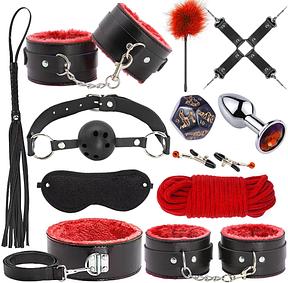
Not available in your region — closest match
View at Amazon (as of Aug 15)Affiliate link. Buying through it earns us a commission; the price stays the same for you.
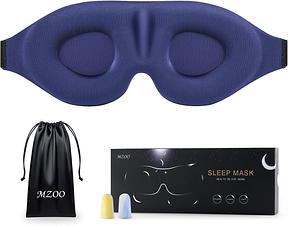
Not available in your region — closest match
View at Amazon (as of Aug 15)Affiliate link. Buying through it earns us a commission; the price stays the same for you.
All products from this post
The ones we named above are marked; the rest are alternatives in the same category.
Affiliate notice: As an Amazon Associate, we earn from qualifying purchases. Product prices and availability are subject to change.
Frequently Asked Questions
Is BDSM dangerous?
With proper practice, no. Statistics show that BDSM-related deaths are extremely rare (0.018% of examined cases) and almost all involve high-risk practices like breath control. If you follow safety rules, use safewords, and avoid dangerous practices as a beginner, BDSM isn't more dangerous than other activities.
How do I get started with BDSM?
Start with communication, not handcuffs. Talk to your partner about fantasies, fill out a yes/no/maybe list, establish safewords. Then begin with light practices: blindfolds, sensory play, verbal dominance. Build slowly over weeks and months.
What is a safeword and do I need one?
A safeword is an agreed code that stops any activity immediately. The traffic light system (green/yellow/red) works well for beginners. Yes, you need one. Always. Even if you completely trust your partner, even for light activities.
Is aftercare necessary?
Yes, without exception. After BDSM sessions, hormone levels drop, which can cause emotional crashes. This affects both partners. Aftercare means cuddling, talking, being there for each other. Plan at least 20 minutes.
How do I talk to my partner about BDSM?
Choose a relaxed moment, not right before or after sex. Frame it as interest, not demand: "I've been thinking about trying something new..." Be open to their reaction, even if it's not as enthusiastic as yours.
Can BDSM improve a relationship?
A 2025 study shows that BDSM can strengthen communication, intimacy, and trust in partnerships. The keys are honest conversations, mutual respect, and willingness to learn together. BDSM can deepen what's already there. It won't replace a missing foundation.
Sources
- systematic review tandfonline.com
- Institute for Sex Education Research sexeducationresearch.org
- traffic light system medium.com
- literature review of BDSM fatalities pmc.ncbi.nlm.nih.gov
- printable lists online blog.lilithfoxx.com
- 2024 study pubmed.ncbi.nlm.nih.gov
- Anoeses explains anoeses.com
- The Aftercare Lounge theaftercarelounge.com
- 2025 study from the Journal of Positive Sexuality tandfonline.com
- SMJG e.V. smjg.org
- SMart Rhein-Ruhr e.V. directory smart-ev.de