
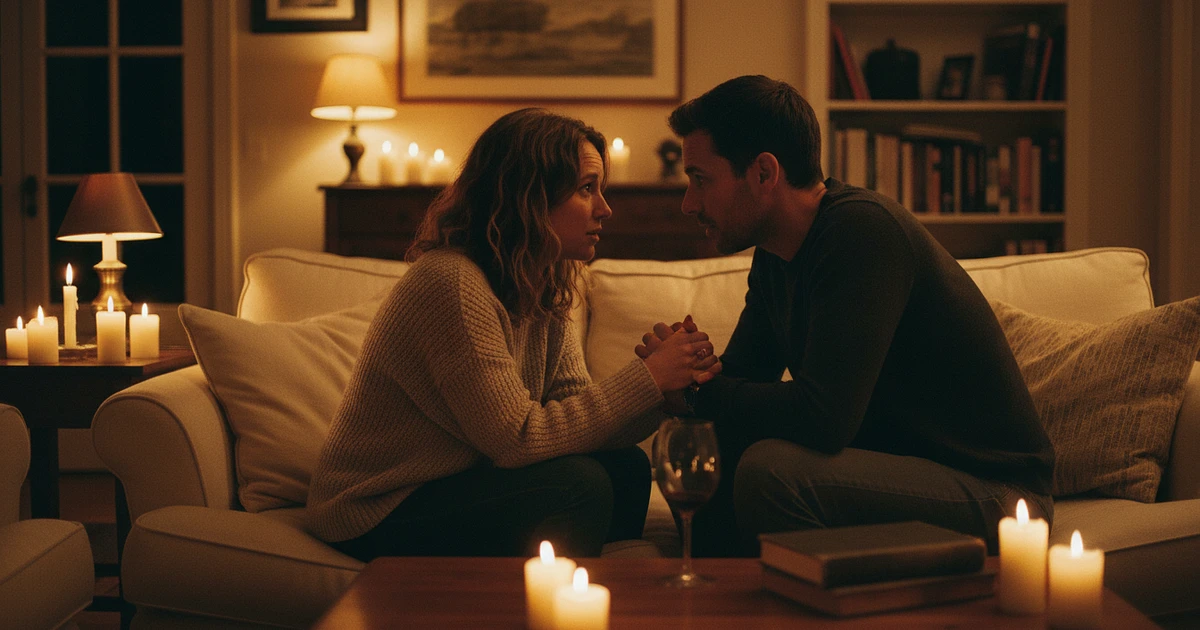
My friend Jonas opened his relationship last year. The most important open relationship rules? Condoms: checked. STI tests: done. Who can see whom? All figured out. Six weeks later he was emotionally wrecked. Not because of sex. Because of feelings.
"We talked about everything," he told me. "Just not about what actually hurts."
Jonas isn't alone. A 2025 study in Archives of Sexual Behavior with 51 people in consensually non-monogamous relationships found: Almost everyone experiences jealousy and insecurity. Most had physical rules. Emotional boundaries open relationship? Those were missing.
Here are 35 emotional boundaries you should discuss. Not a checklist to tick off. Starting points for conversations that actually matter.
Why Emotional Open Relationship Rules Matter More Than Physical Ones
Most guides focus on the physical stuff: condoms, locations, times. Important, yeah. But that's the easy part.
Alexandra Cromer, LPC, puts it this way: "As long as open relationship communication is clear and partners are honest about their wants, open relationships can be healthy." The problem? Emotional communication is harder than "Yes, condom" or "No, not my coworker."
A meta-analysis in the Journal of Sex Research found in 2025: Relationship satisfaction in consensually non-monogamous relationships was similar to monogamous ones. The deciding factor wasn't the relationship structure. It was communication quality.
The Three Pillars: How Open Relationship Rules Work
Before we get to the 35 areas. Here's the foundation all polyamory rules build on.
Communication doesn't just mean "we talk." It means regular check-ins, even when everything seems fine. It means being able to say "I feel insecure" without fear of blame. You need the freedom to be vulnerable.
Comfort means that both partners feel emotionally safe. Not perfect. Not fearless. But safe enough to continue. My friend Lisa always says: "If it feels wrong, it is wrong. No matter what the theory says."
Consent means that both partners want these boundaries. Not one wants them while the other reluctantly accepts. True consent takes time. And the ability to say "no."
Category 1: Time and Energy
Lisa and her partner Marc had this conflict: He wanted one evening per week for other dates. She thought: okay, one evening. Then it was two. Then three. "We never said how much is too much," she told me. Now they have concrete numbers.
1. How much time for other relationships?
Not "as much as you want." Specifically. Two evenings per week? One weekend per month? Jonas and his partner never discussed this. Suddenly she was gone four evenings a week.
2. When is couple time sacred?
Sunday breakfast? Your anniversary? Vacations? Certain times belong to you two. And that means no constant phone-checking for messages from others.
3. What happens during resource conflicts?
You have only one free evening, and both partners want you. What then? Clear agreements in advance prevent drama in the moment.
4. How much emotional energy for new relationships?
Research calls it "NRE." New Relationship Energy. The rush at the beginning. It eats attention. The question is: How much can it eat?
5. When do you need time just for yourself?
Open relationships can be emotionally exhausting. You need space that belongs only to you. Not your partner, not metamours. Just you.
Category 2: Who Gets to Know?
6. Who in your life knows about this?
Family? Friends? Coworkers? Lisa is open about it in her circle. Marc isn't. Both approaches are okay if they're shared and nobody feels pressured.
7. What can others learn about your primary relationship?
Do you tell your other partners about problems in your main relationship? That can feel like betrayal. Or like necessary processing.
8. What can others see about you as a couple on social media?
Tom posts photos with his other partner on Instagram. His main partner sees it in her feed. "I said it was okay, but didn't imagine how it would feel," she says. Now they have a rule: no couple photos with others without warning.
9. How do you handle questions from outsiders?
When your mother-in-law asks who "that person on your Instagram" is. Do you have a shared story? Do you lie? Do you ignore?
10. Are there people who are off-limits?
Ex-partners. Best friends. Family members of friends. Beziehungszentrum recommends explicitly discussing: "Who do you not want involved?"
Category 3: What Gets Shared?
11. How much do you want to know about dates?
"I was at Maria's last night." Is that enough? Or do you need details? Lisa finds not knowing harder to bear than knowing. For Marc it's the opposite.
12. When do you want to know?
Before? After? In real time? "I'm at her place now" can feel reassuring. Or like a stab in the heart.
13. What about sexual details?
Some couples share everything. Others want to know nothing. Both work. What doesn't work: Different expectations that were never discussed.
14. How is safer sex communicated?
When status changes. When someone new joins. When a test comes back differently than expected. When does your partner find out?
15. What about emotional developments?
You realize you're falling for someone else. When do you say that? Or: Do you say it at all? Jonas' partner only told him after three months that she'd fallen in love. "I thought it would pass," she said. It didn't.
Category 4: Emotional Intimacy
This is the area that got Jonas. Not the sex. The emotional closeness.
16. Which intimacies belong only to you two?
Certain pet names? Activities? Places? Lisa and Marc have "their" restaurant. Nobody else gets to go there with them. Sounds small. It's not.
17. How deep can other relationships get emotionally?
Research shows: Many people fear emotional intimacy with others more than sex. Because emotional closeness feels more threatening to the primary relationship.
18. What happens when you fall in love?
Not if. When. Strong feelings happen. The question isn't whether, but how you deal with them.
19. Can other partners provide emotional support?
After a bad day. During family problems. Lisa struggles when Marc seeks emotional support elsewhere. Others find it relieving.
20. What does aftercare look like between you two?
After dates with others. After difficult conversations. After jealousy moments. What do you need to find your way back to "us"?
21. What's your definition of fidelity?
In open relationships, fidelity isn't exclusivity. But what is it then? Honesty? Priority? Reliability? Define it for yourselves.
22. How much vulnerability do you share with others?
Your deepest fears. Your shadow sides. Your unresolved issues. Some of that might belong only in the primary relationship. Or maybe not.
Category 5: Metamour Relationships
Metamours are your partners' partners. The people you don't have a romantic relationship with, but who are still in your life.
23. Do you want to meet your metamours?
Lisa wanted to meet everyone. Marc prefers "Don't Ask, Don't Tell." Research by Arter and Bunge shows: Many form deep friendships with metamours. But not everyone wants that.
Many couples looking for additional partners together find it easier when everyone knows each other. In communities with verified profiles, many find it easier to meet metamours because a certain level of trust exists through verification.
24. How much contact with metamours is okay?
Friendly coffee? Joint group activities? Or separate lives?
25. What happens during conflicts with metamours?
Your partner is in the middle. That's uncomfortable for everyone. How do you resolve it? Is there mediation? Or do you stay separate?
26. Can metamours stay over at your place?
In your home. In your bed. This sounds like a small question. It's not.
27. What about metamour boundaries you don't understand?
Your metamour doesn't want contact with you. You don't understand why. What then? Acceptance? Mediation? Demands?
Category 6: Power and Veto Rights
28. Are there veto rights?
The ability to say: "Not this person." Many CNM communities are critical of vetoes. They treat other people as "disposable." But some couples need that safety net, especially when they're just learning to set polyamory boundaries.
29. Who has what power in decision-making?
Hierarchical polyamory has clear priorities. Relationship anarchy rejects hierarchies. Where do you stand?
30. What happens at "I can't do this anymore"?
One of you is at your emotional limit. Do you pause everything? Reduce? What's the emergency plan?
31. How long do trial periods last?
"Let's try it for three months." Fine. But what happens after? Automatic extension? Re-evaluation?
32. Who can change the relationship structure?
Return to monogamy. Opening in new directions. Can both demand this? Does it require mutual consent?
Category 7: Jealousy Open Relationship – The Hardest Part
Therapist Moshe Ratson describes jealousy as "a signal of vulnerability and an opportunity for growth" rather than a relationship problem. That's important. Jealousy doesn't disappear. You learn to deal with it.
33. How do you communicate jealousy?
Couples counselor Kathy Labriola suggests breaking down jealousy: "50% fear, 20% anger, 20% powerlessness, 10% betrayal." When you know what your jealousy consists of, you can address it more specifically.
34. What are your jealousy triggers?
For Jonas it was: "When she sends him goodnight messages." For Lisa it's: "When Marc does his favorite activities with someone else." Know your triggers.
35. How do you support each other through jealousy?
Labriola recommends "graduated exposure." Instead of allowing everything at once: gradually increase. First no overnights. Then one per week. Then more. Emotional capacity grows with time.
Open Relationship Rules as a Living Document
These 35 points aren't rules you set once and then forget.
Studies show that 48% of people in non-monogamous relationships have fewer conflicts when they communicate openly about boundaries. The key word is "communicate." Not "set."
Do regular check-ins. Weekly at first. Monthly when things get more stable. Ask: "Are our open relationship rules still working? Do we need to change anything?"
Discretion agreements are especially important when it comes to safe practices for meeting new partners – both emotionally and physically.
What to Do When Boundaries Are Crossed
It happens. Not every boundary violation is the end of a relationship. Research by Simone Schneider (2025) shows: What distinguishes consensually non-monogamous relationships from cheating isn't the absence of mistakes. It's how they're handled. Openness, honesty, repair.
What you can do:
- Communicate immediately. Not "later when emotions have cooled." Later becomes never.
- Pause new activities. Stabilize the primary relationship first.
- Ask yourselves: Was this a mistake or a pattern?
- Decide together: Re-evaluate the boundaries or re-evaluate the relationship.
Conclusion: The One Piece of Advice Jonas Gives Today
"Don't just talk about what's allowed. Talk about what would hurt."
These 35 emotional boundaries open relationship are invitations to conversations. None of them have to fit your situation. But all of them should be discussed at least once.
Because the couples who make it? They don't have less jealousy. They don't have less fear. They have better tools to deal with it.
And that starts with a conversation.
Whether you're just thinking about an open relationship or already have experience: At SparkChambers you can meet like-minded people who live similar relationship structures and understand what you're talking about.