
Planning Your First BDSM Scene: The Complete Guide for Couples
 14 min read
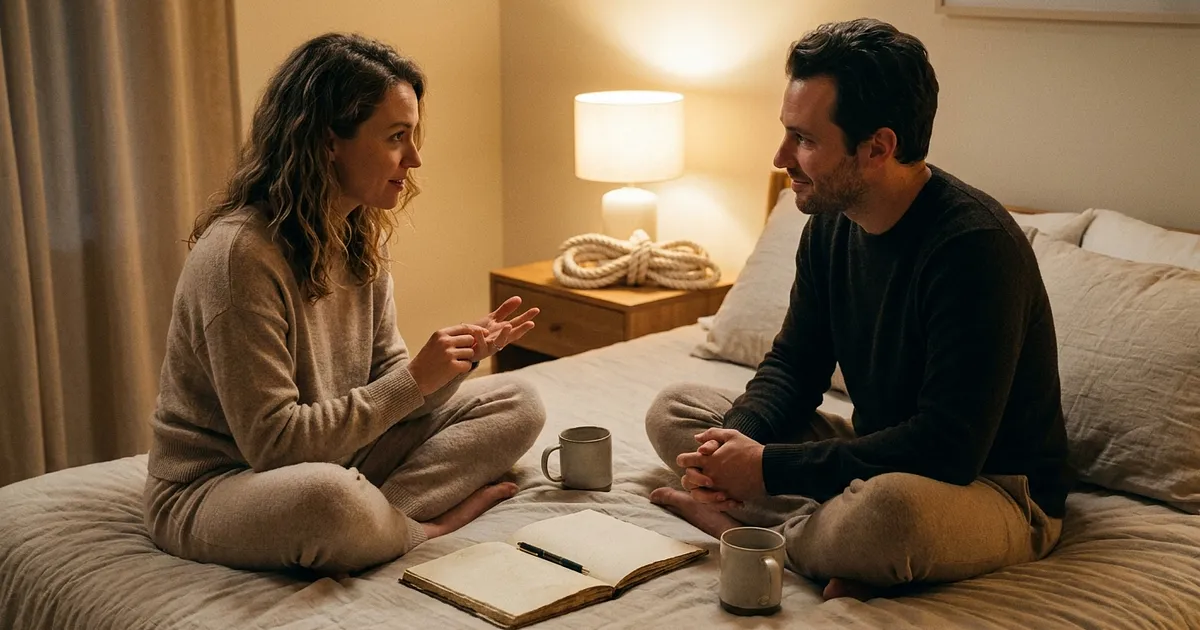
Planning your first BDSM scene feels like a strange mix of first date nerves and performance anxiety. Exciting and terrifying in equal measure. Full of "what if" thoughts that keep circling back. (Completely normal, by the way.)
Here's what might help: According to a study published by the NIH, BDSM is remarkably safe when proper protocols are followed. Fatal accidents represent only 0.018% of all sexually-related deaths. In other words: Your biggest risk is probably that one of you will start giggling mid-scene.
The problem? Most beginner guides focus obsessively on physical safety while glossing over emotional preparation. That's backwards. This guide walks you through planning your first BDSM scene step-by-step, from assessing your emotional readiness through negotiation, execution, and everything that happens after.
Why Planning BDSM Scenes Makes Everything Better
"Spontaneous" sounds romantic. In BDSM, spontaneity is the opposite of safety.
A well-planned scene gives both of you a container to let go within. Paradox? Not really. When you've already sorted out what's on the table (and what isn't), you don't have to think during the scene itself. You can just be. And if something feels off, you know exactly how to address it immediately.
Research on consent in BDSM found something interesting: The way BDSM practitioners talk about consent is so clear and explicit that researchers suggest it as a model for all relationships. No hints, no implied expectations. Just clear words.
A 2024 systematic review analyzing 181 articles found that BDSM practices positively impact self-awareness, authenticity, communication skills, and trust. When you're planning a first BDSM scene, it's not bureaucracy. It's the foundation for deeper connection and safe exploration.
Before You Can Start Planning Your First BDSM Scene: Emotional Readiness
Most guides that explain how to plan a BDSM scene jump straight to safewords and handcuffs. That's a mistake.
Questions for Both of You
Before planning your first BDSM scene, take time for honest reflection:
For you as a couple:
Do you both feel genuinely excited (not pressured)?
Can you discuss embarrassing or vulnerable topics without it getting weird?
Have you resolved conflicts well in the past?
Do you trust each other emotionally enough to be there for unexpected reactions?
For yourself:
Are you doing this for yourself, or because you think it'll make your partner happy?
Are there past experiences that might surface during intense intimacy?
Can you say "stop" even if it breaks the moment?
If you're exploring BDSM with new partners, look for verified profiles for additional safety and trustworthiness.
Psychologists recommend that BDSM beginners answer these questions honestly before planning their first scene.
What Happens in Your Body
BDSM scenes trigger neurochemical changes. Endorphins surge, adrenaline spikes, cortisol fluctuates. This can feel like a runner's high, intense euphoria, or even an altered state of consciousness (called "subspace" – a trance-like state from endorphin release).
But what goes up must come down. Hours or even days after a scene, an emotional crash can hit. It's called "sub drop" (emotional crash for the submissive partner) or "Dom drop" (emotional crash for the dominant partner). Suddenly you feel sad, anxious, or emotionally numb.
This is a normal physiological response to the hormone crash, not a sign something went wrong. Knowing this beforehand makes all the difference. You can recognize the drop instead of interpreting it as relationship damage.
Discussing BDSM Boundaries: The Negotiation
The word "negotiation" sounds like a business meeting. In practice, it's more like an intense conversation about your deepest desires and fears. Many couples find it surprisingly connecting.
The M.I.T.S. Framework
As sex therapists emphasize, there's no "right" way to be sexual. What matters is that everyone involved feels comfortable, respected, and enthusiastic. We've simplified the M.I.T.S. framework so you can plan your BDSM scene without feeling overwhelmed:
M - Marks
Are visible marks like bruises or imprints okay? If you're going to work Monday morning, you don't want to explain where the welts on your neck came from. (Or maybe you do? Your call.) A handprint on your upper arm can pass as "I walked into a door." One on your face can't.
I - Injuries
Does anyone have physical limitations? Joint problems, asthma, heart conditions? A shoulder strain makes certain bondage positions dangerous.
T - Triggers
Are there emotional topics to avoid? Certain words, scenarios, or touches that might trigger negative memories?
S - Safewords
What words stop everything immediately? More on this in the next section.
Hard Limits vs. Soft Limits
Hard limits are boundaries that are never crossed. Period. No discussion, no persuasion, no exceptions. Anything not explicitly negotiated counts as a hard limit by default.
(And yes, that means: If you didn't discuss wax, no wax gets used. Even if the Dom thinks it would be a sexy surprise. Consent doesn't work with surprises.)
Soft limits are things you might want to try eventually, but not yet. They need more trust, more experience, or simply the right moment. Today, "maybe later" is a completely valid answer.
Create a list for both categories. Write them down. Respect them unconditionally.
Introducing BDSM Safewords: More Than Just "Red"
The traffic light safeword system works particularly well for beginners:
Green = Everything's good, keep going
Yellow = Slow down, check-in needed, approaching a limit
Red = Immediate stop, scene ends
Why Normal Words Don't Work
"No" and "stop" can be part of the play. When your partner moans "No, please don't!" during roleplay, should that encourage the Dom or end the scene? This ambiguity is dangerous.
A safeword like "pineapple" or "refrigerator" is absurd enough that it can't possibly be misunderstood. Nobody spontaneously yells "PINEAPPLE!" in the heat of the moment. It immediately pulls you out of the game back to reality. And if it does happen, your system works perfectly.
Non-Verbal Safewords
What if someone is gagged or can't speak?
Hand signals: Squeezing three times means stop
Objects: A ball held in the hand that gets dropped
Sounds: Humming in a specific pattern
Test your safeword BEFORE the scene. Practice it once. Make sure both of you know it and both are ready to use it.
Community standards emphasize: Anyone involved, whether dominant or submissive, can use the safeword at any time. Using it isn't failure. It proves your communication works.
For more tips on safe practices, check out our safety guidelines.
How to Plan a BDSM Session: The Practical Breakdown
1. Container (The Frame)
When planning a BDSM scene, clarify these basics first:
When? Choose a time when you're not tired, stressed, or rushed. Weekend, day off, evening with no obligations.
How long? Plan more time than you think you need. Your first scene plus aftercare should have at least 2-3 hours.
Where? Your bedroom is perfect. Familiar environment, privacy, access to everything you need.
Roles? Who's dominant, who's submissive? Or do you switch?
2. Activities
For the first scene: Less is more.
These things work for a reason: They need almost no equipment, are easy to stop, and intensity can be precisely controlled.
Beginner-friendly activities:
Blindfold – Sensory deprivation for beginners. A scarf works.
Light wrist restraint – Makes power dynamics tangible without learning rope work
Verbal dominance – "Stay exactly like that" has more impact than you'd think
Gentle spanking with the hand – Immediate feedback, no tools needed
Temperature play with ice cubes – Surprisingly intense for zero risk
Feather-light touches – Building anticipation is sometimes better than action
Too complex for the first scene:
Rope bondage (too technical)
Breath play (too risky)
Intense impact tools (too difficult to dose)
You don't need expensive toys, by the way. For detailed information about different BDSM practices, check out our kink encyclopedia.
3. Communication During the Scene
Plan regular check-ins:
"How are you doing?"
"Everything okay?"
"What color?"
These interruptions don't ruin the mood. They show care. And over time, they become a natural part of your play.
Planning Your First BDSM Scene: Example Timeline
When planning your first BDSM scene, BDSM educator Brandon recommends the "Three Pillars" method: Set a goal (without pressure to achieve it), plan sequencing (like an orgasm cycle), and create "perfect moments."
Here's a concrete example for your first scene:
Preparation (30 Minutes Before)
Prepare the room: Clean sheets, dimmed lights, water nearby
Eliminate distractions: Phones on silent, doors locked
Quick check-in: "Are you ready? Is there anything still on your mind?"
Confirm the safeword one more time
Lead-In Phase (10-15 Minutes)
Slow entry. Normal kiss, embrace, familiar territory. Then something shifts. The dominant partner begins taking control – maybe with a calm "From now on, I'm in charge," maybe just through a gesture: Gently holding the partner's hands above their head and keeping them there.
This isn't a race. This phase gives your body time to adjust to the changed dynamic.
Build-Up Phase (15-25 Minutes)
Intensity rises. The blindfold comes on. Touches become more deliberate. Maybe the first spanking. Regular check-ins, initially verbal, then perhaps just through eye contact or hand signals.
Peak (10-15 Minutes)
The most intense part of the scene. Whatever you planned as the "main activity" happens here. Full attention on the moment.
Cool-Down (5-10 Minutes)
Slow deceleration. Remove the blindfold if present. Slow down the tempo. Touches become gentler. Transition from "scene" to "reality."
BDSM Aftercare for Couples: Why This Phase Is Critical
You should plan aftercare when you start planning your first BDSM scene. A study in the Journal of Sex Research with 40 BDSM practitioners found that aftercare serves not just physical recovery but also "impression management," how partners perceive each other and the relationship.
Research shows a positive correlation between aftercare and overall relationship satisfaction in BDSM couples.
What Aftercare Includes
Physical:
Provide water and light snacks
Blanket to wrap up in
Tend to any marks if needed
Cuddling, if wanted
Emotional:
Sometimes you want to talk. Sometimes you just want to be held. Both are okay.
Simply being present, without talking – Presence is often more important than words
Gentle words of affirmation: "You did amazing," "Thank you for trusting me"
No analysis, no criticism – That comes tomorrow at the check-in
If needed: Watch something light together or listen to calm music
Some people need physical closeness after intense scenes. Others need a bit of space. Ask. Respect the answer.
Aftercare for Both Partners
Dominant partners need aftercare just as much. Carrying responsibility for a scene is emotionally exhausting. "Dom drop" can manifest as guilt: "Did I hurt them? Am I a bad person?"
BDSM aftercare for couples means: Discuss what you both need. Everyone has different needs after an intense scene.
Debriefing Your BDSM Scene: The Talk 24 Hours Later
Okay, your first scene is over. Aftercare went well. You've both slept (hopefully). Now comes the part many people skip but shouldn't: The debrief.
The next day, make time for an honest conversation.
Questions for Reflection
"What surprised you, physically or emotionally?"
"Which parts would you want to repeat?"
"Were there moments that felt uncomfortable?"
"How was the aftercare? What would you change?"
"What are you not ready for yet?"
This conversation isn't a performance review. It's shared learning. Your first scene was an experiment, not a test.
What to Do When Your Planned BDSM Scene Goes Wrong
Ideally, everything runs smoothly. Reality looks different. Here are common situations and how to handle them:
Someone starts crying unexpectedly:
This can happen. And it's not a sign that anything went wrong. Intense intimacy sometimes releases stored emotions that have nothing to do with the scene itself.
What you do: End the scene immediately. Hold them (if that's okay). Don't ask why, not now. Just be there. The tears are allowed to flow. Explanations can come later.
The safeword gets used:
Perfect. The system works. End the scene, begin aftercare, discuss what happened later (not immediately).
Arousal suddenly disappears:
Also normal. New experiences can be overwhelming. Take a break, check in, decide whether to continue or stop. Both are okay.
Something feels wrong but you don't know what:
Say yellow. Pause. Try to articulate: "I don't know exactly, but something's off." That's reason enough for an interruption.
The Most Important Rule
No scene needs to be "successfully" completed. You can stop at any time, for any reason. That's not failure. It's healthy self-care.
The Biggest Risk Factor: Substances
The greatest identified danger in BDSM isn't the practice itself but alcohol and drug use during scenes. 64.3% of fatal incidents involved substances.
When planning and executing your first BDSM scene: Stay completely sober.
A glass of wine to relax beforehand? Understandable, but not recommended. Alcohol reduces pain perception, impairs judgment, and makes safeword communication less reliable.
You need to feel comfortable sober. If you need alcohol to feel brave enough, you might not be ready yet.
What You Actually Need
Many people think BDSM requires a basement full of equipment. That's marketing, not reality.
When planning a BDSM scene, what's actually essential:
Safewords (free)
Negotiation (free)
Trust (priceless)
Time and privacy
Nice to have but not necessary:
Blindfold (a scarf works too)
Rope (silk scarves work for beginners)
Spanking paddle (your hand is enough)
The most important investment when planning your first BDSM scene is time for communication, not money for toys.
Connection Over Performance
Your first BDSM scene won't be perfect. It doesn't need to be.
This isn't about demonstrating techniques or looking like you're in a movie. It's about exploring something new together. Nervousness is normal. Uncertainty is human. And laughing when something unexpected happens? Totally allowed.
Studies show: BDSM practitioners report higher well-being and lower psychological distress compared to the general population. Not despite the kink, but because it fosters communication, trust, and authenticity.
When you plan your first BDSM scene, you're essentially planning an intense conversation about your desires, fears, and boundaries. The physical scene afterward is almost a bonus.
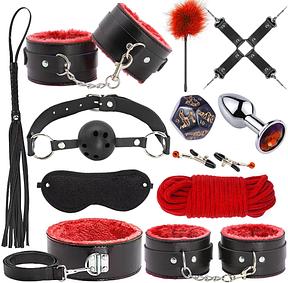
Not available in your region — closest match
View at Amazon (as of Aug 15)Affiliate link. Buying through it earns us a commission; the price stays the same for you.
Not available in your region — closest match
View at Amazon (as of Aug 15)Affiliate link. Buying through it earns us a commission; the price stays the same for you.
All products from this post
The ones we named above are marked; the rest are alternatives in the same category.
Affiliate notice: As an Amazon Associate, we earn from qualifying purchases. Product prices and availability are subject to change.
Frequently Asked Questions
Do we need expensive equipment when planning our first BDSM scene?
No. The BDSM industry would love to convince you that you need to spend hundreds. That's not true. Household items work perfectly for your first scene. A scarf as a blindfold, your hands for light spanking, your voice for dominance. The most important "equipment" is your communication. Invest in time for conversations, not toys.
How long should a first BDSM scene last?
When planning your first BDSM scene, budget 2-3 hours for everything: preparation, the actual scene, and aftercare. The scene itself might run 30-60 minutes. Aftercare isn't optional. It's part of the scene and needs just as much time.
What do we do if one of us uses the safeword?
Stop immediately. No discussion, no negotiation. Switch to aftercare mode: Offer physical closeness, provide water, just be there. Only later (not the same night) can you discuss what happened. Using the safeword is a success, not a failure.
Is it normal to crash emotionally after a scene?
Yes, completely normal. "Sub drop" or "Dom drop" happens when endorphin and adrenaline levels fall. It can feel like sudden sadness, anxiety, or emotional numbness. This can occur hours or days after the scene. Planned aftercare and check-ins the next day help manage it.
Can we drink alcohol to loosen up?
Not recommended, especially when planning and executing your first BDSM scene. Alcohol impairs pain perception, judgment, and communication. Research shows substances are the biggest risk factor in BDSM accidents. If you can't relax sober, you might not be ready yet.
Do both partners need to be ready at the same time?
Yes. BDSM only works with enthusiastic consent from everyone involved. If one partner hesitates or feels uncertain, wait. Pressure leads to bad experiences. True readiness shows when you're both excited (not just "okay with it").
Sources
- study published by the NIH pmc.ncbi.nlm.nih.gov
- Research on consent in BDSM pubmed.ncbi.nlm.nih.gov
- 2024 systematic review researchgate.net
- Psychologists recommend bemorekinky.com
- sex therapists emphasize mindfulcaretherapy.com
- traffic light safeword system bemorekinky.com
- Community standards emphasize centraloutreach.com
- BDSM educator Brandon recommends brandonthedom.com
- study in the Journal of Sex Research pubmed.ncbi.nlm.nih.gov
- Research shows bemorekinky.com
- BDSM practitioners report higher well-being marriage.com