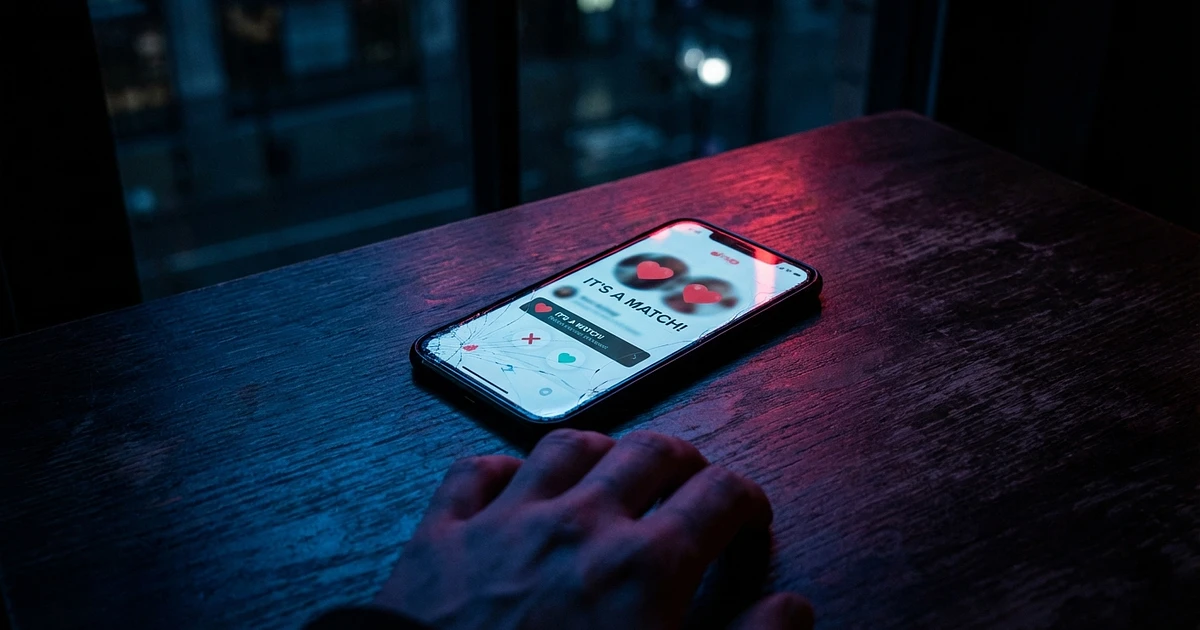
90% of singles feel addicted to dating apps. On Valentine's Day 2024, six users filed a lawsuit against Match Group in San Francisco. They'd all become addicted to Tinder. The accusation: Tinder, Hinge, and other dating apps were deliberately designed to be addictive. Not to help people find love. But to make money.
I looked into the lawsuit. All 55 pages. And the research behind it. What I found? Disturbing is too kind a word.
Why Is Tinder So Addictive?
The Match Group lawsuit claims the company uses "game-like design features" to trap users in an endless pay-to-play loop.
Sounds like a conspiracy theory, right?
It isn't. The science behind it is solid. Biological anthropologist Dr. Helen Fisher explains: "The brain is ready to get addicted, particularly when it comes to love."
Whether you're addicted to Tinder or Hinge addiction has taken hold, the mechanisms are identical. Dating apps use variable reward schedules, the same technique that makes slot machines so effective. You never know when the next match will come. Just like a slot machine.
Cultural anthropologist Natasha Dow Schull explains: "If you don't know what you're going to get and when, that brings about the most perseverating kinds of behavior". This Tinder manipulation isn't a bug. It's the feature.
The Business Model: Profit Over Partners
Hinge advertises with the slogan "designed to be deleted." Sounds nice. The numbers tell a different story.
Match Group generated $3.5 billion in revenue in 2024, with Tinder and Hinge accounting for over 70% of earnings.
But here's where it gets weird: Despite 11% revenue growth, the company lost 5% of paying subscribers in 2023.
Fewer users. More money. Let that sink in.
If the app actually helped people find partners? The business model would collapse. When you're addicted to Tinder, you pay longer and more.
Tinder Addiction: The Alarming Numbers
Picture this: Nearly 8 out of 10 people on dating apps feel burnt out. According to a 2024 Forbes survey, 78% of American users experience burnout. For women, it's 80%. That's what they call dating app burnout. And it's getting worse.
Even more striking: 90% of singles report feeling addicted. 70% believe the app harms their mental health. Yet they keep using it.
This isn't weakness. This is design.
A large systematic review of 29 studies shows the connection between dating apps and psychological distress, anxiety, and depression. In Germany, approximately 2.09 million people use Tinder on iOS alone. Many are addicted to Tinder without realizing it.
Research is clear: Users with low self-esteem are particularly prone to becoming addicted to Tinder. Coincidence? No. Calculation.
What Happened to the Match Group Lawsuit?
In late 2024, a federal judge ordered the case to go to arbitration. The class action was blocked because the terms of service require it.
Match Group won. Legally speaking. But those who are addicted to Tinder lost. The question remains: Are dating apps really designed to help you? Or to keep you hooked?
The Match Group lawsuit may be over. But the apps keep running. And the question now is: Where do you stand?
Are You Affected?
Ask yourself:
Do you check dating apps even when you're not actively looking for dates?
Do you feel bad when you haven't swiped in a while?
Do you use the apps for distraction or against boredom?
Does app usage disrupt your daily routine, sleep, or concentration?
These signs indicate you may be using Tinder addictively.
If you nodded to two or more, you're not alone. And no, that doesn't mean you're "weak" or lack self-control.
Clinical psychologists now treat dating app addiction as a behavioral disorder, similar to gambling addiction. That's not an exaggeration.
Platforms with verified profiles and transparent algorithms can help you regain control.
There's Another Way
At SparkChambers, we do things differently. No artificial like limits forcing you to pay. No algorithms designed to make you addicted to Tinder. Transparency instead of manipulation.
We're part of the community ourselves. We know how frustrating dating apps can be. And we're building what we wished existed: A platform that enables genuine connections, instead of endless scrolling. With clear guidelines for healthy dating practices.