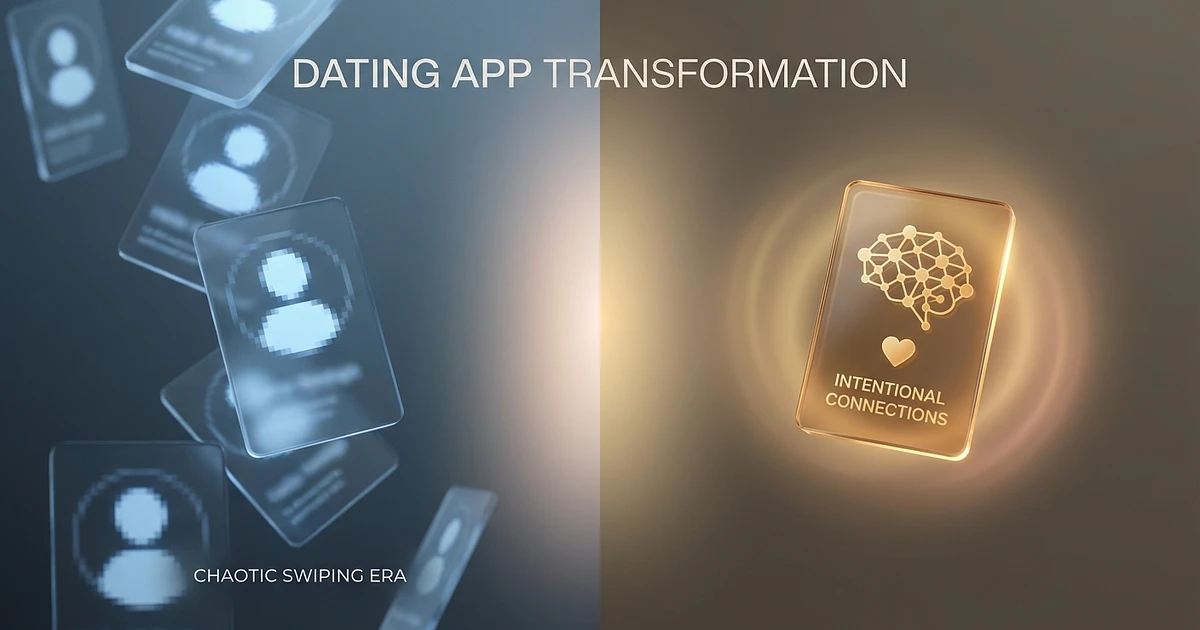
Tinder has a problem. And finally, the company is admitting it. While 53% of singles report Dating App Burnout and monthly active users dropped 9%, the app is pulling the emergency brake: The Tinder Update 2026 introduces Chemistry - a new feature powered by Tinder AI that aims to eliminate endless swiping and combat Swipe Fatigue.
Match CEO Spencer Rascoff confirmed during the Q4 earnings call: users will receive just "one or two drops" instead of scrolling through endless profiles.
What Is Tinder's New Feature Chemistry?
The Tinder AI behind Chemistry completely flips traditional matching. No more swiping through hundreds of faces. Instead, you answer questions. The new feature learns what you actually like. (And if you're brave: You can also grant the Tinder app access to your camera roll. Then the Tinder AI analyzes your photos to better understand your interests.)
The promise: no more 50 matches that disappear into the void. Instead, the app delivers a few handpicked suggestions - Tinder calls them "drops," as if profiles were limited sneaker releases. Will it work? Questionable. But at least it sounds like a plan.
Why the Tinder Update 2026? The Dating App Burnout Crisis
The numbers don't lie. Match.com investigated this themselves - together with the Kinsey Institute. Result: more than half of all singles are regularly burned out from dating. A Forbes Health survey goes further: 79% of all dating app users feel exhausted.
You can see this in forums too. Reddit is full of posts like "I have 200 matches and never message anyone" or "Swiping feels like work." Swipe Fatigue is real, and it leads to situationships instead of real relationships, because users never have to commit.
Tinder itself is bleeding users. The numbers aren't kind to Tinder either. Q4 2026: 9% fewer monthly active users. The Tinder Update 2026 with Chemistry is meant to combat exactly this Swipe Fatigue and win back users. Paying subscribers? Down for nine consecutive quarters. That's more than two years of decline.
Dating App Burnout also shows in rising ghosting rates - users are emotionally exhausted from shallow matches.
Privacy: What Does the Tinder AI Know?
And then there's the privacy issue. Tinder's AI wants access to your camera roll - vacation photos, screenshots, memes, everything. You have to consent, of course. But Gizmodo asks the right questions: What psychological costs are we paying?
Researchers from the Ethical Dating Online Network even warn of an "intimate authenticity crisis." The question is fair: If an AI decides who you see - who is actually dating whom?
The Competition Moved Faster
While Tinder is only now testing Chemistry, others started long ago. Hinge's Prompt Feedback has been running since January 2025. Their AI coaches users on profile text. According to Hinge, prompts lead to 47% more dates than photo likes. Bumble is also experimenting with AI-generated icebreaker messages.
What makes the Tinder Update 2026 with Chemistry different: The Tinder AI doesn't just replace individual features. It replaces the entire matching process. Unlike Hinge or Bumble, the new feature isn't an add-on - it's the core of the dating experience. That's either bold or desperate, depending on how you see it.
When Is Chemistry Coming to Other Markets?
Currently, testing is limited to Australia. When will other markets follow? No official announcement. But key markets matter: in Germany alone, 55% of dating app users have tried Tinder at some point.
Meanwhile, Tinder is rolling out Face Check. The selfie verification feature launched in the US in October 2025. Combined with Chemistry, this signals a clear strategy: less quantity, more quality and trust.
What Does This Mean for You?
Dating apps like Tinder are in crisis mode, that's clear. Too many profiles, too few real connections, too much Swipe Fatigue. The Tinder Update 2026 with Chemistry is an attempt to solve Dating App Burnout with even more technology. Will it work? Maybe. Does the Tinder AI really know better than you who you like? Rather doubtful.
The alternative, of course, would be not to throw more AI at the problem but to build differently from the start. Even with casual dating, quality beats quantity - one real match beats a hundred shallow ones. SparkChambers focuses on deeper connections instead of volume. Sometimes the best technology is the kind that doesn't replace you but gives you time for real people.