
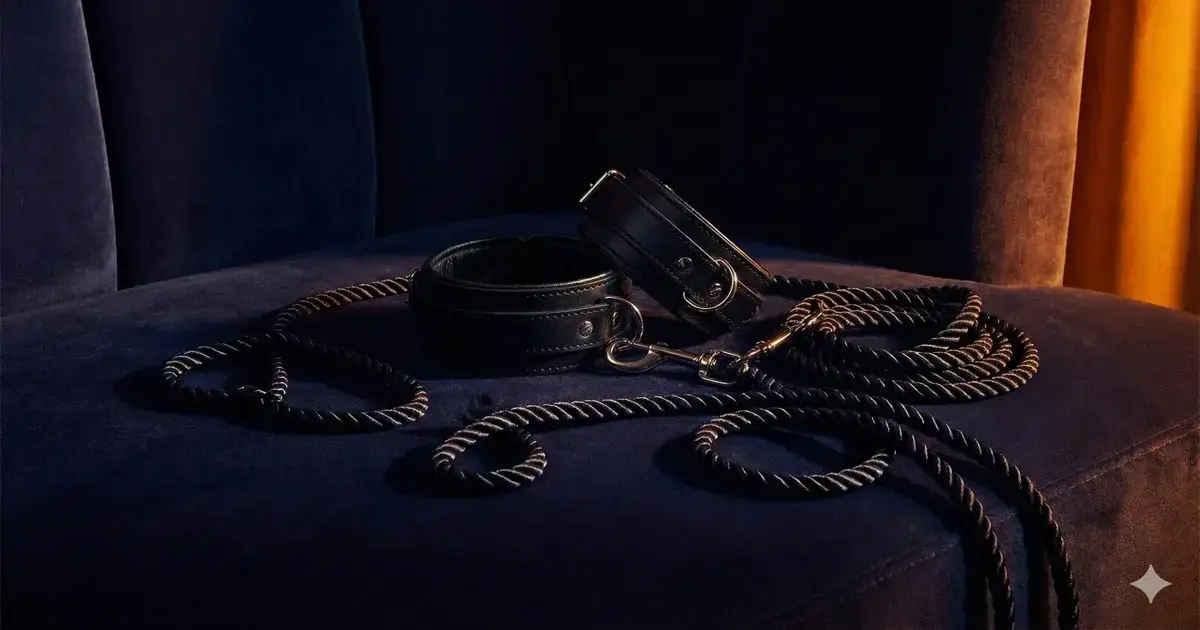
What Is It?
Rope bondage is a specialized form of restraint that uses rope as the primary medium for tying a partner. Unlike general bondage which can involve any restraint method, rope bondage emphasizes deliberate technique, aesthetic patterns, and the meditative quality of the tying process itself. The rope becomes more than a tool. It becomes a channel of communication between partners.
The practice draws heavily from Japanese traditions. Shibari (decorative tying) and Kinbaku (erotic tight binding) emerged from martial arts restraint techniques and evolved into an art form. Today, Western practitioners blend these traditions with their own innovations. The result is a diverse practice ranging from functional restraint to elaborate body art.
What makes rope bondage distinctive is its intentional slowness. Every wrap, every knot, every tug of tension carries meaning. The person being tied (often called the rope bottom or rope bunny) feels each pass of rope across skin. The person tying (the rigger) maintains constant awareness of their partner's body and responses. This mutual attention creates an intimate dance that many describe as meditative for both participants.
Explore related products: Bondageseil „Deluxe Silky Rope“, 10 Meter, in seidiger Glanzoptik, Bondageseil aus Baumwolle, Ø 0,7 cm.
Bondageseil „Deluxe Silky Rope“, 10 Meter, in seidiger Glanzoptik
View at ORIONAffiliate link. Buying through it earns us a commission; the price stays the same for you.
Bondageseil aus Baumwolle, Ø 0,7 cm
View at ORIONAffiliate link. Buying through it earns us a commission; the price stays the same for you.
Why People Enjoy It
The deliberate ritual of being wrapped
Unlike quick restraints, rope bondage unfolds gradually. The bound partner experiences each wrap as it happens. This slow progression builds anticipation and creates space for deep relaxation or heightened arousal.
Connection through the rope itself
Experienced practitioners describe the rope as an extension of touch. Every adjustment communicates. A gentle tug says "I'm here." Tightening a harness says "I've got you." The rope becomes a continuous physical conversation.
Temporary body art
Rope patterns create visual symmetry and beauty on the body. Many enjoy the aesthetic transformation. The marks left behind after untying serve as temporary reminders of the experience, sometimes photographed as art themselves.
Meditative focus for both partners
The rigger must concentrate completely on the task. The rope bottom has nothing to do but receive. Both partners report mental clarity, stress reduction, and present-moment awareness similar to meditation practice. Those drawn to this mindful quality often also explore tantra, which shares the emphasis on presence and intentional connection.
The Spectrum
| Level | Stage | What it involves |
|---|---|---|
| Light | Light | Simple wrist or ankle bindings using soft rope. The focus stays on the sensation of being held rather than elaborate patterns. Quick to tie, minimal risk. A good entry point for curious beginners exploring beyond handcuffs or fabric restraints. |
| Moderate | Moderate | Single and double column ties, basic chest harnesses, hip harnesses. Requires learning foundational knots and safety principles. Sessions last longer as patterns become more involved. The bound partner remains on the ground or bed. May combine with blindfolds for heightened sensation. |
| Intense | Intense | Full body harnesses, decorative patterns, partial suspension (body still supported by furniture or floor). Demands significant skill, quality rope, and thorough safety knowledge. Sessions can last hours. Both partners should understand nerve pathways and circulation monitoring. |
| Advanced | Advanced | Full suspension where the rope bottom hangs entirely from rope attached to hard points. Requires professional-level training, specialized equipment, and extensive experience. Physical forces multiply dramatically. Even small errors can cause serious injury. Not recommended without in-person instruction from experienced riggers. |
Getting Started
Invest in proper rope
Hardware store rope can burn skin and doesn't handle well. Quality bondage rope is specifically treated for safe use on skin. Natural fiber ropes like jute and hemp grip the body, breathe, and develop character with use. Cotton is softer but slippery. Start with 6-8mm diameter rope in 8-meter lengths. Buy from vendors who supply the bondage community specifically.
Learn foundational ties first
Master the single column tie before anything else. This one knot forms the basis of nearly every rope bondage pattern. Then learn the double column tie. With just these two ties, you can create countless restraint scenarios safely. Resources exist online, but in-person workshops offer crucial hands-on correction.
Practice on yourself and inanimate objects
Learn knots on your own ankle or a pillow before tying a partner. This builds muscle memory without pressure. You'll understand how tension feels and how patterns lay before someone else's comfort depends on your skill.
Keep safety shears within arm's reach
Every rope bondage scene needs EMT shears or trauma scissors nearby. Not across the room. Not in a drawer. Right there. If something goes wrong, you need to cut rope immediately. Never tie someone without this tool present.
Start floor work only
Suspension looks dramatic but carries exponentially higher risk. Spend months or years developing ground-based skills before considering any elevation. Even partial suspension (one limb lifted, body still grounded) requires intermediate knowledge.
Safety & Communication
Nerve safety is paramount
The radial nerve running down the outer arm is particularly vulnerable. Rope across the inner wrist, elbow pit, or armpit can compress nerves within minutes. Numbness, tingling, or weakness signals immediate problems. Check constantly by asking your partner to squeeze your fingers and report sensation.
Monitor circulation continuously
Fingers and toes should stay warm and return to normal color quickly when pressed. Cold extremities, persistent white or blue coloring, or numbness means something is wrong. Address immediately by loosening or removing rope.
Never leave a tied person alone
Physical emergencies, panic attacks, or position changes can all require immediate response. Someone must remain present and attentive throughout any rope bondage scene. This applies whether the binding takes five minutes or five hours.
Communicate before, during, and after
Discuss health conditions, injuries, and concerns before starting. Check in regularly during tying. Process the experience together afterward. This communication should feel natural, not clinical. It's part of the intimacy. Learn more in our safety guidelines.
The tied person holds authority
Safe words work the same as any BDSM practice. "Red" means stop and remove rope immediately. The rope bottom's judgment about their body overrides the rigger's assessment. If they say something feels wrong, believe them. Working with verified partners who understand consent creates safer exploration.