

What Is It?
Sensory deprivation is the deliberate restriction of one or more senses during intimate play. At its simplest, that's a silk blindfold during foreplay. At its most intense, it's removing sight, hearing, touch, and movement simultaneously while your partner controls every sensation you experience.
Here's what happens in your brain when you remove a sense: your neural pathways start working overtime to compensate. Block someone's vision, and their sense of touch becomes dramatically more sensitive. Research on sensory processing and neuroplasticity found that even short sensory restriction sessions create measurable changes in consciousness, similar to meditative states. Your brain releases dopamine in response to the novelty, which is why that unexpected touch or whisper feels electric.
The practice exists on a spectrum. You don't need to jump into full BDSM gear to try it. A simple sleep mask during a massage counts. So does putting in earplugs while your partner surprises you with different textures. The key is that you're intentionally limiting input to heighten what remains.
Explore related products: Augenmaske „Satin Blindfold“, zum Binden.
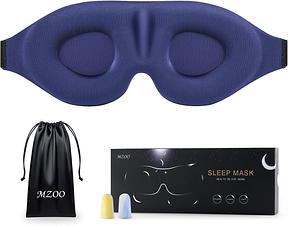
Not available in your region — closest match
View at Amazon (as of Aug 15)Affiliate link. Buying through it earns us a commission; the price stays the same for you.
Why People Enjoy It
Heightened vulnerability creates deeper trust.
When you can't see what's coming, you're forced to let go of control. For many people, that surrender is profoundly intimate. It's not about power for its own sake, it's about choosing to be vulnerable with someone you trust.
Your brain becomes your biggest sex organ.
Without visual input, your imagination fills in the gaps. This is the psychological foundation of sensory deprivation, where the anticipation between touches can be as intense as the touch itself. Research on dopamine and anticipation shows that dopamine spikes highest during anticipation, not the reward itself.
It breaks you out of routine.
Sex can become predictable. Sensory deprivation forces both partners to pay attention differently. The person giving attention has to read subtle cues. The person receiving can't predict or control what's next.
Some people find it meditative.
The altered consciousness state that researchers documented in float tank studies? It's related to what happens during erotic sensory play. You get out of your head, into your body.
The Spectrum
| Level | Stage | What it involves |
|---|---|---|
| bdsm sensory deprivation | BDSM sensory deprivation | exists on a clear progression from beginner to advanced. Start at Level 1 and only advance when you've mastered each stage. |
| level 1: entry point | Level 1: Entry Point | A soft blindfold during otherwise vanilla intimacy. That's it. Start with 10-15 minutes. The goal isn't pushing intensity, it's getting comfortable with not seeing. Most people can try this tonight with a scarf they already own. |
| level 2: building trust | Level 2: Building Trust | Once you're comfortable being blindfolded, extend the sessions to 30+ minutes and formalize your communication. This is when you establish the "color system" most people use: green (great), yellow (slow down), red (stop immediately). Boring? Maybe. But you'll need these patterns later when things get more intense. |
| level 3: adding senses | Level 3: Adding Senses | Now you're ready to stack restrictions. Blindfold plus earplugs (or noise-canceling headphones if you want to get fancy). You can't see what's coming, can't hear footsteps or breathing to predict it. This is where sensory play shifts from "spicy vanilla" to true sensory deprivation. Don't rush past this level. Spend multiple sessions here before even thinking about Level 4. |
| level 4: movement restriction | Level 4: Movement Restriction | Add light bondage restraints while senses are restricted. This requires trust that's been built over time. You also need to master non-verbal safety signals since communication becomes harder. Never skip to this level. |
| level 5: advanced practice | Level 5: Advanced Practice | Multiple senses restricted with extended duration. This requires significant experience, detailed pre-negotiation, and comprehensive aftercare plans. Only for people who've spent months building up to it. |
Getting Started
Start smaller than you think you need to.
I've talked to people who went straight from nothing to full sensory restriction because it seemed exciting. They panicked. Every. Single. One. One person lasted ninety seconds before safe-wording out of what was supposed to be a thirty-minute session. Start with just a blindfold for ten minutes. Master that before adding anything.
Invest in a quality blindfold.
Sleep masks work, but they often let in light at the edges. A proper blindfold designed for blindfold sex and extended sensory play blocks light completely and stays comfortable for extended wear. It's worth the $20-40.
Establish your communication system before you start.
Agree on a safe word that means "stop completely." Also agree on check-in signals. "Color system" is standard: green/yellow/red. If you're planning to restrict hearing, establish a physical signal too, like three quick hand squeezes.
Talk about what you both want.
Are you looking for gentle sensuality or something more intense? Does the blindfolded person want to be surprised, or do they want a running narration? Figure this out beforehand.
The giver's job is to pay attention during sensory deprivation.
When someone can't see or hear, they can't easily tell you something's wrong. Watch their breathing, muscle tension, and body language constantly. If something seems off, check in verbally.