Cross Dressing: Clothing, Kink and Gender Expression
 13 min read
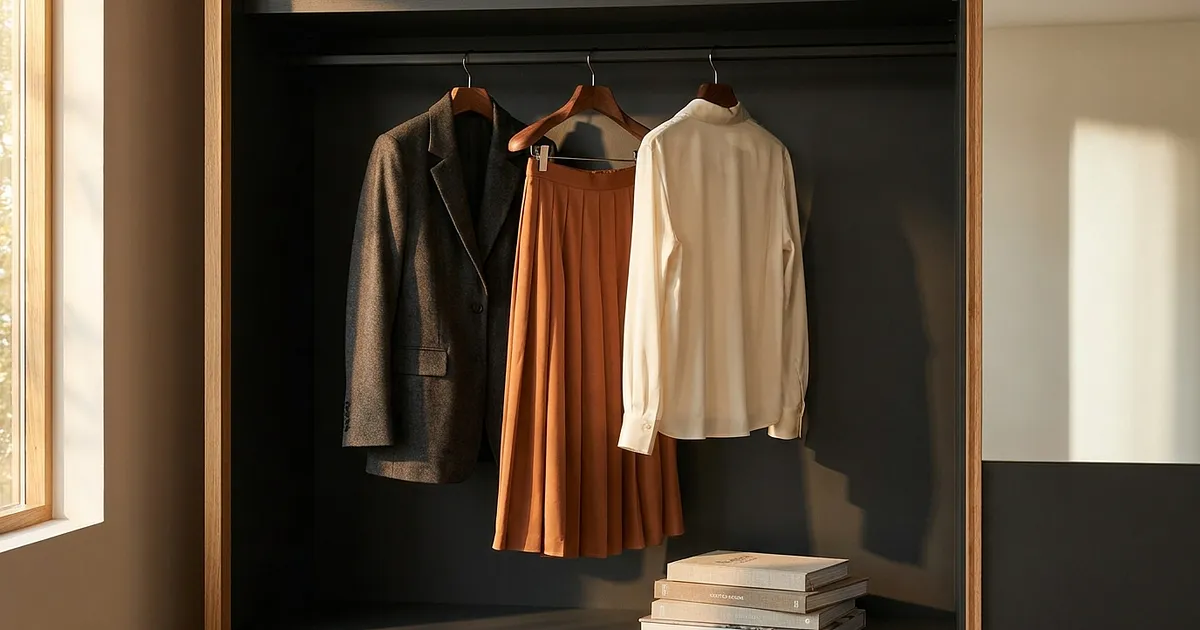
A skirt can be everyday clothing, part of a stage persona, a private experiment or one detail in a consensual scene. Cross dressing describes what someone wears, but the outfit alone cannot tell you their gender identity, orientation, diagnosis or reason for choosing it. The same visible act can carry very different meanings.
That distinction sounds simple. In practice, it gets lost surprisingly fast. A stranger sees heels, a suit or makeup and supplies a whole backstory. A partner hears “I want to try this” and worries that it must reveal a hidden identity. Neither response leaves much room for the person actually wearing the clothes.
This guide treats cross-dressing as an action rather than an answer key. It also explains where kink can fit without making every outfit sexual. All examples involving partners are hypothetical and concern consenting adults.
What does cross dressing mean?
Clothing doesn't have a permanent gender. Colours, cuts, fabrics and hairstyles move between gender categories across places and generations. So any useful definition needs cultural context: cross-dressing is the act of wearing clothes or adopting presentation cues that a person's culture codes as belonging to another gender.
The definition describes an act. It doesn't settle why someone does it.
The PFLAG National Glossary explains gender expression as outward communication through clothing, appearance and mannerisms. It also separates expression from gender identity and from sexual or romantic orientation. The American Psychiatric Association draws the same basic lines: gender identity is an internal sense of self, while gender expression is outward presentation.
That means a dress may tell you that someone chose a dress. Full stop. It doesn't tell you whether the wearer is cisgender, transgender or nonbinary. It doesn't tell you whom they find attractive. And it certainly doesn't grant an observer permission to assign a label.
Trans women deserve particular clarity here. A trans woman wearing ordinary women's clothing is wearing clothing that matches her gender. Calling that cross-dressing can deny her identity rather than describe her outfit. The same care applies to any trans or nonbinary person. Ask which language they use; don't impose a category from the outside.
Women can cross-dress too, as can nonbinary people. Yet the label often gets applied unevenly because many cultures give women more freedom to wear trousers, shirts or traditionally masculine cuts without comment. That asymmetry is a social convention, not proof that only men cross-dress.
Is the term outdated?
“Cross-dressing” remains useful for many people, especially as a name for a specific activity or part of their self-description. Others find it too binary, dated or simply irrelevant to how they understand their clothes. “Gender nonconforming,” “gender expression,” “femme presentation,” “masc presentation,” or no label at all may fit better.
There isn't one polite substitute that works for everybody. Stonewall's terminology guidance recommends avoiding assumptions based on appearance and respecting the terms people choose for themselves. A good question is, “What word feels right to you?” A poor one is, “What are you really?”
“Transvestite” is generally considered outdated or offensive in contemporary English. Leave it to historical discussion or to the rare person who deliberately claims it for themselves.
One outfit, several possible meanings
A satin blouse doesn't arrive with a motive sewn into the label. Someone may like its texture. Another person may feel more at ease when their reflection looks softer. A performer may need it for a character. Two partners might give the same blouse an erotic meaning in a private scene.
Those possibilities can overlap. They don't form a ladder, and one isn't more “real” than another.
| Concept | What it describes | What it does not automatically reveal |
|---|---|---|
| Cross-dressing | Wearing clothes culturally associated with another gender | Identity, orientation, diagnosis or erotic intent |
| Gender expression | Outward presentation through clothing, appearance, voice or behaviour | A fixed identity or whom someone is attracted to |
| Drag | Theatrical gender performance with its own artistic and community traditions | The performer's offstage identity |
| Roleplay | A scenario or character agreed by the participants | Who either person is outside that scene |
| Clothing kink or fetish | Erotic meaning attached to a garment, material, act of wearing or scenario | That all cross-dressing is erotic |
| Gender identity | A person's internal sense of gender | Something an observer can determine from clothing |
These contexts can overlap. Someone might cross-dress privately for comfort, perform in drag on weekends and use different clothing in roleplay with a partner without those experiences meaning the same thing. Sometimes the person won't have a neat explanation, and that's fine too.
Cross dressing vs drag
Drag is performance, not a catchall word for clothing that crosses gender expectations. A drag artist usually creates a stage persona and may use costume, makeup, movement, comedy, dance or lip sync. Cross-dressing may happen entirely at home, with no audience and no performance.
The distinction also has history behind it. National Geographic's account of modern drag traces traditions involving theatre, underground balls and Black and Latino performers. Flattening drag into “someone wearing another gender's clothes” erases the art form and the communities that shaped it.
Costume is another neighbouring idea, but it isn't a synonym either. Wearing a character's clothes for a party can be simple dress up. It may become gender play or kink if that is how the wearer experiences it, yet the costume doesn't decide. Our guide to Kinktober costumes and consent goes further into seasonal costume play; this article stays with clothing, meaning and identity.
Why do people cross-dress?
There is no universal cause. Honestly, that search for one hidden trigger creates more confusion than it solves. It assumes every person is doing the same psychological thing when the common feature may be no more than a choice of clothes.
Possible meanings include comfort, visual style, sensory pleasure or curiosity. Clothing can help someone test a side of their presentation without deciding where it leads. It can make an internal sense of gender visible, create distance from a rigid social role, support a performance or help establish a fictional character. For some adults it carries erotic charge. For others it never does.
Even that list is only a map, not a questionnaire that produces a label.
A hypothetical example makes the problem clearer. Alex wears a skirt alone on quiet evenings because the fabric and silhouette feel comfortable. Sam wears a similar skirt onstage as part of a drag persona. In a separate hypothetical relationship, Robin and Jules agree that the skirt will signal a role during a private scene. The garment looks similar. The meanings aren't interchangeable.
A person may also change their understanding over time. Private experimentation can remain exactly that, or it may help someone find words for their gender. Enjoying cross-dressing doesn't prove a later transition, and the possibility of later insight doesn't make earlier exploration false. People are allowed to be uncertain.
Clothing is not a diagnosis
Cross-dressing by itself isn't a psychiatric disorder. The MSD Manual Professional reference says so directly and notes that people cross-dress for varied reasons, including reasons unrelated to sexual arousal. Its clinical page discusses a much narrower situation involving a particular arousal pattern together with significant distress or impairment. That isn't a description of everyone who cross-dresses.
The World Health Organization's ICD guidance also says that gender-variant behaviour and preferences alone aren't a basis for diagnosing gender incongruence. Clothes don't function as a diagnostic test.
This point is worth making once, then leaving clinical language alone. Curiosity isn't an illness. Neither is nonconformity. If someone is distressed, they deserve support centred on the actual distress, not an automatic attempt to remove a harmless form of expression. This guide doesn't diagnose or recommend treatment.
When clothing is part of kink or roleplay
Cross-dressing becomes part of kink when the adults involved give it erotic meaning or build it into a negotiated power exchange, fantasy or role. The clothes might affect mood, sensation or symbolism. They might mark the start of a character. Or they might be aesthetically exciting without defining a larger identity.
Kink is optional here.
The cleanest way to avoid assumptions is to negotiate the specifics. Consent to wear an item isn't blanket consent to a sexual activity, a humiliating label, public exposure, photography or sharing. The National Sexual Violence Resource Center describes consent as permission for something specific. Silence or uncertainty doesn't replace a clear agreement.
Consider a hypothetical conversation between two partners:
“I'd like to wear this outfit during a private roleplay. I want you to use the character name Mara, but I don't want jokes about my body or my identity. No photos. If I say ‘pause,’ we step out of the role and check in.”
“Got it. Is the outfit part of the role only, or would you like me to compliment it as you? And should it stay private after tonight?”
That exchange doesn't require either person to solve what the clothing “ultimately means.” It covers the information needed for the agreed scene. Names, pronouns and labels used during roleplay deserve explicit discussion because playful language for one person can feel invalidating to another.
A useful clothing based negotiation might cover:
the garment and who chooses it
what role, if any, it signals
welcome names, pronouns and compliments
words or themes that are off limits
Then stop and talk about privacy separately. Who may know? Can the outfit be worn outside the home? Are photos completely forbidden, stored privately or allowed only after another check in? Disclosure to one partner isn't permission to tell a friend.
For a broader scene structure, the BDSM roleplay negotiation guide covers characters, boundaries and coming out of role. The safewords and communication guide offers practical ways to pause or stop when ordinary dialogue is part of the fiction.
Don't turn a person into the costume
Clothing can be erotic without making the wearer available for objectification. That line matters most when a real gender identity gets treated as a prop. A 2021 qualitative study of 142 transgender and nonbinary volunteers found varied accounts, including consensual kink, but most participants described fetishization as negative sexual objectification. This was one volunteer sample, not a study of all trans or nonbinary people and not a measure of cross-dressing prevalence. The practical warning is narrower: ask what someone wants rather than treating their presentation as an invitation.
This is where language such as “feminization” needs care. Some adults choose it enthusiastically for a scene. Others hear it as a claim that femininity is humiliating, or as a denial of who they are. The label isn't neutral just because it appears in kink vocabulary. Let the participant define the fantasy and reject any script that depends on unwanted shame.
Talking with a partner without shame or detective work
A disclosure about clothing can feel vulnerable. The first response doesn't need to be perfectly informed; it needs to leave room for the person to speak. “Thanks for trusting me” is usually more useful than a rapid series of questions about identity, orientation or transition.
Curiosity works better when it starts with meaning:
“What do you enjoy about these clothes?”
“Is this everyday expression, private exploration, roleplay, erotic, or some mix?”
“Which words feel good, and which should I avoid?”
“Who else knows, and what needs to stay private?”
“Are you asking me to listen, participate or help with something?”
Five questions can still feel like an interview if fired off at once. Pick the one that fits the moment and listen to the answer. There may not be a finished answer yet.
A partner also gets to name their own feelings. Surprise, uncertainty or lack of interest doesn't equal rejection. The line sits between an honest boundary and shaming someone for the clothes. “I need time to understand what participation would mean for me” leaves space for both people. “This proves you've lied about who you are” claims knowledge the outfit cannot provide.
If clothing will enter a shared scene, specific, enthusiastic agreement matters. Our guide to enthusiastic consent in kink explains why a broad yes isn't enough when the activity, audience or emotional meaning changes.
Privacy needs the same respect outside a scene. Don't borrow, discard, expose or photograph someone's clothing without permission. Don't surprise them by presenting it in front of another person. A garment may look ordinary to you while carrying a lot of personal risk for its owner.
And if you are the one exploring? Starting small is legitimate. Clothes already in your wardrobe, a private fitting or a conversation about one item may tell you more than buying a whole persona. There is no examination at the end and no deadline for choosing a label.
If a conversation with a partner feels possible, begin with one garment, one question and the privacy boundary that matters most. You don't need to settle identity, kink or a permanent label before you can talk honestly about what you want now.
Frequently Asked Questions
Is cross-dressing always sexual or a kink?
No. Cross-dressing may be about comfort, aesthetics, gender expression, curiosity, performance or private exploration. For some consenting adults it is erotic or part of roleplay. The wearer and context determine that meaning; an observer cannot infer it from the clothes.
Does cross-dressing mean someone is transgender?
No. Clothing and presentation don't prove gender identity. A cisgender person may cross-dress, while a transgender person wearing clothes that match their gender may not consider that cross-dressing at all. Use the person's own description rather than assigning one.
Is cross-dressing a mental disorder?
No. Cross-dressing itself isn't a psychiatric disorder. Clinical references distinguish the act from a much narrower condition involving a particular arousal pattern together with significant distress or impairment. Clothing alone isn't a diagnosis, and this article doesn't offer diagnostic advice.
What is the difference between cross-dressing and drag?
Cross-dressing describes an act of wearing clothes associated with another gender. Drag is a theatrical art and community tradition, usually involving a stage persona and performance. A person may do both, either one or neither; neither term reveals their offstage identity.
Is “cross-dresser” still an appropriate term?
It can be, when someone uses it for themselves. Others find it dated, too binary or simply inaccurate. Ask which words the person prefers. Avoid “transvestite” for contemporary people unless an individual explicitly claims that term.
How common is cross-dressing?
There isn't a reliable current percentage covering all genders, cultures and reasons for cross-dressing. Definitions vary, and private behaviour is hard to measure. Frequently repeated figures often concern a narrower erotic subgroup, so presenting them as prevalence for all cross-dressing would mislead.
Sources
- PFLAG National Glossary pflag.org
- American Psychiatric Association psychiatry.org
- Stonewall's terminology guidance stonewall.org.uk
- National Geographic's account of modern drag nationalgeographic.com
- MSD Manual Professional reference msdmanuals.com
- World Health Organization's ICD guidance who.int
- National Sexual Violence Resource Center nsvrc.org
- 2021 qualitative study of 142 transgender and nonbinary volunteers link.springer.com