Brat Play Explained: What Brats and Brat Tamers Actually Do
 15 min read

Brat play looks like chaos from the outside. One partner talks back, "forgets" the rule, drags their feet on purpose and grins about it. The other partner doesn't get angry. They get interested. That's the whole trick of a brat dynamic: the defiance is real enough to be fun and staged enough to be safe, because both people agreed to it long before anyone rolled their eyes.
Quick note, since search results get muddled: this guide is about the brat kink as a D/s dynamic, not the Charli XCX album Brat released on 7 June 2024 or the "brat summer" meme that followed. It's written for adults (18+), it's educational, and it isn't medical, legal or therapeutic advice.
What is brat play, and how does it work?
The Glossary of BDSM on Wikipedia describes a brat as a sub who behaves disobediently, mischievously or uncontrollably, often to provoke a response, with both parties consenting. That last clause is the point. Without consent, it's just a difficult person.
For the short dictionary version of the dominant side, there's an encyclopedia entry on brat taming. This guide picks up where a definition stops: what the two roles do, and how couples keep the game from sliding into a real fight.
Most brat play follows a loose arc. Autostraddle's explainer from 17 September 2025 calls brat dynamics "the consensual and playful violation of a rules-based order" and sketches them in three acts. Rules come first (some of them built to be easy to break). Then the disobedience: teasing, small pranks, "forgotten" instructions, malicious compliance. Order returns with an agreed consequence, and reflection and aftercare close it out. The same piece cautions that bratting at a partner who never signed up for it can, at worst, feel like a boundary violation.
Why do people enjoy a brat dynamic?
Shanna K. Kattari, PhD, an associate professor at the University of Michigan, describes the appeal to Pride (20 March 2025) as the "thrill of the chase": the brat's enjoyment comes from being made to comply after a playful struggle, not from simply obeying. Attention is a big part of it too, probably bigger than the consequences themselves.
Kattari also says something people skip past: not everyone enjoys bratting, and that's fine. A submissive who hates the idea isn't "less fun." They just like a different flavour of power exchange.
What does a brat tamer actually do?
The job is mostly restraint, which is harder than it sounds.
In a brat dynamic, the brat tamer is the dominant or top who enjoys a brat's resistance and answers it with structure. Licensed marriage and family therapist Kira Hayes, speaking to Pride, puts the core mindset well: the tamer shouldn't take the behaviour personally, because it's "an invitation to engage." A tamer who gets genuinely offended has already lost the game.
In practice, that skill set looks like this:
Staying calm. A raised voice usually reads as losing, and the brat knows it.
Consistency, so the brat learns which lines exist and that crossing one has a predictable, agreed result.
Curiosity about why the brat is pushing today. Bored? Craving attention? Testing whether you're watching? Just in a mood?
Planning ahead. Kattari notes that tamers can think their orders through to close loopholes before the brat finds them. Loose rules are an open invitation... which can be half the fun if you both enjoy the hunt.
Patience with the consequence. A Feeld guide for dominants (15 April 2025) warns that anger backfires: once the tamer reacts outside the agreed boundaries, nobody is enjoying themselves any more. A good tamer, it says, knows the difference between playful defiance and a genuine challenge.
Tone does a lot of work in brat play. In Feeld's sample banter the brat taunts, "Is that all you've got?" and the tamer replies with a cool warning that the brat might find out how much more there is. Calm and a little amused, never rattled.
Brat enabler, brat wrangler, brat breaker: are those real roles?
You'll see "brat enabler," "brat wrangler" and "brat breaker" all over search suggestions. No credible source defines them, and there's no agreed standard. Treat them as informal community labels that mean different things to different people, and ask a partner who uses one what they mean.
Brat vs submissive: what's the real difference?
This is where a lot of confusion lives, so here is brat vs submissive in one line: "brat" describes a play style, "submissive" describes a D/s role. They overlap a lot, but they aren't the same thing, and neither is the same as a partner who's genuinely unhappy.
Sex educator Lola Jean, interviewed by Feeld (14 July 2025), describes a brat as someone who likes to be defiant or cause chaos as a means of self-expression, and says being a brat doesn't automatically mean being submissive. The Wikipedia glossary, on the other hand, frames the brat as a sub. Both views exist in the community. You don't need to settle it; you need to know which one your partner means.
| Brat | Service-minded submissive | Genuinely unhappy partner | |
|---|---|---|---|
| What they want | To be made to comply, after a playful struggle | To please through obedience or service | For something to actually change |
| How "no" works | Can be part of an agreed script | Usually means no | Means no. Full stop. |
| The tamer's job | Respond with calm, negotiated structure | Give clear direction and appreciation | Stop playing and talk, out of role |
| What goes wrong | Consequences that weren't agreed | Taking compliance for granted | Treating real distress as "bratting" |
That right-hand column is the one that matters most. In brat play, a brat's submission (when they are a sub) shows up through challenge. Someone who is quietly hurt, tired or angry isn't bratting, even if the behaviour looks similar on the surface.
How do you tell playful defiance from a real boundary?
Honestly? You can't always tell by looking. No authoritative framework exists for reading the difference, and a list of "tells" would be guesswork dressed up as fact. What couples rely on instead is enthusiastic consent given in advance, plus the habit of stepping out of the game to ask.
A few signals tend to separate play from a real problem, though none of them is foolproof:
Tone shifts. Play usually has a grin in it. A flat voice, tears or silence where there's normally banter deserves a pause.
The "out of character" check. Some couples agree on a phrase that means "I'm asking as me, not as the tamer." A quick "hey, real question, are we good?" costs nothing.
If the brat pushes on something you never negotiated, it probably isn't part of the game.
A teasing "no" paired with a tense jaw and turned-away shoulders is worth a second look.
If in doubt, pause and ask. A paused scene can restart in thirty seconds. A trust problem takes far longer to fix.
Consent violations do happen in kink communities. A 2020 review in Sexual Abuse covers them alongside safety precautions and argues that the BDSM community's explicit approach to consent could serve as a model for clinical and educational discussions of consent. Brat play leans on exactly that explicitness, because the whole genre plays with the appearance of refusal.
How do you negotiate brat play?
Negotiate before you play. That much is standard advice; the useful part is knowing what to put on the table. Here's a practical starting list, worked through out of scene, sober and with time to spare:
- Which behaviours are fair game. Backtalk? Ignoring an instruction? Hiding the remote? Taking the wrong chair? Be specific.
- What's off limits. Topics, insults or behaviours that stay out of the game entirely. Real insecurities are a common one.
- The consequences on the table. Feeld's advice is to agree beforehand which punishments and admonishments are allowed. Many couples keep these mild and non-physical at first, such as losing a small privilege, an extra chore, or being made to wait.
- Rewards, if you want them. Some brats like an agreed payoff for "giving in" gracefully.
- What "no" means mid-scene. This one deserves its own conversation (more on that below).
That's the core. A few extras save grief later: how intense the banter gets, how long a scene runs, and whether anything happens in public or around other people (usually not, without everyone's consent). Lola Jean suggests each person think, talk or journal about what brat play means to them before the first scene, which is sound advice for any new dynamic.
If you already use a written checklist for limits, add a brat section to it. Your list doesn't need to be pretty. It needs to exist.
What does "no" mean in brat play?
Here's the tricky bit. In most of life, "no" means stop. In a brat dynamic, a playful "no" or "make me" can be part of the script, which is why Lola Jean says partners have to rethink how they communicate.
So decide, explicitly, which words are in character and which aren't. A common setup: "no" and "make me" are play, a check-in word like "yellow" means slow down or talk, and "red" (or your chosen safeword) ends everything immediately. And if either of you would rather keep "no" meaning no, that's a perfectly good rule. Plenty of couples ban it from the script on purpose.
A rough illustration (adapt it, don't copy it):
Brat: "Make me." (play)
Tamer: "Phone in the drawer. Now." (play)
Brat: "Yellow. Can we slow down for a second?" (both drop the act and talk)
Either person: "Red." (everything stops)
Brat play isn't consensual non-consent, by the way. CNC is a separate, heavily pre-negotiated dynamic where people act as if consent has been waived, and this guide doesn't cover it.
Do you still need a safeword for brat play?
Yes. If anything, more than in a quieter dynamic.
The safeword (or an agreed signal) stays the only real stop. Not a sulky tone, not a guess. Not even "I mean it this time." The Glossary of BDSM defines a safeword as a mutually agreed word, phrase or gesture that signals reduced intensity, a break or an immediate stop, with "yellow" and "red" as common examples. For help choosing one, there's a guide to safewords and BDSM communication. When the safeword is used, the scene ends, and no consequence follows later for using it. Ever.
Some general BDSM research is useful here, with one caveat: none of it is about brat play specifically.
A 2024 study by Bryce Westlake in Archives of Sexual Behavior of self-identified practitioners found that years of experience predicted safeword use, and that people in submissive-related roles were more likely to use safewords than those in dominant-related roles. How accurate people thought porn's safety depictions were told nothing about their safeword habits, so screen scenes are a thin guide to real consent.
A 2025 survey of 202 BDSM practitioners in Archives of Sexual Behavior found that people generally endorse strict consent communication, but are more flexible about it in longer-term relationships than in short ones.
That second finding is worth sitting with. Long-term couples get comfortable, and comfortable can quietly turn into "we don't need to check in anymore." In a brat dynamic, where defiance is the whole texture of the game, that drift is risky.
If speaking might be hard during a scene, agree on a non-verbal signal too, like dropping an object or a double tap.
What does aftercare look like after brat play?
Brat play can run hot. There's friction, teasing, sometimes a consequence that stung a little emotionally. Hayes notes that bratting can feel vulnerable on both sides, which is easy to forget when one partner spent the evening playing the unbothered one.
Aftercare is the time after a scene to calm down and reconnect. For brat play specifically, it often helps to:
Drop the roles out loud. Something as simple as "okay, game over" marks the switch.
Reassurance matters. Feeld calls reassurance and affection after intense play "essential," and a brat who spent an hour being "difficult" may want to hear they're still adored.
The tamer needs a check-in too. Staying calm and strategic takes effort, and tops can feel low afterwards as well.
Water, a snack, something soft to curl up under, and maybe terrible TV.
A large, soft blanket gives both of you an easy reason to stay close and slow down. This sherpa fleece one is an easy pick:
Aisbo Kuscheldecke Sherpa-Fleece 150 x 200 cm, grau
Sometimes the low feeling arrives a day or two later. The encyclopedia entry on sub drop explains that pattern if it shows up.
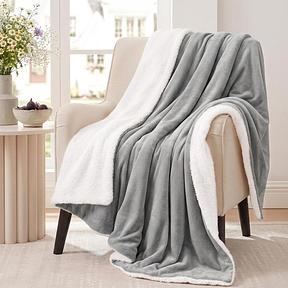
Aisbo Kuscheldecke Sherpa-Fleece 150 x 200 cm, grau
View at AmazonAffiliate link. Buying through it earns us a commission; the price stays the same for you.
The debrief: a short checklist for after the scene
A debrief is different from cuddles. It's the conversation, a few hours or a day later, about how the scene went. For a brat dynamic, a handful of questions does the job:
What part of the banter was the most fun?
Did any line or consequence land harder than expected?
Was there a moment either of you wasn't sure if it was still play?
Is there a word, topic or behaviour to retire?
That third question is the important one. A yes there just means the negotiation needs another pass.
Where should a first brat scene start?
Small. Smaller than you think.
Lola Jean's advice on Feeld is to start with small, contained scenes with a single goal, and it's hard to improve on. Pick one rule and one consequence, and keep the scene short. For example: the brat has to ask permission before sitting on the sofa, "forgets" twice, and the agreed consequence is waiting five minutes before they're allowed to sit. Silly? Absolutely, and that's fine. Silly is a great way to learn how you both react.
Light sensory control fits well at this stage, because it's low-stakes and easy to stop. A "no peeking" rule with a soft blindfold or eye mask is one optional way to try it: it gives the brat a rule that's easy to bend and the tamer something easy to notice.
Once a few small scenes feel easy, you can add a second rule, then a reward, then a longer arc. Going slowly also shows you whether this dynamic suits you both. It might not, and that's useful to learn.
If you're new to power exchange in general, the encyclopedia's overview of power exchange is a good primer to read before the first negotiation.
A note on the evidence
The sources behind this guide include no peer-reviewed study of brat play specifically, and there's no reliable figure for how many people practise it. The advice above draws on educator guidance (Pride, Feeld, Autostraddle) and on general research about consent in kink.
Wider research suggests kink interests aren't rare or a sign of something wrong. A 2017 Quebec survey of 1,040 adults in the Journal of Sex Research found nearly half reported interest in at least one less common sexual category, and about a third had tried one. A 2013 study in the Journal of Sexual Medicine compared 902 BDSM practitioners with 434 controls through online questionnaires and concluded that BDSM may be better understood as recreational leisure than as psychopathology. Neither study looked at bratting, so treat them as background, not proof.
If you only agree on one thing before the first scene, make it the word that stops everything. The rest can be renegotiated.
All products from this post
The ones we named above are marked; the rest are alternatives in the same category.
Affiliate notice: As an Amazon Associate, we earn from qualifying purchases. Product prices and availability are subject to change.
Frequently Asked Questions
What is brat play in BDSM?
Brat play is a consensual D/s dynamic where one partner, the brat, playfully resists, teases or breaks agreed rules, and the other, the brat tamer, responds with calm structure and pre-agreed consequences. The defiance is negotiated in advance, so it's a performance both people chose.
What is the difference between a brat and a submissive?
Submissive describes a role, brat describes a play style. Many brats are submissives who express their submission through challenge rather than obedience. Ask your partner which label they mean, because definitions differ.
What do brat tamers do?
A brat tamer stays calm, sets clear rules, anticipates loopholes and answers defiance with consequences the couple agreed on beforehand. They treat brattiness as an invitation to play, not a personal attack, and check in when the tone suggests something real is going on.
Do you need a safeword for brat play?
Yes. Because a playful "no" can be part of the script, a safeword or agreed signal is the only reliable way to stop. When it's used, the scene ends immediately and nothing is held against the person who used it.
Can you be a brat without being submissive?
Some educators say yes, describing bratting as an attitude or play style rather than a fixed category, while other definitions, such as the Wikipedia glossary's, frame the brat as a sub. There's no single right answer. What matters is that you and your partner agree what the label means for you.
Sources
- Charli XCX album *Brat* en.wikipedia.org
- Glossary of BDSM on Wikipedia en.wikipedia.org
- Autostraddle's explainer from 17 September 2025 autostraddle.com
- describes the appeal to Pride (20 March 2025) pride.com
- Feeld guide for dominants (15 April 2025) feeld.co
- interviewed by Feeld (14 July 2025) feeld.co
- 2020 review in *Sexual Abuse* pubmed.ncbi.nlm.nih.gov
- 2024 study by Bryce Westlake in *Archives of Sexual Behavior* scholarworks.sjsu.edu
- 2025 survey of 202 BDSM practitioners in *Archives of Sexual Behavior* doi.org
- 2017 Quebec survey of 1,040 adults in the *Journal of Sex Research* doi.org
- 2013 study in the *Journal of Sexual Medicine* academic.oup.com