How to Find a Kink-Friendly Therapist (and a Community That Fits)
 5 min read

Looking for a kink-friendly therapist usually starts with a smaller, uglier question: will this person think something is wrong with me? That worry is documented, not imagined. A 2021 study by Sprott and colleagues in The Journal of Sexual Medicine found that 49.6% of kink-identified participants had never told their mental health provider about their kink, and roughly 19% had delayed or skipped care because they expected stigma. If that hesitation sounds familiar, it helps to know why shame about sexual preferences is so normal: most of it has nothing to do with what's actually wrong with you.
1. Start with a directory built for this
Four worth opening in tabs:
NCSF's Kink Aware Professionals directory is the oldest of the four, and the one the clinical field still points to first.
Want telehealth, or a specific state? Psychology Today's kink-allied filter narrows by both.
Inclusive Therapists runs its own BDSM/Kink/Poly-Positive category.
Certified sex therapists get their own home at AASECT's referral directory.
2. A listing is not a screening
NCSF says so itself: inclusion in the KAP directory happens "without any verification or screening," which puts the real work on your first call.
Ask about their experience with kink-identified clients, and where that training came from. Can they say plainly where consensual kink ends and abuse begins? The quieter question, probably the more useful one, is what happens if your kink isn't the thing you came in about.
The red flag is a therapist who treats kink itself as the presenting problem. Not a fringe worry: the American Counseling Association's 2020 practice brief cites a 2013 survey in which 76% of mental health professionals had treated at least one kink-community client, while only 48% felt competent doing it.
3. What a kink munch is, and why start there
A munch is the low-stakes on-ramp: a casual public meetup where nothing sexual happens, usually in a restaurant. Conversation only. No play, no gear. The etiquette is thin. Dress like it's any other Tuesday, and let whoever runs it know you're new. Nobody expects you to know the vocabulary. If kink itself is still new territory beyond just the therapist search, our honest guide to getting started with BDSM is a good place to get oriented before your first munch.
The book people tend to hand newcomers first is Playing Well With Others: Your Field Guide to Discovering, Exploring and Navigating the Kink, Leather and BDSM Communities, a field guide to community etiquette and what munches are actually for.
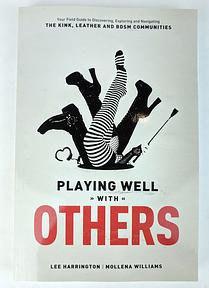
Affiliate link. Buying through it earns us a commission; the price stays the same for you.
4. Online spaces need the same treatment
FetLife, Discord servers, local subreddits, the occasional Telegram group. Good places to find people, zero built-in safety.
Community guidance here is boringly consistent. How established an account is tells you more than the profile text does. One friend should know where you're going and when you'll check back in. And anyone pushing hard to meet fast has already told you something. That same caution carries into the meetup itself: agreeing on clear safewords and a yes/no/maybe list matters as much as vetting the person did.
None of this is therapy, and none of it is advice about your care. It's a map of where the doors are. Honestly, the hardest part is usually the first email, not the vetting. There's more here on what mutual consent actually looks like in practice and what aftercare actually involves, plus negotiation and safewords, whenever you want it.
All products from this post
The ones we named above are marked; the rest are alternatives in the same category.
Affiliate notice: As an Amazon Associate, we earn from qualifying purchases. Product prices and availability are subject to change.
Frequently Asked Questions
What does "kink-friendly therapist" actually mean?
It means the provider has said they're knowledgeable about kink and BDSM and won't judge you for it. Kink-aware therapists go by several labels, and "kink-friendly," "kink-allied," "kink-positive" and "kink-affirming" all get used near-interchangeably. None of them is a certification, which is why the first call matters more than the label does.
Is being into kink a mental health problem?
No. The DSM-5 separates an unusual sexual interest from a disorder, and the disorder label requires distress, impairment, or someone who hasn't consented. Consensual kink between adults doesn't meet that bar on its own. A therapist who can't articulate that distinction is telling you something useful.
What is a munch?
A casual public meetup for people interested in kink, with nothing sexual happening, usually at a restaurant or café. Ordinary clothes, conversation, nothing else. It's the standard first step into local community precisely because nothing happens there.
Do I have to tell my therapist about my kink?
That's yours to decide, and plenty of people never do. Worth knowing that silence has a documented cost: people who expect stigma are more likely to delay or avoid care. Vetting a provider first is what makes the disclosure feel less like a gamble.
Sources
- The Journal of Sexual Medicine academic.oup.com
- NCSF's Kink Aware Professionals directory kapprofessionals.org
- Psychology Today's kink-allied filter psychologytoday.com
- Inclusive Therapists inclusivetherapists.com
- AASECT's referral directory aasect.org
- American Counseling Association's 2020 practice brief counseling.org
- Dress like it's any other Tuesday msmorganthorne.com
- How established an account is bdsm101.org