Kink and Chronic Illness: Adapting Play for Different Bodies and Abilities
 5 min read
Most kink advice quietly assumes a body that feels the same on Saturday as it did on Tuesday. If you're juggling kink and chronic illness, you know better. You're also far from alone: 1.3 billion people, 16% of the world's population, live with a significant disability, according to a 2023 World Health Organization fact sheet.
Your energy belongs in the negotiation
Spoon theory, Christine Miserandino's metaphor for a limited daily supply of energy, already gives a lot of chronically ill people the vocabulary. What most advice skips, I think, is saying that number out loud during negotiation instead of managing it privately. Something like: "I'm at maybe a 5 today. Can we keep it low-effort and pause halfway?"
Disability theorist Alison Kafer's idea of crip time fits here: it "bends the clock to meet disabled bodies and minds." The scene follows today's capacity, not last week's plan.
Quietly pushing through tends to backfire. Grace Duncan, who lives with Hashimoto's disease, told Vice that overriding her fatigue left her "more stressed because I couldn't do what I wanted so badly to do."
Kink and Chronic Illness: Adapting Play, Not Giving It Up
Most kink and chronic illness advice stops at "listen to your body." Here's what that looks like activity by activity.
Restraint when grip or joints are unreliable
With shaky grip or sore joints, release speed matters more than looks. Knots and buckles are slow to undo. Soft click-closure cuffs such as the Soft Bondage Hand Cuffs with Click Closure (Black) are one faster option, and shorter restraint times help as well.
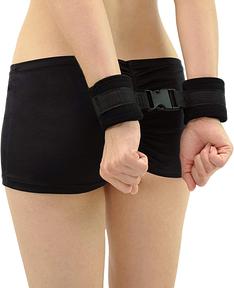
Soft Bondage Hand Cuffs with Click Closure (Black)
View at AmazonAffiliate link. Buying through it earns us a commission; the price stays the same for you.
Support underneath you
A surprising amount of adaptation comes down to what you're lying or sitting on. A wedge, a stack of pillows or an inflatable cushion like the Liebesfreunde Sex Lumbar Cushion for More Fun (Inflatable) can take strain off hips and lower back, turning a position you'd endure into one you can actually hold.
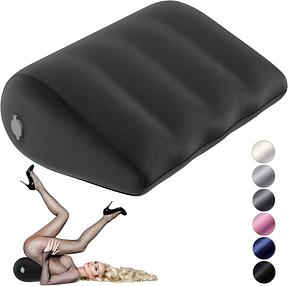
Liebesfreunde Sex Lumbar Cushion for More Fun (Inflatable)
View at AmazonAffiliate link. Buying through it earns us a commission; the price stays the same for you.
Impact play when you already live with pain
Honesty matters most here. In a 2025 survey of 525 BDSM practitioners by Forer and Westlake, people with chronic pain reported self-perceived physical and mental benefits. They hadn't initially come to BDSM for pain management, though, and they did high-intensity sensation play more often than others. Self-reports, not treatment. My read is that pacing matters more for this group, not less.
In practice that often looks like a lighter implement, a lower starting force, a seated position and agreed no-go zones around flare-prone joints. A small leather paddle like the aDogo SM Leather Paddle Leather Whip Sex Toy is a gentler place to start than anything heavy and rigid.
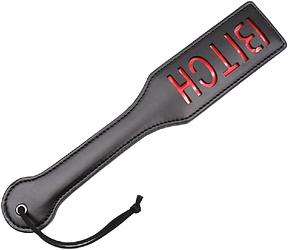
aDogo SM Leather Paddle Leather Whip Sex Toy
View at AmazonAffiliate link. Buying through it earns us a commission; the price stays the same for you.
Sensory play on low-energy days
Feathers, temperature and slow touch ask almost nothing of the receiving partner, which makes them a good fit when the tank is nearly empty. A feather tickler like the Liebesfreunde® Federkitzler für sinnliche Sexspiele is about as low-effort as kink gets. It's also a decent excuse to try the gentle stuff most people rush past on their way to something louder.
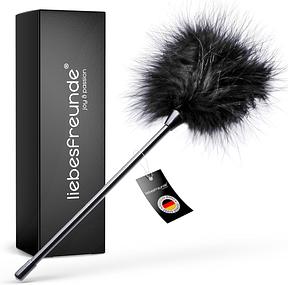
Liebesfreunde® Federkitzler für sinnliche Sexspiele
View at AmazonAffiliate link. Buying through it earns us a commission; the price stays the same for you.
Checking in when your body shifts
The Consent Culture FAQ frames BDSM as highly adaptable, built on safe words and signals you agree on up front. That adaptability is exactly what makes renegotiation possible at any point, mid-scene or between sessions, and with a fluctuating condition, that's everything. A few tools that help:
A number check ("Where are you, 1 to 10?"). Dropping below the number you agreed on means shifting down a gear. Not failing.
A non-verbal signal, like two taps, for moments when talking costs too much.
A quick "what's different today?" before you start, since last week's limits don't carry over automatically.
Getting individual help
This article is general education, not medical advice. General tips only go so far when the condition is yours specifically. For guidance on your specific condition, the NCSF's Kink Aware Professionals directory lists therapists and other professionals who say they're familiar with kink. A listing isn't an endorsement, so ask a few questions before you book.
The pacing, though? That part's yours. The rest of kink and chronic illness is something you can plan for together.
All products from this post
The ones we named above are marked; the rest are alternatives in the same category.
Affiliate notice: As an Amazon Associate, we earn from qualifying purchases. Product prices and availability are subject to change.
Frequently Asked Questions
Is impact play safe if I already live with chronic pain?
Nobody can promise that in general. It depends on your condition and your body. Many people start with a light implement, low force and a seated position, avoid flare-prone areas and check in often. If you're unsure, loop in your doctor or a kink-aware professional first.
Does BDSM help with chronic pain?
Some practitioners say it does, but for most people navigating kink and chronic illness that's self-reported experience, not a clinical finding. In a 2025 survey of 525 practitioners (Forer & Westlake), people with chronic pain described real physical and mental benefits, even though most hadn't gone looking for pain relief in the first place. Interesting, not proof. It isn't a treatment.
How do I tell a partner I need to change or stop a scene?
Early and specific works best, ideally during negotiation: what's different today, and which word or signal means "change course." Not a big speech, just a heads-up. Mid-scene, a quick number or colour check makes it easier to say. A good partner hears that as information, not rejection.
Can I do bondage with limited mobility or joint problems?
Often, yes, with changes. Nothing dramatic, just planned. Quick-release cuffs, looser positions, shorter restraint times and supportive cushions are all common adaptations. It helps to agree before you start on how fast restraints can come off.