The Yes No Maybe List: Your New Year Kink Check-In
 8 min read

Most New Year's resolutions die by February. The gym membership, the meal prep, that vague promise to "communicate better." The ones that stick are the specific ones, the kind you can actually sit down and do in an afternoon. A yes no maybe list is one of those. It's a simple tool, borrowed from kink communities, that turns a fuzzy intention like "let's be more adventurous this year" into an honest conversation about what you each want, what you're curious about, and what's firmly off the table.
And here's the part nobody mentions: it isn't a one-time worksheet. Done right, it's something you revisit, ideally every year, because you're not the same person you were twelve months ago. Neither are your limits.
What a yes no maybe list actually is
A yes no maybe list is a written inventory of activities you sort into three buckets: yes (things you want or enjoy), no (hard boundaries), and maybe (things you're curious about under the right conditions). You fill it out on your own first, honestly, without anyone reading over your shoulder. Then, once there's real trust, you compare notes with a partner.
A few examples of what tends to land in each column of a yes no maybe list:
Sensation play, like temperature, texture, or light impact
Roleplay or power exchange
Restraint, whether you're giving it or receiving it
Public or semi-public scenarios
Opening up the relationship structure itself
Aftercare rituals and how you check in afterward
The most widely used version, Scarleteen's Yes, No, Maybe So inventory, breaks the conversation into eight sections, from body boundaries to relationship models, precisely because, as its authors put it, "we can't just know or guess what we or others want or need." That's the whole point. Desire isn't always obvious, not even to ourselves. Writing it down forces a clarity that a breezy "I'm open to anything" never will.

Hard and soft limits, and why they blur
This is where the kink vocabulary on your yes no maybe list earns its keep. A hard limit is an absolute. It's a no that isn't up for negotiation, whoever is asking and however much you trust them. A soft limit is fuzzier: something you might try under the right conditions, with the right person, on the right day, but aren't ready to green-light yet.
"Hard limits are things you will not do, under any circumstances," says Morgan Thorne, a longtime practitioner and educator, while soft limits are things you might consider "for the right person." Most of your "maybe" answers are really soft limits wearing a different hat. And that's completely fine. A maybe isn't a weak yes. It's an honest "not like this, not yet," which is far more useful to a partner than a polite yes you'll quietly resent later.
Your limits will change, so plan for it
Here's the real case for doing this every year instead of once. Limits move. Thorne herself is the example: after 20-plus years in the community, she says "limits aren't carved in stone," and most of hers shifted as her understanding and interests grew.
It isn't only seasoned practitioners, either. "Consent can be retracted at any time," notes licensed clinical social worker Rachel Gombos, which means any answer on your yes no maybe list is a snapshot, not a signed contract. Stress, a new relationship, a health change, or honestly just a good or a rough year can move where your lines sit. If you only revisit your boundaries when something goes wrong, you're renegotiating in the worst possible moment. An annual check-in catches the drift before it turns into a problem.

How to actually have the conversation
The mechanics matter less than people fear. Kink negotiation sounds more formal than it is. There's no spreadsheet, no candlelit summit required. What helps is picking a low-pressure moment, walking through your yes no maybe list side by side, and treating mismatches as information rather than rejection.
Elise Robinson works with couples navigating exactly this kind of conversation. The sex therapist puts it plainly: "it is not a flaw or sign of relationship incompatibility to not be 100% aligned." Different comfort levels are simply human. So when your yes meets your partner's no, you note it and move along. Where your maybes overlap, though, you've probably found something worth planning.
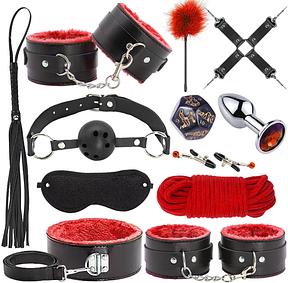
If light restraint is one of those overlapping maybes, a beginner-friendly kit keeps a first attempt gentle and predictable rather than improvised.
3-teiliges Set „Bett-Fesseln“ mit verstellbarem Gurt und 2 Fesseln
Agreeing on a safeword first, going slow, and checking in often is the entire method. Nothing about this needs to be dramatic.
Not available in your region — closest match
View at Amazon (as of Aug 15)Affiliate link. Buying through it earns us a commission; the price stays the same for you.
Checking in as a couple for the year ahead
You don't have to lead with the heavy stuff when you sit down with your yes no maybe list. The Gottman Institute recommends couples start their New Year check-in with a few easy relationship check in questions over coffee, before working up to harder topics and setting goals they'll genuinely revisit. That same start-light, build-up structure works just as well for a limits conversation.
Start with what worked this year: what did you both enjoy and want more of? Then the maybes. Then anything that needs renegotiating. If sitting across from each other reciting a list feels clinical, a prompt deck can do the icebreaking for you.
Sondermoment Love Edition - Fragespiel für Paare
It hands you neutral questions to warm up with before you get to the ones that matter more.
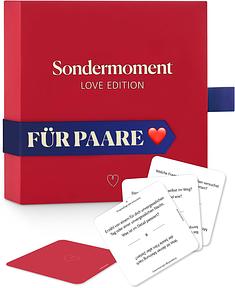
Sondermoment Love Edition - Fragespiel für Paare
View at AmazonAffiliate link. Buying through it earns us a commission; the price stays the same for you.
Don't skip the aftercare check-in
Aftercare, the winding-down and looking-after-each-other once something ends, belongs on your yes no maybe list too. Robinson notes that even aftercare needs "may change over time." What comforted you last year might land differently this year, so it's worth asking out loud.
For a lot of couples, slow touch does most of the work, and something as low-key as a massage oil turns the wind-down into a small shared ritual.
Massageöl „Indisches Liebes-Öl“ mit orientalischer Duftnote
None of this is really about the oil. It's about closing the year knowing how the two of you land safely afterward.
Massageöl „Indisches Liebes-Öl“ mit orientalischer Duftnote
View at ORIONAffiliate link. Buying through it earns us a commission; the price stays the same for you.
Starting your own list
You won't get your yes no maybe list perfect, and that isn't the goal. The goal is to begin the year having actually said the quiet things out loud, and to know you'll say them again next January when they've inevitably shifted.
If you want somewhere to start, browse our encyclopedia for the practices you're curious about, then bring your yes no maybe list to the table. Curiosity is normal. Talking about it clearly is the whole skill.
All products from this post
The ones we named above are marked; the rest are alternatives in the same category.
Affiliate notice: As an Amazon Associate, we earn from qualifying purchases. Product prices and availability are subject to change.
Frequently Asked Questions
What is a yes no maybe list?
It's a written inventory where you sort activities into three buckets: yes (things you want), no (firm boundaries), and maybe (things you're curious about under the right conditions). You fill it out privately first, then compare with a partner once there's trust. It replaces guessing with an honest, specific conversation about desires and limits.
What's the difference between a hard limit and a soft limit?
A hard limit is an absolute no, not open to negotiation no matter who asks. A soft limit is something you might try under the right conditions, with the right person, but aren't ready for yet. Most "maybe" answers are really soft limits. A maybe is honest information, not a weak yes.
How do I bring up a yes no maybe list without it feeling clinical?
Pick a relaxed moment and start light, over coffee rather than as a formal sit-down. Lead with what you both enjoyed this year before moving to newer territory. A question deck can carry the awkward opening for you. Treating any mismatch as information rather than rejection keeps the whole thing warm instead of like a job interview.
Can soft limits change over time?
Yes, and that's expected. Practitioners and therapists both stress that limits shift with trust, mood, stress, and life stage. What sat firmly in your "no" column last year might become a "maybe" this year, or the reverse. Consent is a snapshot, not a permanent contract, which is exactly why revisiting your list matters.
How often should couples redo their list?
Once a year is a sensible rhythm, which is why the New Year works so well as a natural checkpoint. Some couples also do a lighter check-in seasonally or after a big life change. The aim is to catch shifting limits on purpose, rather than discovering them in the worst possible moment.