Building Your First Kink Toy Box: A Couples' Starter Kit Guide
 10 min read
Most guides to building a BDSM kit hand you a shopping list and call it done. Buy the cuffs, grab a blindfold, add a flogger, checkout. Easy.
We think that skips the part that matters. A first bdsm kit isn't really about the gear. It's about two people working out, together, what they're curious about and how they'll look after each other while they find out. The stuff comes second.
And being curious puts you in ordinary company, not fringe company. A peer-reviewed survey in the Journal of Sex Research found nearly half of respondents were interested in at least one kink-adjacent activity. Kinsey Institute research fellow Justin Lehmiller puts it plainly: "BDSM is far from a rare or unusual sexual interest or behavior."
One thing up front. This is education, not advice. Nothing here is medical, legal, or therapy, and none of it is a how-to. You know your relationship and your own body better than any article does. So take what's useful, leave what isn't, and go at whatever pace feels right, with clear talk, sober consent, and personal safety from everyone involved.
Okay. Let's build the thing properly.
Talk before you shop (the part most couples skip)
Here's the move that separates a good first kit from a drawer of regret: you have the conversation before you spend a cent.
Not a clinical one. A curious one. What are you each drawn to? What's an absolute no? What's a "maybe, if we go slow"? Sex therapist Jennifer Litner, PhD, LMFT, CST, recommends settling hard limits, soft limits, and a safeword before anything starts, plus a non-verbal backup signal for any moment a blindfold or gag might make talking hard. Two taps on the arm. A dropped object. Whatever you'll both remember.

A lot of people default to the old "SSC" idea, Safe, Sane, Consensual. It's a fine starting point. As kink educator Roman Ashford explains, it's "a fine first introduction, which is not the same as a framework you should practice by." Most couples today build on it with RACK, Risk-Aware Consensual Kink, which is honest about the fact that any activity carries some risk and asks you to go in eyes open rather than pretend nothing can go sideways.
You'll notice this conversation does two jobs at once. It keeps you safe, and it tells you what to actually buy. If bondage lights you both up but impact play is a hard no for one of you, congratulations, you just saved yourself the cost of a flogger. The talk is the real first purchase.
The starter kit: what actually earns a place
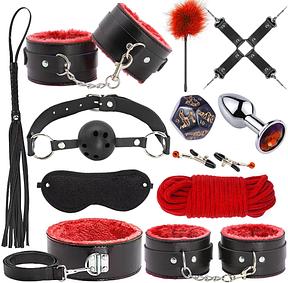
A beginner bondage kit does not need to be big. Three or four pieces cover most of what a couple wants to explore early on, and every one of them should map back to something you both said yes to.
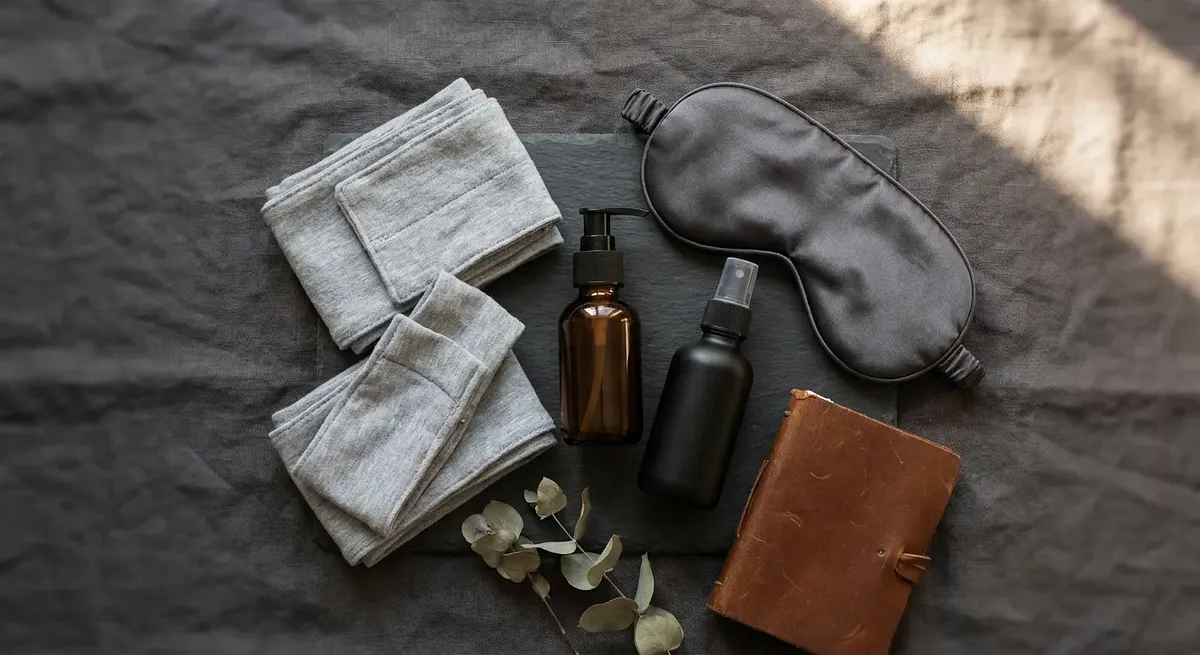
Below are the pieces most couples reach for first. Buy the ones that match your conversation, and genuinely, skip the rest until you want them.
Restraints: where most couples start
Restraint is the classic entry point, and for good reason. It changes very little physically and a lot emotionally, which is a gentle place to begin.
For a first setup, an under bed restraint system is hard to beat. The straps run under the mattress and out of sight, the cuffs clip on and off in seconds, and there's nothing to drill, mount, or explain to anyone. You can pack the whole thing away in a drawer when you're done. This adjustable under-bed set is a sensible starting point: soft cuffs, a strap that fits most beds, and no assembly drama.
3-teiliges Set „Bett-Fesseln“ mit verstellbarem Gurt und 2 Fesseln
Go for cuffs you can loosen or release fast. That matters more than how they look. If someone wants out, "out" should take a second, not a struggle.
Not available in your region — closest match
View at Amazon (as of Aug 15)Affiliate link. Buying through it earns us a commission; the price stays the same for you.
A blindfold: the cheapest upgrade you'll ever make
If you buy one sensory item, make it a blindfold. Taking sight away turns the volume up on everything else, a light touch, a change in temperature, the wait between one thing and the next. It's the backbone of any sensory play kit and it costs about as much as a coffee.
A smooth, soft satin mask like this one does the job without pressing on the eyes or sliding off halfway through.
Augenmaske „Blind Love“, glatt und seidig
Start there. You can add feathers, textures, or temperature later once you know what you both enjoy.
Augenmaske „Blind Love“, glatt und seidig
View at ORIONAffiliate link. Buying through it earns us a commission; the price stays the same for you.
One soft impact toy (if you're both into it)
Impact play is a bigger step, and it's genuinely optional. Plenty of couples never bother, and their kit is complete without it. But if the idea appeals to you both, one beginner-friendly piece is enough to test the water.
A short, soft flogger like this one is forgiving. The falls spread the sensation out, so it thuds more than it stings, which makes it far easier to control than a paddle or a cane while you're learning where and how hard.
Aim for fleshy areas, keep it light, and check in often. That's about as much technique as a first session needs.
Affiliate link. Buying through it earns us a commission; the price stays the same for you.
Body-safe materials: what to buy and what to skip
This is the bit the cheap bundled kits get wrong, and almost nobody warns you about it.
Here's the short version. According to mindbodygreen, medical-grade silicone, borosilicate glass, and stainless steel are the materials sex educators consider genuinely body-safe. They're non-porous, which means they can be properly cleaned. The two to be wary of are PVC/vinyl and soft "jelly" rubber, which are porous and often carry a chemical smell. Licensed social worker Lisa Hochberger gives a field test you can use standing in the aisle: a strong chemical smell is a good sign that cheap, unsafe materials went into it.
Why does porous versus non-porous matter so much? Because as sexual-health nonprofit Power to Decide notes, "clean" and "sanitized" aren't the same thing. Porous materials can hold onto bacteria no amount of washing fully removes. For shared, reused gear, that's the whole ballgame.
Lube belongs in this conversation too. Water-based lube is the safe default because it plays nicely with silicone toys and body-safe materials and won't degrade them. A straightforward water-based option like Durex Play Feel covers most situations and washes off easily afterward.
Durex Play Feel Lube (100 ml, water-based)
So here's the rule of thumb: spend where it touches skin. A cheap strap is fine. A cheap porous thing you share, less so.
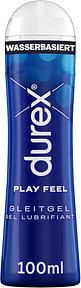
Durex Play Feel Lube (100 ml, water-based)
View at Amazon (as of Sep 04)Affiliate link. Buying through it earns us a commission; the price stays the same for you.
Budget tiers: what a first kit really costs
Nobody tells beginners what "reasonable" looks like, so here's a rough map. Prices vary, but the shape holds.
Starter, roughly the price of a nice dinner out. A blindfold, a set of soft under-bed cuffs, a bottle of water-based lube, and a small cleaner. That's a real, complete first kit. You can explore for months on this and never feel like you're missing anything.
Comfortable. Add a soft impact toy, maybe a second sensory item like a feather or a textured glove, and upgrade your restraints to something a little sturdier if you've been using them a lot.
Leveling up. This is where a couples vibrator earns its keep, and honestly it's the one splurge most couples don't regret. A rechargeable couples vibrator with a range of settings brings a whole new layer of sensation into play, solo or shared, and it lasts for years.
Paarvibrator „Match“, 10 Vibrationsstufen, wiederaufladbar
You don't climb the tiers on a schedule. Some couples stay happily at "starter" forever. Buy up a rung only when you've actually worn out the one below and know what you want next.
Paarvibrator „Match“, 10 Vibrationsstufen, wiederaufladbar
View at ORIONAffiliate link. Buying through it earns us a commission; the price stays the same for you.
Care, cleaning, and keeping it private
Two boring tasks make everything else work: cleaning your gear properly, and keeping it somewhere you're comfortable with.
On cleaning, Healthline is clear that the method depends on the material, so read the label rather than guessing. Non-porous, non-motorized items can take the most thorough cleaning. Anything with a motor or battery, like that couples vibrator, gets wiped down carefully, never dunked. A dedicated toy cleaner makes the routine quick enough that you'll actually do it, which matters more than owning the perfect product. An alcohol-free 2-in-1 cleaner is a gentle, no-fuss option to keep by the drawer.
Vibratissimo Toy Cleaner 3x300 ml (2-in-1 Cleaning + Disinfection, Alcohol Free)
Storage is the other half. Let each piece dry fully before it goes away, keep porous and non-porous items from squashing together, and pick a spot that fits your living situation, a lockable box, a dedicated drawer, a labelled pouch at the back of the wardrobe. Discretion isn't shame. It's just keeping your things yours.
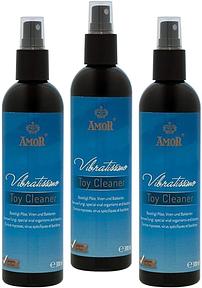
Vibratissimo Toy Cleaner 3x300 ml (2-in-1 Cleaning + Disinfection, Alcohol Free)
View at AmazonAffiliate link. Buying through it earns us a commission; the price stays the same for you.
Before you close the drawer: aftercare
One last thing, and please don't treat it as optional. When the play stops, you're not actually done.
Medical News Today describes aftercare as the wind-down that helps partners process the emotional comedown after an intense scene. Water, a blanket, a bit of quiet, talking through what you liked and what you'd change. Agree on your aftercare plan during that first conversation, right alongside your safeword, because the moment you'll want it is not the moment you'll want to start negotiating it.
That's the real kit, when you zoom out. A few well-chosen pieces, a clear conversation, and a habit of checking in. The gear is easy. The rest is what makes it good.
All products from this post
The ones we named above are marked; the rest are alternatives in the same category.
Affiliate notice: As an Amazon Associate, we earn from qualifying purchases. Product prices and availability are subject to change.
Frequently Asked Questions
What should be in a beginner BDSM kit?
Less than you'd think. A blindfold, a set of soft cuffs or an under-bed restraint system, a water-based lube, and a toy cleaner make a complete first kit. Add a soft impact toy only if you both want one. The best kit is the one that matches the conversation you had, not the biggest bundle on the shelf.
Do we need to spend a lot on a starter kit?
No. A genuinely good first kit costs about as much as a nice dinner out. What matters is where the money goes, not how much of it: put it into anything that touches skin or gets shared, and worry less about a simple strap. That's exactly where a porous, hard-to-clean bargain ends up costing you.
What materials are body-safe for bondage and toys?
Sex educators point to medical-grade silicone, borosilicate glass, and stainless steel. They're non-porous, so they can be properly cleaned. Be cautious with soft "jelly" rubber and PVC, which are porous and often smell chemical. A strong chemical smell is a decent warning sign to put it back.
How do we pick a safeword?
Choose a word you'd never say by accident during play, so not "stop" or "no" if you enjoy playful protest. Many couples use a traffic-light system: green for good, yellow for ease off, red for stop now. Agree a non-verbal signal too, like two taps, for any moment talking is hard.
Are cheap bundled bondage kits safe?
Sometimes, but check the materials before you trust one. Budget bundles often use porous PVC or jelly parts that can't be fully sanitized, which matters most for anything shared or used against skin. Buying a few individual body-safe pieces often beats a large cheap set you can't clean well.