Body-Safe Sex Toy Materials: What to Check Before You Buy
 5 min read
Here's the uncomfortable part nobody prints on the box. When you shop for body-safe sex toy materials, you're the only quality check in the room. In the US, most toys are sold as "novelty items," which means they skip the mandated testing that covers medical devices or food containers. The Consumer Product Safety Commission has no sex-toy-specific safety standard, and as Inverse reported, the "novelty" label exists partly to sidestep that testing.
So "body-safe" isn't a certification. It's a marketing word. Your job is to verify it.
Non-porous vs porous: the one thing that matters
Porosity is the whole game. Non-porous materials have no microscopic gaps, so they wipe clean and, if they're rigid, you can properly sanitize them. Porous materials trap fluid and bacteria in tiny surface openings that no amount of washing reaches. According to the University of Rochester's University Health Service, porous materials like TPR absorb germs more easily even after washing, while sealed, non-porous surfaces don't encourage bacteria to grow.
That's not a small hygiene footnote. It's the difference between a toy you keep and one you can't fully clean.
The buy list
Stick to non-porous and you've done most of the work:
100% silicone. Soft, warms to body heat, and truly non-porous. A body-safe silicone option like Naturdildo „Silicone Dildo M“, 18 cm mit Saugfuß, sehr biegsam is the everyday default for most people.
Borosilicate glass. Rigid, non-porous, and it handles temperature play. Something like Glasdildo „No. 7“, 17,8 cm, mit Stimulationsnoppen cleans up completely and lasts for years.
Stainless steel. Surgical-grade steel is heavy, sleek, and sterilizable.
ABS hard plastic. Common on vibrator shafts, non-porous, easy to wipe down.
All four are sterilizable in a way jelly never will be, which is why the care step is short. A quick spritz with something like LELO Toy Cleaning Spray, Adult Toy Cleaner, Fast-Acting for Quick Maintenance (60 ml/ 2 oz) between uses handles day-to-day cleaning, and the rigid ones can take a proper boil.
Naturdildo „Silicone Dildo M“, 18 cm mit Saugfuß, sehr biegsam
View at ORIONAffiliate link. Buying through it earns us a commission; the price stays the same for you.
Glasdildo „No. 7“, 17,8 cm, mit Stimulationsnoppen
View at ORIONAffiliate link. Buying through it earns us a commission; the price stays the same for you.
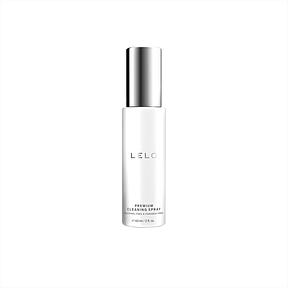
LELO Toy Cleaning Spray, Adult Toy Cleaner, Fast-Acting for Quick Maintenance (60 ml/ 2 oz)
View at Amazon (as of Aug 11)Affiliate link. Buying through it earns us a commission; the price stays the same for you.
The avoid list
Jelly rubber. Cheap, soft, and porous. Often plasticized with phthalates.
PVC and vinyl. Same problem, same reason to skip it.
Unspecified "TPE/TPR" or "skin-safe" blends. Treat these as porous unless the seller names a real certification.
"Cyberskin" and realistic-feel materials. Soft, yes. Non-porous, no.
Why the caution? A 2023 peer-reviewed study found phthalates above hazard thresholds in every toy it tested, plus plastic particles shedding from normal wear. A Swedish government survey of 44 toys flagged several over the EU's phthalate limit too. Small samples, same direction.
How to read the label

Three quick checks before you buy:
Does it name an actual material? "Body-safe" or "premium" isn't a material. Silicone, glass, steel, and ABS are. No named material, no sale.
If it says "medical-grade," does it name a standard? A real claim points to something like ISO 10993 or USP Class VI. A bare "medical-grade" with no standard is just nicer marketing.
Is "phthalate-free" doing real work? Genuine silicone never contained phthalates anyway, so on silicone it's reassurance, not proof. On a soft PVC product, you'd want a named testing body behind that claim.
One more thing that trips people up. Don't pair silicone toys with silicone lube, since it can slowly degrade the surface. A water-based lube like EasyGlide Water Based Lubricant 500ml - Compatible with Latex and Silicone Toys plays nicely with everything.
None of this is the exciting part, I know. But the same care you'd put into aftercare belongs in what you buy in the first place, and it applies just as much to beginner-friendly bondage restraints or anything you'll reach for during a first BDSM session. Buy once, clean easily, and you can stop thinking about it.
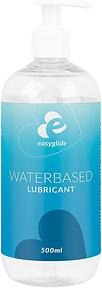
EasyGlide Water Based Lubricant 500ml - Compatible with Latex and Silicone Toys
View at AmazonAffiliate link. Buying through it earns us a commission; the price stays the same for you.
All products from this post
The ones we named above are marked; the rest are alternatives in the same category.
Affiliate notice: As an Amazon Associate, we earn from qualifying purchases. Product prices and availability are subject to change.
Frequently Asked Questions
Is silicone body-safe?
Yes, if it's 100% silicone. Real silicone is non-porous, phthalate-free by nature, and easy to sanitize. The catch is that cheap toys sometimes label a porous TPE blend as "silicone," so look for a clear "100% silicone" claim rather than the word on its own.
Why are porous materials a problem?
Porous materials have microscopic surface openings that trap fluid and bacteria. Washing removes what's on top but can't reach what's soaked in below the surface, and most porous toys can't be boiled or sanitized without breaking down. Non-porous materials don't have that gap.
Does "body-safe" mean a toy passed safety testing?
No. In the US it has no legal definition and no required testing behind it. Most toys are sold as novelty items, so the term is marketing. It only means something when it's paired with a named material and, ideally, a named standard.
What should I avoid entirely?
Jelly rubber, PVC or vinyl, "cyberskin," and any soft blend labeled only "skin-safe" or "TPE/TPR" with no certification. These are porous and the ones most likely to carry phthalates.