Non-Verbal Safewords: Signals to Use When You're Gagged or Can't Speak
 3 min read
A safeword only works if you can say it. Add a gag, or a headspace deep enough that words stop assembling, and the system quietly stops existing.
That's the hole a non-verbal safeword fills. One physical signal, agreed before anything begins, so "stop" still lands when your mouth isn't available. If the spoken layer isn't set up yet, safewords and the yes/no/maybe conversation covers it.
Four non-verbal safeword signals worth agreeing on
The drop-it object
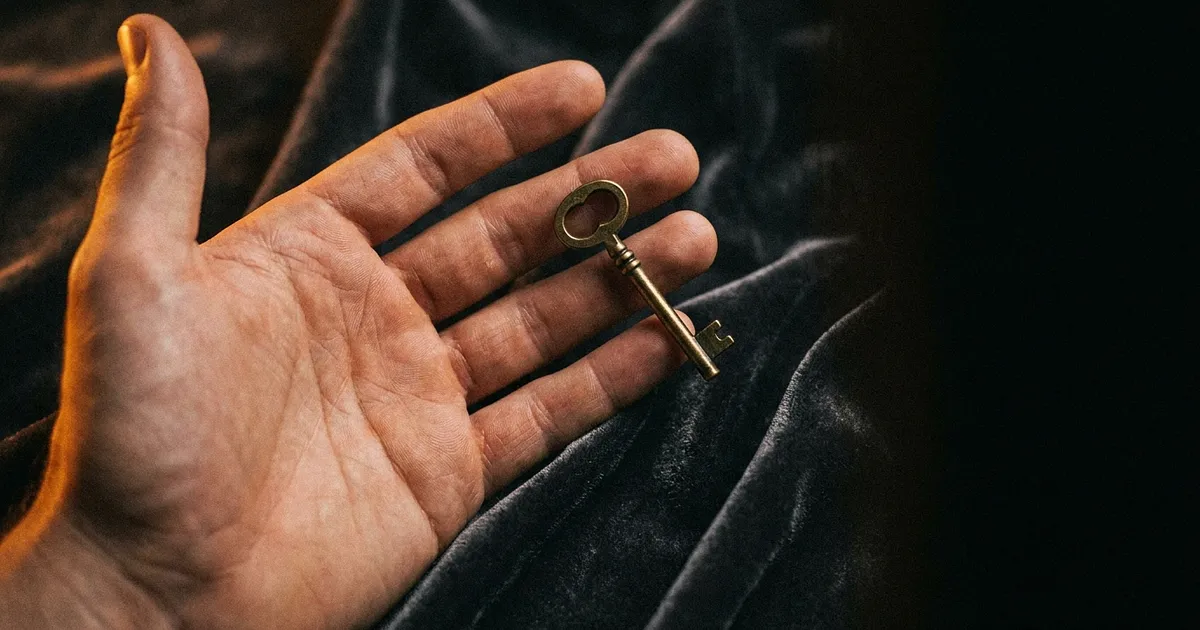
You hold something. Keys, a rubber ball, a squeaky dog toy, anything that won't slip loose by accident. Open your hand and the scene stops. Nothing to remember under stress, which is probably why it's the default.
Three squeezes
Hands free and in reach? Three squeezes, then three squeezed back. That return squeeze does half the work. It proves the signal landed.
The tap-out signal, or a bell
Borrowed from grappling. Two or three sharp taps on a surface your partner can feel or hear. Bedding and music swallow taps, though, so a bell removes the ambiguity.
Affiliate link. Buying through it earns us a commission; the price stays the same for you.
An eye-blink code
The one that survives when almost nothing else does: rapid blinking, or one slow, deliberate double blink. It only works if your partner can actually see your face, so that's worth naming in the agreement too, not assumed.
What if your hands are tied as well
Almost every guide assumes gagged means hands-free. Often it isn't. Cuff the wrists too and both the dropped object and the squeeze vanish.
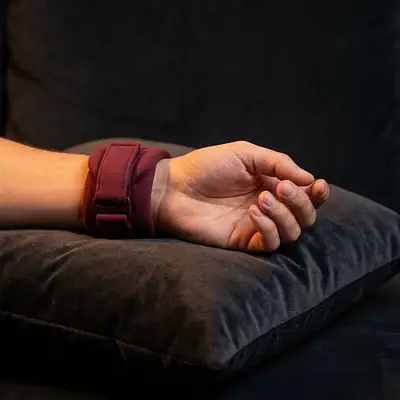
Padded cuffs help a little, since fingers usually stay mobile.
Handfessel aus Leder, weich gepolstert, für schmale Handgelenke
Past that, agree in advance on something needing no hands at all. A foot tapping the mattress. A hum through the gag. Or a fixed check-in rhythm: the Top checks in every so often regardless of whether a signal has fired, so safety isn't resting entirely on the person who's tied up. The National Coalition for Sexual Freedom makes the same case for any restraint scene.
Handfessel aus Leder, weich gepolstert, für schmale Handgelenke
View at ORIONAffiliate link. Buying through it earns us a commission; the price stays the same for you.
The Top's half of this
A non-verbal safeword only counts if someone acts on it. Object drops, taps land, humming starts, and everything stops right then, no pause to decide if they really meant it. Check in out loud: ask what happened, loosen whatever needs loosening, and make the check-in visible so nobody's left wondering if the signal actually registered.
Agree on it before you need it
A non-verbal safeword invented mid-scene is a guess, not a signal. Fold it into the conversation where you build your yes/no/maybe list, and run it once while you're both calm.
All products from this post
The ones we named above are marked; the rest are alternatives in the same category.
Affiliate notice: As an Amazon Associate, we earn from qualifying purchases. Product prices and availability are subject to change.
Frequently Asked Questions
What's a safeword when you're gagged?
A held object you drop is the standard answer. Keys, a ball, a toy. Releasing it means stop, and none of that needs speech.
How do you safeword when your hands are restrained too?
Agree a third signal that needs no hands. A foot tapping the mattress, a sustained hum through the gag, or a bell you can nudge.
What is the difference between a safeword and a safe signal?
A safeword is spoken. A safe signal delivers the same instruction physically, for scenes where speech isn't reliable. Most people who play with gags agree on both.
Should the Top stop immediately when a signal fires?
Yes. Same as the spoken safeword: stop, release pressure, check in out loud. A false alarm costs thirty seconds. A missed one costs far more.