What Does a Sex Machine Add to Power Exchange? (Sponsored)
 7 min read
Sponsored · This article was written by Hismith, a maker of sex machines, and edited by the SparkChambers team. Hismith paid for its publication. It is not a product test.
Let's be real for a second: a lot of power exchange is about one person deciding and the other person living with that decision. When the deciding happens through a human body, there are natural limits: arms get tired, hips start complaining, attention drifts. A sex machine quietly removes a bunch of those limits, and that changes the texture of the dynamic in ways that can feel really sharp.
Here's what it actually adds, and what it does not take away: the need for consent, a stop signal and a person who stays present.
It Turns Control into Something Mechanical and Persistent
A human partner eventually needs a break. A sex machine doesn't. Once the D-type sets the speed, depth or pattern, the machine keeps doing exactly that until someone changes it or turns it off. That simple fact shifts the power balance.
The s-type is no longer dealing with a person who might soften, adjust or get distracted by their own pleasure. They're dealing with something that has no will of its own, only the will of the person holding the controls.
For a lot of people, that feels like distilled power exchange. The D-type's decision is expressed through an object that does not negotiate and does not tire. The limits of the scene, though, were negotiated before it started, and they still apply.
It Makes Objectification Feel More Literal
There's a particular flavor of objectification that happens when someone is being used by a machine while their partner watches.
The s-type isn't interacting with another human body that responds emotionally or physically in real time. They're interacting with metal, silicone and a motor that was deliberately pointed at them.
When the D-type set the machine up, chose the attachment, decided the settings and is now standing there with the remote, the message lands cleanly: "This is happening because I want it to."
For people who enjoy objectification, dollification or "thing" headspace, that can hit hard in a good way. The machine becomes the tool. The D-type remains the one with the intent, and the one who watches for how the s-type is really doing.
It Frees Up the Dominant's Attention and Hands
One of the quieter advantages is practical. A sex machine lets the D-type stay fully in the dominant role without having to be the physical engine the entire time.
They can sit close by and watch. They can tease or edge the s-type with their hands or a vibrator while the machine keeps going. What they do not do is leave: the stop control stays within their reach, and their attention stays on the person on the machine.
The control stays with them, but the physical work is outsourced. That can make longer scenes more sustainable and can help the D-type stay in headspace instead of getting pulled out by physical fatigue.
It Adds Psychological Weight Before It Even Turns On
Just having a sex machine in the room changes the atmosphere. Even when it's sitting quietly, it's a visible reminder of what could happen and who gets to decide when, or if, it does.
For some dynamics, simply knowing the machine is available and that the D-type controls its use becomes its own ongoing form of power exchange.
Some couples like the ritual of setting the machine up together. Others prefer the D-type to have it ready and waiting. Both approaches work, as long as the decision-making authority inside the scene is clear and the limits were agreed outside it.
Consent, a Stop Signal and Staying Present
A machine cannot hear a safeword, read a face or notice that something has gone numb. That makes three things non-negotiable.
Agree on limits before the scene. Talk about speed, depth, duration, attachments, restraints and what is off the table. Overstimulation or denial is something both of you agreed to beforehand, not something one person decides on alone in the moment.
Use a stop signal that works without words. A safeword plus a non-verbal signal (dropping an object, a hand squeeze, a set number of taps) works even when the s-type is gagged, breathless or deep in headspace. When the signal comes, the machine stops first and the talking happens after.
The person in control stays in the room. The D-type keeps the stop control within reach for the whole scene and keeps watching. Restraints must be quick to release, and someone who is restrained is never left alone with a running machine. App control is useful for changing settings from across the room, not for running a scene from another room or another city.
Consensual surrender does not remove the right to withdraw consent. A scene can always end early, and ending it is not a failure.
Practical Ways People Use It in Power Exchange
Edging and denial: The machine can bring someone close to the edge again and again while the D-type controls every stop and start. No tired wrist means the edge can be held for a long time, within the duration you agreed on.
Forced orgasm and overstimulation: Once permission is given, or deliberately withheld, the machine can keep going past the point where a human partner would usually slow down. Agree on the limits beforehand and stop the moment the stop signal comes or stimulation turns painful.
Bondage and machine combinations: Cuffs, a spreader bar or simple restraints plus a machine remove most of the s-type's physical agency. They're positioned and secured, and the D-type stays beside them with the stop control and a way to undo the restraints fast.
App control in the same room: Some machines can be controlled from a phone. That lets the D-type change the pattern while sitting back and watching, without leaving the room.
Roleplay scaffolding: Robot, medical device, training apparatus, alien tech: the machine becomes a prop that supports whatever fantasy the two of you are building.
Choosing a Machine for Power Exchange
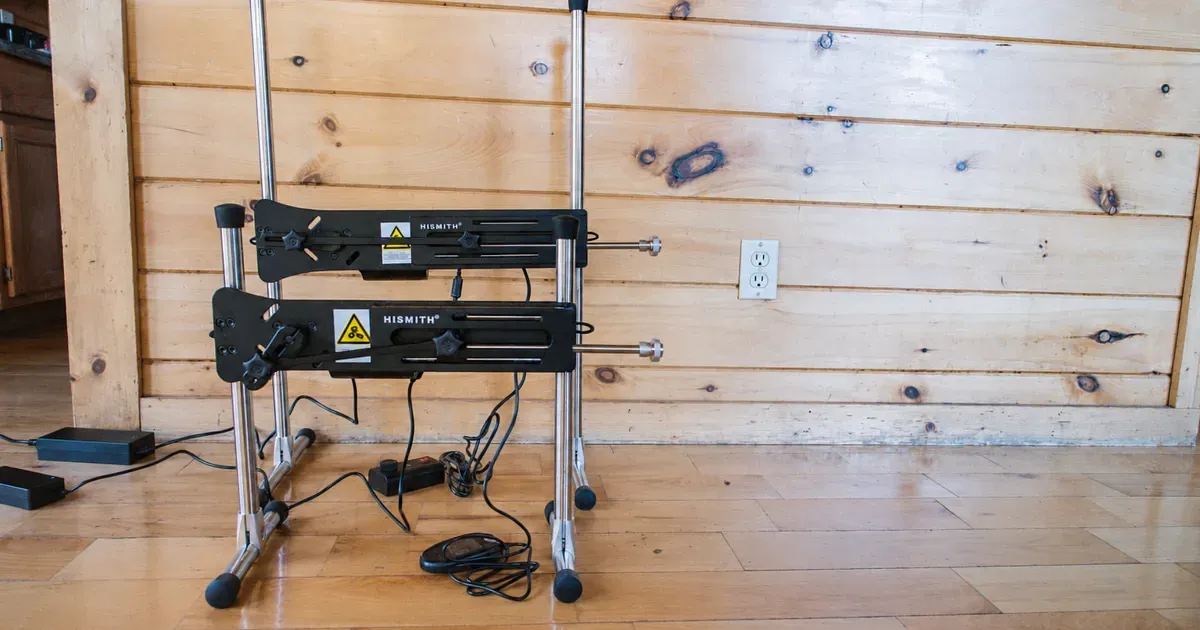
Look for sturdy construction, a stroke range that suits what you plan to do, and a stop control that is easy to reach for both partners. Hismith makes machines with interchangeable attachments and options for partner control. Compare individual models: some need to be stopped to adjust the stroke by hand, others adjust it electronically. For power exchange, check what your partner can control and how the person on the machine can stop it.
Frequently Asked Questions
What needs attention during a longer session?
Watch for changes in comfort, numbness and strain from holding a position. Stop if stimulation becomes painful or distressing. Follow the manufacturer's operating limits and keep a stop control within reach. A machine cannot recognize a safeword or someone's discomfort, so the person controlling it needs to stay present and attentive.
Does using a machine automatically make a scene dominant or submissive?
No. The same machine can be used without any power exchange at all. The dynamic comes from what the people involved want it to mean: who chooses the pace, which decisions are shared and what handing over those choices feels like.
Can the submissive still stop the machine?
Yes. Giving someone control of the pace can be part of the scene while the person on the machine keeps a way to stop it. That option has to stay practical, also when restraints are involved. Consensual surrender does not remove the ability to withdraw consent.
Is it safe to control a sex machine from another room?
Not during a scene. A machine cannot notice distress, so the person in control stays in the room, within reach of the stop control. Use app control to change settings from nearby, never to leave someone alone on a running machine, and especially not someone who is restrained.