What Counts as Edge Play? A Beginner's Guide to Higher-Risk Kinks
 15 min read

Ask five experienced kinksters what edge play is and you'll get five different lists. One says breath play and nothing else. One includes anything that leaves a mark for more than a day. Someone will insist it means whatever frightens them personally, which is a mood rather than a definition. That vagueness matters, because the phrase is doing real work as a warning label, and a warning label meaning six different things warns nobody about anything.
So this piece does the boring, useful thing instead. It maps the category.
What is edge play, actually?
The most quotable definition still comes from Jay Wiseman, an EMT-trained BDSM educator who wrote SM 101 and has served as an expert witness in kink-related fatality cases. In a 2011 interview with Denver's Westword, he described edge play as activity that is "above-average in terms of its physical and/or emotional risks and below-average in terms of its predictability."
Both halves of that sentence carry weight. Plenty of kink hurts. Fewer kinds of kink are genuinely unpredictable, and unpredictability is what turns a bad night into an ambulance.
One piece of housekeeping first, because the search results are a mess on this point. Edging and edge play are unrelated. As KYNK 101 explains, edging is an arousal-control technique, fully reversible, roughly as risky as a long makeout session. Edge play is a category of activities that can cause lasting injury. The words rhyme. Nothing else about them matches.
SSC, RACK, and why the acronym changed
You'll meet two frameworks fast, and the history behind them is more useful than the acronyms themselves.
David Stein coined SSC (Safe, Sane, Consensual) in 1983 as an ethical floor, a way of drawing a line between consensual kink and abuse. It worked. Then it got misread. Over about fifteen years, "safe" drifted in common usage from "we take reasonable precautions" toward "this is risk-free if you do it properly," which is a lie that gets people hurt.
Gary Switch introduced RACK (Risk-Aware Consensual Kink) in 1999 on The Eulenspiegel Society's Usenet list, partly as a correction. Per the documented history of the term, he compared BDSM to mountaineering. You don't make a mountain safe. You learn it, train for it, and accept a residual risk you can name out loud. A third framework, PRICK (Personal Responsibility, Informed Consensual Kink), gets used by a smaller group who want the accountability piece stated explicitly.
For edge play specifically, RACK is the framing that survives contact with reality. Nothing in the list below is safe. If you're brand new to BDSM entirely rather than looking to push past your current edges, our beginner's guide to BDSM is the better starting point, since this article assumes you already have negotiation and safeword basics in place. Some of it can be made less dangerous by people who know what they're doing, and one item on the list arguably can't.
How real is the risk? A 2021 peer-reviewed study in The Journal of Sexual Medicine surveyed 1,118 kink-identified adults and found that 13.5% reported a past kink-related injury serious enough to consider medical attention or to miss work. The number that should bother you more sits right next to it. In that same 2021 sample, 58.3% had never told a physical-health provider they were involved in kink at all, and 19% had delayed or avoided care because of anticipated stigma.
The six categories of edge play
Here they are, roughly ordered by how much community consensus exists that the risk in each edge play category can be managed at all. This is a map, not a manual. You won't find technique here, on purpose.
Breath play, which sits in a tier of its own
Restricting someone's breathing, whether by hand, position or device. Sometimes called erotic asphyxiation.
Almost every honest source treats this one differently from the rest of the category, and it's worth being blunt about why. Wiseman has called breath play the single most dangerous aspect of SM-related play, and says that after decades of looking he has been completely unable to learn any way to make it acceptably safe. That isn't a scold from someone squeamish about kink. It's a 35-year educator with EMT training reporting a negative result.
The fatality data is genuinely contested, and the unvarnished version is the wide one. Older figures widely cited in the US put accidental autoerotic asphyxiation deaths somewhere between 250 and 1,000 a year. Later epidemiological work suggests the real number is under 160 a year, with international incidence around 0.5 deaths per million people annually in Western countries, as summarised by Live Science in 2013. Pick the low end and it's still a mechanism that kills people who thought they had it handled.
The specific problem is that unconsciousness arrives without a useful warning, and the person losing consciousness cannot safeword. Beginner guides sometimes point at a fingertip pulse oximeter as a mitigation, something along the lines of the CHOICEMMED Fingertip Pulse Oximeter, Blood Oxygen & Pulse Rate Monitor.
It's a real tool, and it isn't a solution. Consumer oximeters lag several seconds behind what's happening in someone's brain, and a reading that looks fine right up until it doesn't is arguably worse than no reading at all, because it buys false confidence. If you take one thing from this section, take Wiseman's negative result rather than a gadget.
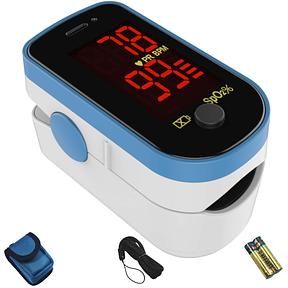
CHOICEMMED Fingertip Pulse Oximeter, Blood Oxygen & Pulse Rate Monitor
View at Amazon (as of Aug 28)Affiliate link. Buying through it earns us a commission; the price stays the same for you.
Knife play
Usually less about cutting than people assume. A lot of knife play uses blunt or dull edges and trades almost entirely on the psychology of a blade against skin, plus sensation from pressure and temperature.
The risk is real but of a different shape. An unintended cut. An infection from a blade that was never meant for skin. A panic response from the bottom that arrives faster than the top can react. Sobriety is treated as non-negotiable by basically every educator who teaches this, and so is knowing where the big vessels are, which is the kind of thing you learn from a person in a room rather than from an article.
Consensual non-consent (CNC)
A negotiated scene in which the bottom's resistance is part of the script, so the usual real-time signals go quiet exactly when you'd normally rely on them.
This is the sub-kink where the danger is mostly psychological and logistical rather than anatomical, and it gets underestimated for that reason. Chelsea Twiss, a licensed psychologist writing for Choosing Therapy, notes that CNC scenes are riskier than play that routinely includes a safeword, precisely because they are "not as easily stopped when someone becomes uncomfortable." Her practical suggestions are a written, revisitable agreement covering what is and isn't on the table, plus a traffic-light system that survives a scene where "no" and "stop" have been redefined as dialogue.
Worth saying plainly: CNC is negotiated fiction between people who already trust each other. Nobody consents to it mid-scene. All of the consent happens before.
Fire play
Fire play looks more dangerous than it usually is, until it isn't. Brief, controlled flame on skin; the burn risk is obvious. The less obvious risks are the ones that make experienced people nervous, like flammable products near hair, bedding that catches, and jewellery or lubricants behaving in ways nobody anticipated.
It's also a category where the safety knowledge is almost entirely procedural, meaning it lives in preparation and in the room itself rather than in the moment. That's a poor fit for learning from text.
Electro play
Electrical stimulation, usually via TENS-style units or violet wands.
Electro play carries the most specific hard rule in this whole taxonomy, and it's a good example of what sub-kink-specific knowledge actually looks like. Community guidance is consistent that current must never cross the chest or pass near the heart, because of the risk of disrupting cardiac rhythm. TENS-style devices are generally kept below the waist for that reason. Violet wands, which work differently, are treated as safe across more of the body. Anyone with a pacemaker, an implanted defibrillator, another implanted electrical device, or a known cardiac condition is advised out of electro play entirely.
Notice how specific that is. "Be careful" would have told you nothing.
Blood play
Anything that intentionally draws blood, plus the adjacent territory of play piercing, the edge play category where bloodborne-pathogen risk dominates.
Two risk streams here, and they're separate. Bloodborne pathogens make this the sub-kink where testing, fluid-bonding status and barrier discipline matter most. Clotting is its own concern. Anyone on blood thinners, or living with a clotting disorder, sits in a completely different risk bracket than the person next to them. Sharps disposal is a real logistical question rather than an afterthought.
Negotiating an edge play scene
Generic BDSM negotiation advice, the pick a safeword and communicate version, is not sufficient for edge play. Higher-risk play needs the plan to cover what happens when things go wrong, not only what happens when they go right.
A workable pre-scene conversation covers roughly these points:
What the scene is actually going to be, in outline. Not a script, but not a surprise either.
What each person wants out of it, which is a different question from what they'll agree to.
Hard limits, soft limits, and which soft limits are negotiable tonight versus in principle.
The specific tools and activities in play, named. "Impact" is not a plan. "This flogger, on the back and thighs" is.
Health disclosure. Heart conditions, asthma, medication, blood thinners, recent injuries, anything about mental health that changes the risk maths.
Safewords, including a non-verbal signal, because gags and headspace both take speech away.
Logistics. Who else is in the building, how long the scene runs, what happens after, and what "we stop everything" looks like in practice.
And one more that beginners skip. The person on top needs to say out loud what they are not confident doing. That admission is worth more than any checklist.
Community education organisations exist mostly to fill this gap. The Eulenspiegel Society, founded in New York in 1971 and the oldest BDSM education group in the US, runs classes and demos most weeks, taught by people with years behind them. The Society of Janus has played the same role on the West Coast since 1974. Both exist because higher-risk practice is understood, community-wide, as something you get taught rather than something you work out alone.
Restraint is where the plan usually breaks
Wiseman's most repeated safety line has nothing to do with exotic technique. If person A ties up person B, then person A does not leave. Stay in the room. He has said that one soundbite would prevent most BDSM fatalities, and given how many restraint and positional deaths there are compared to the exotic ones, that's plausible.
Which is why, in edge play involving restraint, gear that adjusts and releases fast is a safety decision rather than a comfort one. Getting someone out of an adjustable restraint set takes seconds. Improvised gear takes however long it takes, and you don't get to choose which night that matters. If you're still building out a restraint kit, our guide to bondage restraints for beginners covers cuffs, ties and under-bed systems that release fast.
Rope buys you texture and costs you time
Rope is beautiful and slow. That trade is fine right up until it isn't. If you're new to rope, our Shibari for beginners guide covers rope types and safety fundamentals before you're anywhere near an edge-play context.
A starter rope set covers most beginner ties, and the honest framing is that rope adds minutes between "we need to stop" and "they're free." Nerve compression is the other quiet risk, and it doesn't announce itself with pain in the way people expect.
Have a way to cut someone free
If rope or tape is anywhere in the scene, something that cuts fast belongs in the room. Trauma shears like the Madison Supply Trauma Shears - 7.5 Inch EMT/Nurse Scissors, 2-Pack are built to slide flat against skin and cut through material without a point going near the person. Scissors from a kitchen drawer are not the same tool. This matters most in exactly the moments when you're least able to think clearly.
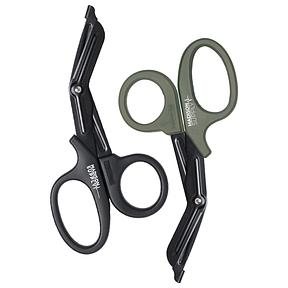
Madison Supply Trauma Shears - 7.5 Inch EMT/Nurse Scissors, 2-Pack
View at Amazon (as of Aug 28)Affiliate link. Buying through it earns us a commission; the price stays the same for you.
Friction is a safety issue, not a nicety
Unglamorous, and it comes up constantly. Not enough lubrication turns into micro-tears, micro-tears turn into an infection route, and that matters more in any scene involving blood, sharps or extended restraint. A plain water-based option like K-Y Jelly Water-Based Personal Lubricant stays compatible with nearly everything, silicone toys and latex barriers included, which is why it's usually the default rather than the exciting choice.

K-Y Jelly Water-Based Personal Lubricant
View at Amazon (as of Aug 28)Affiliate link. Buying through it earns us a commission; the price stays the same for you.
Aftercare when the stakes were higher
Aftercare after edge play isn't just a longer cuddle. Three things are actually going on.
The physical check comes first, and it's more deliberate than people expect. Our BDSM aftercare kit guide covers the comfort essentials worth having ready before a scene, not scrambled for after. Skin. Circulation anywhere something was bound. Any mark that's changing rather than settling. Anything involving sharps or blood needs the gear handled properly afterwards, which is where an alcohol-free cleaner earns its place, since alcohol degrades silicone and leaves residue you don't want near broken skin.
Then the emotional part, which runs on a delay. What the community calls sub drop or dom drop, a physical and emotional crash following the endorphin and adrenaline high of an intense scene, can arrive hours or even days later. That lag is why aftercare for edge play sensibly extends past the night itself, into a check-in the next day and sometimes the one after that.
Third, the debrief. What worked, what nearly didn't, what neither of you expected. Do that one when both people are rested, not at 2am while somebody's still floating.
And if something did go wrong, get it looked at. Go back to that 2021 Journal of Sexual Medicine finding: more than half of kink-identified adults had never disclosed their involvement to a physical-health provider. Understandable, given the stigma. It also makes injuries worse than they had to be. The National Coalition for Sexual Freedom maintains a Kink Aware Professionals directory for exactly this reason.
Where this leaves you
Edge play isn't one thing, and it isn't a difficulty setting you earn after enough vanilla hours. It's a set of six loosely related activities with genuinely different risk profiles, where the plain truth about one of them is that a 35-year expert couldn't find a safe version.
Take the taxonomy as a filter rather than a checklist. Most of what's on it rewards patient learning from experienced people in a room with you. Some of it you may read about and decide it isn't yours. That's a real answer, and nobody in the community should be giving you grief for it.
If a specific term here caught your attention, the SparkChambers kink encyclopedia covers individual edge play practices in more depth, including the lower-risk relatives that tend to be a better place to start.
All products from this post
The ones we named above are marked; the rest are alternatives in the same category.
Affiliate notice: As an Amazon Associate, we earn from qualifying purchases. Product prices and availability are subject to change.
Frequently Asked Questions
Is edge play the same thing as edging?
No, and the confusion is common enough to be worth flagging. Edging is an orgasm-control technique, holding someone near climax and then backing off. It's low-risk and fully reversible. Edge play is an umbrella term for higher-risk activities such as breath play, knife play or blood play, where mistakes can cause lasting injury. Similar words, unrelated practices.
Is edge play just abuse with better branding?
No. The line is explicit, ongoing, revocable consent, plus negotiated limits and a working stop mechanism. Remove any one of those and it stops being kink, whatever it looks like from outside. That's also why edge play communities put such heavy weight on negotiation, safewords and aftercare. Those structures are what keep the distinction real rather than rhetorical.
Do you need experience before trying edge play?
Community practice says yes, and specifically the kind of experience that includes being taught. Higher-risk kink is treated as a skill you learn from people with years behind them, at classes, workshops and munches, rather than something you work out privately. Knowing your own limits, your partner's, and how you both behave when a scene goes sideways matters more than enthusiasm does.
Is breath play ever safe?
The honest answer is that the most credentialed voices say no. Jay Wiseman, an EMT-trained educator who has testified in kink fatality cases, calls it the most dangerous area of SM-related play and reports finding no way to make it acceptably safe after decades of trying. Risk can be reduced somewhat but not removed, and unconsciousness arrives without a reliable warning.
How do you find in-person instruction for higher-risk kink?
Local munches are the usual entry point: casual social meetups in public venues, easy to leave, no play involved. From there, education organisations and dungeons run classes on specific practices. Groups like The Eulenspiegel Society in New York and the Society of Janus in San Francisco have run this kind of teaching for decades, and most large cities have a smaller equivalent.
Sources
- a 2011 interview with Denver's Westword westword.com
- KYNK 101 explains kynk101.com
- the documented history of the term en.wikipedia.org
- The Journal of Sexual Medicine academic.oup.com
- Live Science livescience.com
- Choosing Therapy choosingtherapy.com
- current must never cross the chest or pass near the heart bdsmpath.org
- The Eulenspiegel Society en.wikipedia.org
- aftercare en.wikipedia.org
- Kink Aware Professionals directory kapprofessionals.org