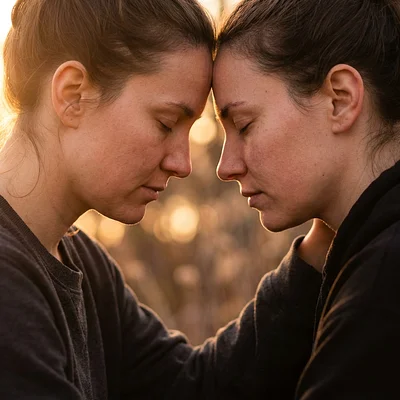

My friend Sarah told me about the first time her partner came home from a date with someone else. She sat on the couch, staring at the wall, thinking: What's wrong with me? We agreed to this. Why does it feel so awful?
I've been there too. Probably you have as well.
Here's the thing most people won't tell you: jealousy in open relationships is completely normal. According to research from the University of Basel, even people who've been practicing polyamory for years experience jealousy. The difference? They've learned to handle it differently.
The Four Jealousy Patterns You Need to Know
Jealousy isn't just one feeling. Before you can do anything about it, you've got to figure out where it's coming from.
Fear of loss: You're scared of losing your partner completely. To someone else. Forever.
Trust issues: You're wondering if your partner is being honest. If the agreements you made are actually being kept.
Feeling left out: There's something special happening between them and someone else. And you're somehow not part of it.
Scarcity mindset: There's only so much time, energy, attention. If your partner gives that to someone else, there's less for you.
I've noticed in my own experience that scarcity mindset is usually my trigger. Yours might be different.
5 Strategies for Dealing with Jealousy in Open Relationships
1. Name What You're Actually Feeling
Sounds simple. It's not. "I'm jealous" doesn't really say much. Try this instead: "I'm scared you'll love me less when you're with her."
The more specific you get, the easier it is for your partner to work with you on it.
2. Use "When You... I Feel..." Statements
Martha Kauppi, a therapist specializing in non-monogamous relationships, recommends a simple phrase according to Psychology Today: "When I'm with you, I'm with you."
Simple? Yes. But it helps a lot when you're stuck comparing yourself to someone else.
3. Ask for the Minimum, Not the Maximum
Instead of "I want you to only see other people once a week," try: "I need one guaranteed evening per week where it's just us."
The first controls your partner. The second protects what you need.
4. Write It Down
Honestly? I started keeping a journal. Not forever. Just to see when jealousy shows up and what triggers it. After about three weeks, it became clear: Friday nights. That's when I feel alone.
Knowing the pattern helps. Then you can actually change something.
5. Find Support Outside the Relationship
Your partner can't give you everything. Friends, community, maybe even therapy. It helps when you don't have to process everything with just one person.
Compersion: Do You Have to Feel It?
Compersion is the opposite of jealousy. You feel happy when your partner is happy, even with someone else. Cosmopolitan describes it as "vicarious joy."
Sounds great. But here's the truth: you don't have to feel it to make an open relationship work. Really. Some people develop it over time. Some never do. Both are fine.
When You Should Pause
Sometimes jealousy in an open relationship is a signal you shouldn't ignore.
If you're crying constantly. If you can't sleep. If you don't recognize yourself anymore. That's when it's time to step back.
Taking a break isn't failing. Sometimes you need more foundation before you can keep building.
On SparkChambers you can find others going through similar experiences. Sometimes talking to people who get it helps more than any strategy.