Our First Shibari Experience: What Rope Actually Felt Like
 10 min read

We were both braced for it to hurt. That turned out to be the single thing I got most wrong about our first shibari experience, and I'd been quietly wrong about it for roughly eleven months, which is about how long we circled the idea before either of us did anything.
Why we wanted to try rope at all
Jo brought it up first, sideways, the way you float something you're not sure about yet. What hooked me wasn't the look of it. It was a line in an essay by a rope bottom who said she liked not having to make decisions for a while. I have a job where I make something like four hundred small decisions before lunch. Forty minutes with nothing at all to decide sounded less like kink and more like a holiday.
Jo's reason was simpler and better than mine. Jo wanted to be trusted with something.
Trying rope bondage for the first time is one of those things you can read about for months and still have no idea how it actually feels. So at some point we stopped reading.
The conversation we had before any rope came out
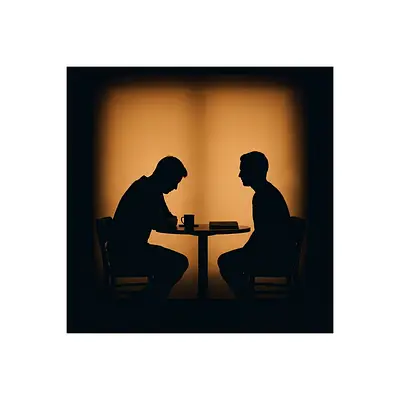
The most useful part of our first shibari experience happened on a Tuesday, on the sofa, fully dressed, with tea. Written down that sounds absurdly organised. At the time it felt faintly ridiculous, like scheduling a spontaneous evening.
It wasn't ridiculous. I just didn't understand why until afterwards.
Every guide I read beforehand said "communicate first" and then moved on, which is about as useful as telling someone to be healthy. So, specifics.
We named things. Not categories, things. Wrists yes. Chest yes. Anything above the collarbone, no. No suspension, not even slightly. Jo asked whether I wanted it to go anywhere sexual afterwards, and I said I genuinely didn't know, so we made the default no and agreed I could change that out loud if I wanted to. That last bit mattered far more than I expected.
We picked safewords. Green, yellow, red, which felt embarrassingly like a driving lesson right up until the moment I needed yellow. We added a non-verbal signal too, because Jo had read that people sometimes stop talking altogether, and I said with total confidence that this wouldn't happen to me. Reader, it happened to me.
And we talked about afterwards. Beforehand. Which felt like planning the washing-up before you've cooked, and turned out to be the smartest twenty minutes we spent.
All of that has to happen in advance rather than mid-scene, for a structural reason rather than a polite one. As Healthline's guide to subspace puts it, you can't meaningfully give consent once you're deep in that headspace. The state that makes rope feel so good is the same one that makes you a hopeless negotiator. The National Coalition for Sexual Freedom's survey work found that roughly 1 in 3 people in kink report having a limit crossed or a safeword ignored at some point. We weren't trying to be virtuous. We were trying not to be that.
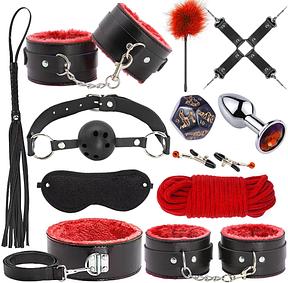
Then we ordered rope: 3-teiliges Bondageseil-Set "Bondage Ropes", 1 x 20 m, 2 x 3 m. Nothing elaborate, one long coil and a couple of short lengths, about thirty euros all in. It sat in the drawer for most of a week.
Not available in your region — closest match
View at Amazon (as of Aug 15)Affiliate link. Buying through it earns us a commission; the price stays the same for you.
What does shibari feel like?
Tight. That's the first honest answer.
Not painful tight, though. More like a hand pressed flat and steadily against your back, except it's everywhere the rope crosses and it never lets up. Jute is dry to the touch, a bit like garden twine somebody has softened, and it smells faintly of hay. Nobody warned me about the smell, and it's the detail I remember most clearly.
The rope goes on slowly. Much more slowly than photographs suggest. Jo would lay a wrap, smooth it flat with a thumb, check it, then move on. There were long stretches where nothing happened except being touched and adjusted, and I think that emptiness is where the whole thing lives.
Around ten minutes in, my arms started feeling heavy in a way that had nothing to do with the rope holding them up.
And once, near my left wrist, a wrap sat wrong and my ring finger went cold and prickly. I said yellow. Jo undid one wrap, shifted it up an inch, and we carried on. Maybe twenty seconds, total. I'd built that moment up in my head as a scene-ending catastrophe, and it was less disruptive than pausing a film to answer the door.
The part neither of us saw coming
Somewhere past the twenty-minute mark I stopped answering in full sentences.
I'm not sure I can describe this well. It wasn't sleepiness and it wasn't arousal. The closest I can get is that the part of my brain that narrates everything just... stopped narrating. Warm. Extremely present, and at the same time not entirely in the room. People call it rope space. There's a small study out of Northern Illinois University, fourteen participants, which found that people being tied show a measurable altered state while the people doing the tying show something closer to flow. Tiny sample, preliminary by its own authors' admission, and it still lined up almost exactly with us.
Because Jo had one as well, and that's the bit almost nobody writes down.
I asked, days later, what it had been like from the other end. Jo said it was the most focused hour of the last two years. No phone, no drifting off, no mental to-do list running underneath. Just my breathing, the tension in each wrap, and the colour of my hands. What Jo noticed was my eyes going glassy and my answers getting shorter, and the strange part was feeling responsible and completely calm at once rather than nervous.
The word for that is topspace. I'd never heard it until we went looking.
So: two headspaces, not one.
Aftercare turned out to be half the scene
Getting untied took maybe six minutes and I remember almost none of it.
What I do remember is the blanket, which Jo had put on the radiator beforehand without mentioning it. Sweet tea. Lights low. Jo asking me nothing at all for the first quarter of an hour, because we'd agreed in advance that I'd want quiet before I wanted talking. I did.
Two days later, though, I felt flat. Not sad exactly. Low-battery. Slightly weepy at an advert, irritable with people who hadn't earned it. I nearly didn't mention it, which would have been a mistake.
This is another place I'll point at a real source, because I'd assumed it was in my head. Licensed psychologist Dr. Kate Balestrieri describes sub drop as a genuine neurochemical dip: adrenaline, endorphins, oxytocin and dopamine run high during an intense scene, then fall away once it ends, and the crash can land days later. Knowing that turned "something is wrong with me" into "this is a known thing, and it passes." Jo checked in on the Thursday. That was aftercare too, just delayed.
Aftercare isn't the credits rolling. It's the second half of the film.
What I'd tell someone who's about to try it
The rope was the least interesting part. I mean that as a compliment to the rope.
Almost everything I'd change sits upstream of the knots. The conversation is what I'd push you on, because it's the part you can get right for free and the part nearly everyone rushes. Ours ran about ninety minutes and covered things we'd never said out loud in six years.
Also, expect to be bored for the first ten minutes. Nobody mentions this. There's a stretch at the beginning where it just feels like somebody slowly wrapping string round your arm and you think, is this it? Then it isn't.
Go in with a low ambition, too. We tied a simple chest harness and I sat on the floor. That was the entire scene, and it was plenty.
For rope materials, what to avoid and where the real risks sit, that's our beginner's guide to shibari rope types and safety, which is deliberately not this post's job.
Would we do it again? We did, four days later. Shorter, worse technique, better conversation. I'd take that trade.
All products from this post
The ones we named above are marked; the rest are alternatives in the same category.
Affiliate notice: As an Amazon Associate, we earn from qualifying purchases. Product prices and availability are subject to change.
Frequently Asked Questions
Does shibari hurt the first time?
Usually not, and that surprises most beginners. Well-placed rope reads as broad, even pressure rather than pain, closer to a firm hand held against your skin. Discomfort usually means a wrap is sitting in the wrong place, which is a signal to adjust rather than something to push through. Numbness, tingling or a cold finger means stop and move the rope straight away.
What is rope space, and is it the same as subspace?
Rope space is the calm, floaty, sometimes wordless state some people enter while being tied. Most treat it as a rope-specific flavour of subspace rather than a separate thing. The part of your brain that normally narrates everything just goes quiet, and you stay warm and present rather than drifting off. The partner doing the tying can enter their own version, usually described as deep focus, which the community calls topspace.
What should a couple agree on before trying rope bondage for the first time?
Before your first shibari experience, name specific acts rather than vague categories. That helps far more than any general rule. Agree which parts of the body are off limits, and settle whether the scene goes anywhere sexual by default. Safewords matter too, including a non-verbal signal in case speech stops. Aftercare belongs in that conversation as well. All of it has to happen before the scene, since someone deep in rope space cannot meaningfully consent to anything new.
How long should a first rope scene last?
Shorter than you think. Ours ran about forty minutes of tying and sitting, and that was plenty for a first attempt. Twenty to sixty minutes is a common range for beginners, and a floor scene with one simple chest harness is a sensible ceiling. Suspension is a completely different skill set and belongs nowhere near a first time.
Do you need special rope to start?
You need rope meant for bondage, but it doesn't have to be expensive. A basic starter set with one long length and a couple of short ones covers a simple chest or wrist tie comfortably. Avoid anything thin, plastic-feeling or slick-cored, since thin cord concentrates pressure into a small area. Material and diameter are worth reading up on before you buy.