I Tried Primal Play for a Weekend: Here's What I Learned
 8 min read

I thought I knew what primal meant. Dark romance had taught me the shape of it: a hero who doesn't ask, a heroine who doesn't have to answer, consent written out of the scene because the story needed to feel dangerous. On the page, primal play romance "skips the rules of traditional BDSM and goes straight for the raw, the wild, the chase". So when my partner typed what is primal play into her phone one Thursday night and read the real answer out loud, I got almost all of it wrong. Almost all of it.
Why we even got curious
Neither of us went looking for a kink to try. It was smaller than that.
She'd finished a shifter romance she was a bit embarrassed to admit she'd liked, and halfway through complaining about the plot she said the quiet part out loud. The chase was the bit that worked. Not the growling. The chase.
I said I didn't get it. Then I thought about it for four days and realised I did.
That's the whole origin story. Six years together, a sex life that was good and completely legible: we both knew the choreography by heart. Not a problem, I'd have said. But she'd named something, and once it was named I couldn't unhear it.
The part the books cut
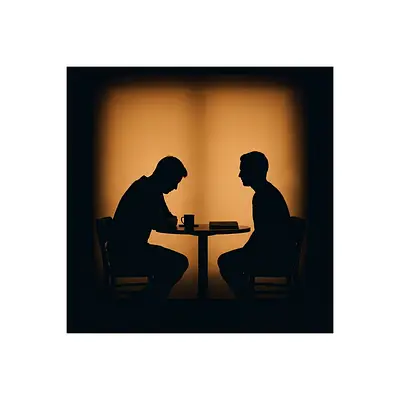
Here's what I didn't expect. The hardest hour of the entire weekend happened on a Friday evening, fully dressed, at a kitchen table, with tea.
You can't improvise a scene where nobody is going to be talking. Everything we'd normally sort out halfway through, a check-in, an "is this okay", a small correction, had to be settled first. In complete sentences. Before we gave the sentences up. (SparkChambers' safewords and communication guide is basically a longer version of that Friday-night conversation.)
Saying it out loud was worse than doing it. Sex therapist Elise Robinson calls these conversations "really freaking awkward" the first time. She's not wrong. There's a specific flavour of embarrassment in describing an instinct-led want to someone who has known you six years and never heard you say anything like it. My voice went strange. At one point I said "I don't know, it just sounds good, is that weird," and she said "yes, and also same." Which is roughly the most romantic thing anyone has said to me.
We agreed on a sound for stopping, and on what stopping looks like if the sound never comes. I'm not relisting the rest, partly because SparkChambers already has a safety-first guide to primal play covering the signals and the physical side properly, and it was open on a laptop while we talked. This isn't that. This is just the one weekend.
The only object we settled on was a collar. We already owned one, and it went on when we started and came off when we were done. Not a safety device. Just a door.
What primal play actually felt like
I'll skip the parts that are ours. The physical primal play experience wasn't the one I'd braced for.
The first surprise was how fast it stopped being a performance. I'd had a plan, I think, some idea of how I'd move, and it lasted maybe ninety seconds. After that it was a bedroom, a hallway, and a heart-rate-in-my-ears attempt not to get caught. I hadn't run inside a house since I was a child. My body remembered instantly. My lungs did not.
Second surprise: the noise. Not dramatic noise. Breathing, furniture, a lamp we relocated with an elbow.
Then the laughing, which I wasn't braced for at all. There's a version of this weekend where laughing wrecks the whole thing. Instead it did the opposite, probably because a scene you can laugh in is one where you already trust the exit.
And a fourth thing I only clocked afterwards. I never once thought about how I looked, which for me is close to unprecedented.
The chase ended the way chases end. I'd assumed the pinning part would feel theatrical and it didn't. It felt like being physically outmatched by someone I know is not stronger than me, which is disorienting in a way I still don't have language for. Somewhere in there my wrists ended up in the padded leather cuffs, and I have no memory of the transition. She bit my shoulder hard enough that I found it again on Wednesday. Neither of us had planned that.
Then Tuesday happened
Sunday was fine. Better than fine. Sore shoulder, a bruise on my forearm shaped like nothing in particular, and the specific smugness of two people who did a thing.
Tuesday I cried at my desk over a work email that did not deserve it.
I honestly thought I was getting ill. What I felt had a name, though, and I only knew that because she went looking. Dr. Kate Balestrieri, a licensed psychologist and certified sex therapist, calls it sub drop, and what explained it for me was the timing. A crash that can land "moments, hours, or even a couple of days" after a scene ends. Not that night. Tuesday. At a desk. Over an email.
Once I understood it was a bill rather than a verdict, it was manageable. Still embarrassing. I'd assumed I was the sort of person this didn't happen to, which is a silly thing to assume about your own nervous system.
Would we do it again?
Yes, with one change, and it isn't the change I'd have predicted.
I assumed we'd want it bigger next time. More chase, more house, more everything. We agreed on shorter. The scene ran about twenty-five minutes, and the last third was two people being enthusiastic past the point where either of us was fully present. So we stop at the good part now. Which is, I notice, advice that applies to a lot of things.
The other change is that the week after counts as part of it, instead of being something we reverse-engineer from a Tuesday.
I don't think this becomes our whole thing. I'm not even sure it's in our top three. But I understand now why the novels borrow the aesthetic of primal play and leave out the kitchen table. The kitchen table doesn't sell. It was also the entire reason the rest of it was safe enough to enjoy.
Frequently Asked Questions
What is primal play?
Short version: a scene built around instinct instead of dialogue, chasing, catching, pinning, biting, negotiated in full before either person stops using words. The full framework is in SparkChambers' safety-first guide; this post is just the one weekend we tried it.
Is primal play the same thing as it is in dark romance novels?
No, and that's the biggest thing I got wrong. The fiction works by keeping the negotiation off the page, which is what makes it read as dangerous. The real one exists because two people agreed out loud first.
Do you have to be experienced in BDSM to try primal play?
We weren't. Six years together, no kink history worth mentioning, one long conversation at a kitchen table with the guide open on a laptop. What mattered wasn't technique. It was saying an awkward thing in plain words first.
What does primal play actually feel like?
For me: fast, breathless, and much funnier than I expected. The performance instinct fell away inside two minutes and what was left was adrenaline. Physically it was closer to two unfit people wrestling than to anything cinematic.
Why does primal play need so much negotiation beforehand?
Because almost nothing can be discussed while it's happening. Everything you'd normally adjust mid-scene has to be settled first, in full sentences, since you're deliberately giving up the words you'd use to adjust it.
Is it normal to feel low a few days after a scene?
Yes. Mine landed on the Tuesday, not the Sunday, and I assumed I was getting sick. Sub drop can arrive anywhere from minutes to a couple of days afterwards, and it says nothing about whether the scene went well.
Sources
- primal play romance "skips the rules of traditional BDSM and goes straight for the raw, the wild, the chase" underthecoversbookblog.com
- Sex therapist Elise Robinson calls these conversations "really freaking awkward" mindfulcaretherapy.com
- Dr. Kate Balestrieri, a licensed psychologist and certified sex therapist, calls it sub drop modernintimacy.com