
What Is It?
Primal play is a form of intimate expression where partners shed social conditioning and tap into raw, instinctual behaviors. Think: growls instead of conversation. Your body wrestling instead of your brain negotiating. Instinct wins. It strips away the polished performance most of us wear and gets at something more honest underneath.
The appeal isn't really about acting like an animal, though that can be part of it. Sexuality educator Bydarra puts it simply: "Primal is the closest I ever come to getting out of my head and into my body." For many people, that's the whole point. When you're wrestling with your partner, feeling their breath on your skin, responding to their movements without words, the endless mental chatter just stops.
Unlike structured BDSM scenes with predetermined roles and scripts, primal play tends to flow more organically. Power shifts. Roles blur. What matters is the raw connection between two people who trust each other enough to drop the mask.
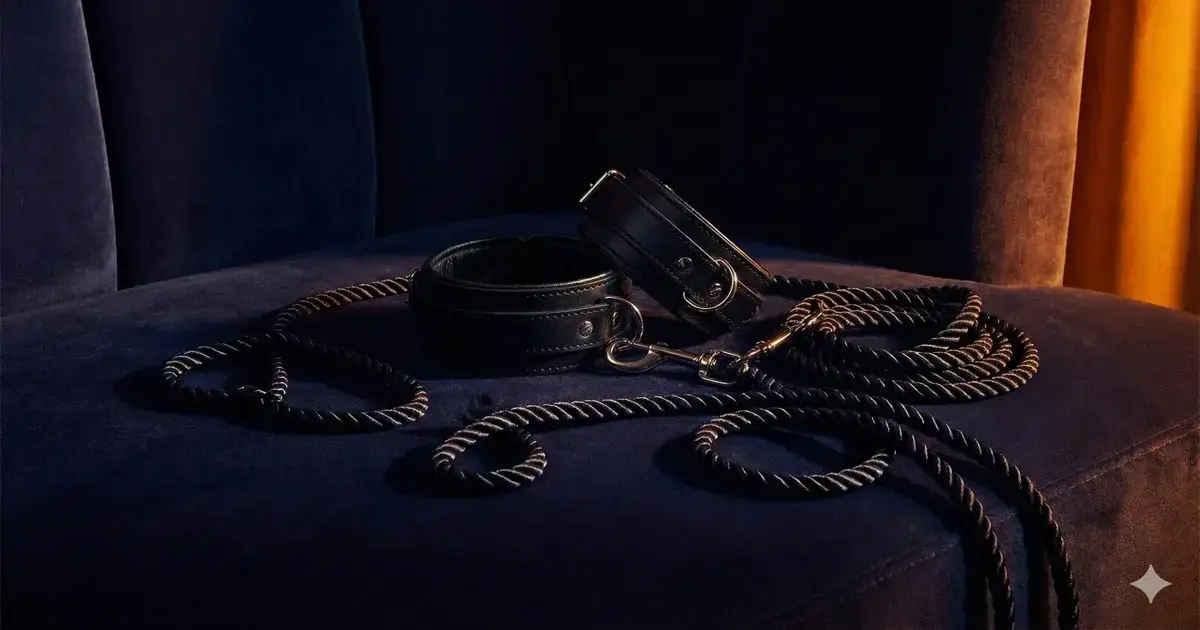
Explore related products: Leder-Halsfessel mit Leder-Leine, Kopfmaske mit Katzenohren.
Leder-Halsfessel mit Leder-Leine
View at ORIONAffiliate link. Buying through it earns us a commission; the price stays the same for you.
Affiliate link. Buying through it earns us a commission; the price stays the same for you.
Why People Enjoy It
The quiet mind.
Most of us spend our days trapped in thought. Primal play overwhelms your senses with immediate physical experience, forcing your brain to stop overthinking and just be present.
Real vulnerability.
Psychology Today notes that "if accessing your primal sexual self doesn't feel vulnerable and risky, you haven't truly located it." This isn't comfortable vulnerability, it's the kind that requires genuine courage. And that courage tends to create profound intimacy.
Physical release.
Your body stores tension you don't even know about. Growling, wrestling, chasing—these let you discharge that accumulated stress in ways polite society doesn't allow.
Connection beyond words.
When you're communicating through touch, breath, and movement rather than language, something different happens. Many couples describe feeling more understood by their partner after primal scenes than after hours of conversation.
The Spectrum
| Level | Stage | What it involves |
|---|---|---|
| Light | Light: | Incorporating growls and animalistic sounds during intimacy. Holding your partner down with slightly more force than usual. Playful wrestling that leads somewhere interesting. Light scratching or biting within comfortable limits. This is where most people start. |
| Moderate | Moderate: | Predator/prey chase scenes around your home. Sustained wrestling for dominance. More intensity in physical contact, leaving marks you both agreed to. Non-verbal communication for extended periods. The intellectual brain goes quieter here. |
| Intense | Intense: | Extended scenes where words disappear entirely. Deep primal headspace where social conditioning drops away. Wrestling to genuine exhaustion. Strong dominance/submission dynamics that emerge organically rather than being prescribed. The mask comes fully off. |
Getting Started
Talk first, play later.
Before any primal scene, have an actual conversation about boundaries, limits, and desires. I watched a couple skip this and spend 20 minutes mid-scene figuring out what "marks" meant while one partner was actively scratching. Have the conversation before. What body parts are off-limits? What kind of marks are okay? What does "too rough" mean for each of you? The irony of primal play is that it requires more negotiation than most kinks, not less.
Start soft.
Your first attempt shouldn't be an hour-long chase through the house. Try adding some growling and hair-pulling to your usual intimacy. See how it feels. Build from there across multiple sessions.
Create safe space.
Clear the room of sharp corners and obstacles. Know where you are spatially. Passion without awareness leads to bruised shins and bumped heads, not deeper connection.
Establish non-verbal signals.
Because speaking might be difficult once you're deep in primal headspace, agree on a tap-out signal beforehand. Two firm taps on your partner's body means "stop, now." Practice it before you need it.
Trust your partner, and earn theirs.
Primal play requires vulnerability most people have never shown anyone. That kind of exposure demands earned trust. Build it gradually across many smaller interactions before going deeper.
Safety & Communication
Physical safety:
- Keep nails trimmed to avoid accidental injury from scratching - Human bites risk infection. Stay aware of intensity and avoid breaking skin - Know safe striking zones if impact is involved. Avoid kidneys, spine, and joints - Clear the play space of hazards before starting - If exploring breath play or choking, know safe technique and establish double safewords beforehand
Psychological safety:
- Discuss any trauma history or triggers beforehand - Start slowly and build intensity over multiple sessions - Watch for signs of dissociation or overwhelm - Primal intensity can surface unexpected emotions. That's normal, but you need to be ready to hold space for it
Consent framework:
RACK (Risk-Aware Consensual Kink) works best here. Primal play carries inherent physical and emotional risks. Acknowledging those risks openly, rather than pretending they don't exist, makes for safer scenes. Like consensual non-consent dynamics, primal requires explicit pre-scene negotiation even though it feels spontaneous in the moment.
Aftercare isn't optional.
The intensity of primal play requires decompression afterward. Physical aftercare means wound care, hydration, warmth, and rest. Emotional aftercare means talking through the experience, affirming the connection, and checking in again the next day. Skip this and you risk sub-drop or emotional disconnection.