Water Based vs Silicone Lube: Choosing a Body-Safe Formula
 12 min read
Most product pages skip the part that actually matters. The water based vs silicone lube question isn't about preference, and it's got nothing to do with which bottle looks nicer on the nightstand. It's chemistry. What a lube is made from decides what it can safely touch, how long it lasts, how easily it rinses off, and whether your skin will thank you or complain. Get that right and everything else falls into place.
So let's take it slowly. Two main types, water-based and silicone-based, plus a third one that gets treated as a footnote and shouldn't: hybrid. By the end you'll know which belongs with your toys, your condoms, and your skin, and why.
If lube is your very first stop into this world, our BDSM beginner's guide is a good companion read.
A quick note before we start. This is education, not medical advice. If something keeps irritating you, a clinician beats a blog every time.
Water Based vs Silicone Lube (Plus the Hybrid Middle Ground)
Water-based lube is mostly water with a bit of thickener. It feels natural, cleans up with a rinse, and works with basically everything. The catch is that it dries out and you reapply.
Silicone-based lube is built on silicone polymers. It's slick, it lasts, and it laughs at water. Toy owners run into a much bigger problem with it, though, and we'll get to that shortly.
Hybrid sits in the middle. Mostly water, a little silicone, aiming for the glide of one and the easy cleanup of the other. It's a real category with real trade-offs, not a marketing loophole.
That's the map. Now the detail.
Water-based lube: the everyday default
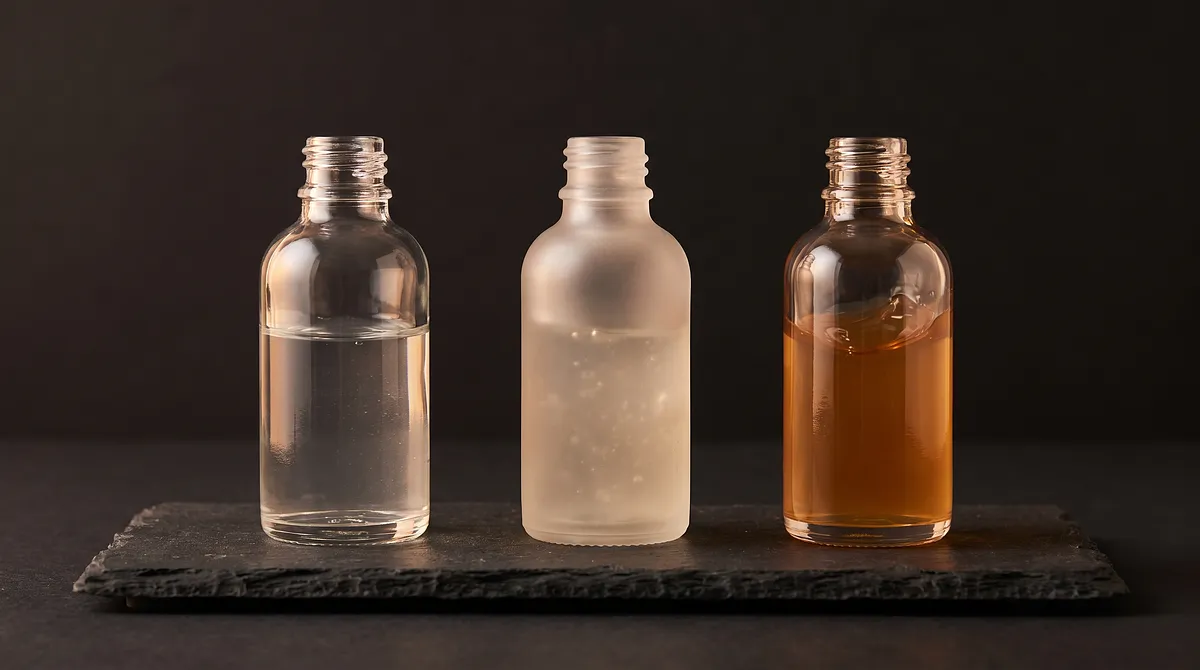
If you only ever buy one kind, this is usually it. Water-based formulas feel the closest to your body's own lubrication, they don't stain most fabrics, and a little warm water takes them away. They're also the friendliest to sensitive skin, assuming the ingredient list behaves. More on that further down.
The downside is longevity. Water evaporates and absorbs, so the glide fades and you top up. A drop of water or saliva can revive it, which is handy. For everyday use, for anyone new to lube, and for use with any toy material at all, water-based is the safe starting point. Something like Gleitgel „AQUA“ auf Wasserbasis covers the basics without fuss.
One synonym worth knowing, because you'll see it on labels: water-soluble. Same idea. It dissolves in water, which is exactly why cleanup is so painless and why it's the default recommendation for most people.
Shopping from outside Germany, where the Orion range isn't sold? A widely stocked water-based option such as Sliquid Naturals H2O Water-Based Lubricant ships across most Amazon storefronts and does the same job.
Gleitgel „AQUA“ auf Wasserbasis
View at ORIONAffiliate link. Buying through it earns us a commission; the price stays the same for you.
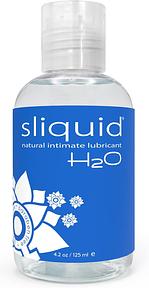
Sliquid Naturals H2O Water-Based Lubricant
View at Amazon (as of Aug 11)Affiliate link. Buying through it earns us a commission; the price stays the same for you.
Silicone-based lube: long-lasting, with one hard rule
Silicone is the marathon runner. It stays slick far longer than water-based, it doesn't dry out, and it's brilliant in water, so shower and bath play is where it genuinely shines. It's also hypoallergenic for a lot of people, since it sits on the skin rather than soaking in. A little goes a long way, which offsets the higher price. A quality silicone based lubricant like Gleitgel „Play Perfect Glide“, auf Silikonbasis can outlast a whole session on one application.
Now the rule you cannot skip. Silicone lube and silicone toys do not mix.
Here's why, in plain terms. Both the lube and a cured silicone toy are built from the same family of silicone polymers. Put them in contact and the lube's molecules slowly work their way into the toy's surface, making it swell and turn permanently tacky. It doesn't wash off. It doesn't recover. And it can happen just from storing a toy where silicone lube residue lingers, not only during use. A few weeks of that and a good toy is ruined.
So silicone is fantastic, right up until a silicone toy enters the picture. Keep the two apart and it's one of the best things you can own.
Gleitgel „Play Perfect Glide“, auf Silikonbasis
View at ORIONAffiliate link. Buying through it earns us a commission; the price stays the same for you.
The option outside Germany
If Orion isn't available where you are, a long-running silicone formula like pjur Woman Silicone-Based Personal Lubricant is easy to find on Amazon.
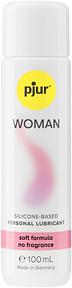
pjur Woman Silicone-Based Personal Lubricant
View at Amazon (as of Aug 11)Affiliate link. Buying through it earns us a commission; the price stays the same for you.
Hybrid lube: the honest middle ground
Hybrid formulas are mostly water with a small percentage of silicone blended in. The pitch is the best of both worlds: the near-natural feel and easy cleanup of water-based, with some of the staying power of silicone. And honestly, that's roughly what you get. A hybrid glides longer than pure water-based and rinses off easier than pure silicone.
As Good Clean Love explains, the blend is designed to balance longevity against cleanup. Something like Gleitgel „Flutschi Anal“ auf Wasserbasis mit Silikonanteilen is aimed squarely at people who find water-based too short-lived but don't want to commit to full silicone.
Here's the caveat nobody prints on the front of the bottle. A hybrid still contains silicone. So the silicone-toy rule still applies, just to a smaller degree that depends on how much silicone is in the mix. If you're pairing lube with a silicone toy, treat a hybrid as risky rather than safe. When in doubt, patch test on the base of the toy, or reach for pure water-based instead.
Gleitgel „Flutschi Anal“ auf Wasserbasis mit Silikonanteilen
View at ORIONAffiliate link. Buying through it earns us a commission; the price stays the same for you.
Toy material compatibility, at a glance
This is the table most competitor articles never bother to print. Good news first. If your toy is glass, metal, or hard ABS plastic, you don't have to think about lube type at all. Those materials are nonporous and lube-agnostic. Use whatever you like.
| Toy material | Water-based | Silicone-based | Hybrid |
|---|---|---|---|
| Silicone | Safe | Avoid, degrades the toy | Risky, depends on the blend |
| Glass | Safe | Safe | Safe |
| Stainless steel | Safe | Safe | Safe |
| ABS hard plastic | Safe | Safe | Safe |
| TPE / elastomer | Safe | Usually fine, patch test | Usually fine |
The single rule to memorize: a silicone toy plus silicone lube is the one combination to avoid. Everything else is forgiving. And when you aren't sure what a toy is made of, water-based is never the wrong answer. That's really what people mean when they ask for the best lube for silicone toys, the honest reply is skip silicone lube and use water-based.
Condom compatibility: it's about the material
"Water-based is condom-safe" is the line you'll read everywhere, and it's true. But it stops short, because condoms aren't all made of the same stuff, and the real variable is the condom material, not just the lube.
Start with the firm rule. Oil destroys latex. ONE Condoms puts it plainly: oil breaks down latex molecules, which is how a latex condom fails. That means no massage oil, no hand lotion, no coconut oil, no petroleum jelly with a latex condom, ever. As Bedsider notes, water-based and silicone-based lubes are both safe with latex, while oil-based products compromise it.
Here's the part most articles skip entirely. HANX breaks compatibility down by material: polyisoprene condoms, the common latex-free option for allergies, react to oil the same way latex does, so keep oil away from those too. Polyurethane condoms are the outlier that tolerates oil-, water-, and silicone-based lube alike.
| Condom material | Water-based | Silicone-based | Oil-based |
|---|---|---|---|
| Latex | Safe | Safe | Not safe |
| Polyisoprene | Safe | Safe | Not safe |
| Polyurethane | Safe | Safe | Safe |
Short version. Water-based and silicone-based are safe with every condom on that list, which is why silicone lube for condoms is a perfectly good pairing. Oil is only safe with polyurethane. When you don't know the material, skip the oil.
The Best Lube for Sensitive Skin: What's Actually on the Label
If lube has ever left you sore or itchy, the reflex is to blame a whole category. "Water-based doesn't work for me." Usually that's the wrong diagnosis. In practice, the culprit is normally a specific ingredient or a formula's osmolality, not the water-versus-silicone question at all.
Two numbers do most of the work here: pH and osmolality. Osmolality measures how concentrated the dissolved particles in a liquid are. When a lube's osmolality runs much higher than your body's tissue, it can pull moisture out of cells instead of adding it, which stresses and dries the surface it's meant to protect. The World Health Organization flags this as the safety-relevant property and set guidance thresholds for it.
The numbers are sobering. A 2014 study in Pharmaceutics tested 12 commercial lubricants against WHO thresholds and found only 5 met the recommended pH range, while 7 failed the osmolality guideline, some at roughly three times the acceptable ceiling. So plenty of mainstream products don't actually clear the bar the guidance recommends.
The reassuring flip side is that gentler doesn't mean weaker. A 2023 randomized trial in The Journal of Sexual Medicine followed 183 women using water-based lubricants, and formulas meeting the WHO osmolality guideline were rated "very good" or "good" for tolerance in 94.2% of cases. Meeting the safety threshold cost nothing in performance.
So what do you look for on a label? A few ingredients get flagged most often. As AH! YES notes, glycerin can raise a formula's osmolality, and parabens act as weak estrogen mimics. Fragrance is another common irritant that adds nothing functional. This is exactly what a "glycerin free lube" claim on a label is signalling. If your skin runs reactive, a formula built for it, such as Gleitgel „SENSITIVE“ auf Wasserbasis, is worth a try before you write off water-based entirely.
And to say it once more, because it matters: this is general education, not a diagnosis. Recurring irritation is worth a conversation with a healthcare provider, not just a different bottle.
Gleitgel „SENSITIVE“ auf Wasserbasis
View at ORIONAffiliate link. Buying through it earns us a commission; the price stays the same for you.
Water Based vs Silicone Lube: Which One for Which Moment
Rules stick better as scenarios, so here's how the choices tend to shake out.
Everyday use with any toy? Water-based. It's the default for a reason, and it never conflicts with a toy material.
New to all of this? Water-based again. Easiest cleanup, gentlest learning curve, hardest to get wrong.
Shower or bath? Honestly, silicone or hybrid, because water-based just washes away the moment it gets wet. Only keep silicone away from silicone toys.
Long sessions where stopping to reapply breaks the mood? Silicone earns its keep.
Reactive or sensitive skin? A low-osmolality, glycerin-free water-based formula, and read the label rather than trusting the front of the bottle.
Silicone toys specifically? Water-based, full stop. Not silicone, and not hybrid if you can avoid it.
Putting it together
Strip away the marketing and it's a short list of truths. Water-based is the safe generalist. Silicone lasts and loves water but never meets a silicone toy. Hybrid splits the difference honestly, carrying a smaller version of the same silicone caveat. Condoms care about their own material more than about your lube. And for sensitive skin, the label matters far more than the category. That's the water based vs silicone lube question, settled.
That's genuinely most of what there is to know. Pick the type that matches the moment in front of you, check it against your toys and your condoms, and you're set. New to gear generally, not just lube? Our bondage restraints for beginners guide covers picking safe equipment the same way. If you want to keep going, our other guides dig into toy care and safer-sex basics in the same plain language, including what aftercare means and why it matters once play wraps up.
All products from this post
The ones we named above are marked; the rest are alternatives in the same category.
Affiliate notice: As an Amazon Associate, we earn from qualifying purchases. Product prices and availability are subject to change.
Frequently Asked Questions
Is silicone lube safe to use with condoms?
Yes. Both silicone-based and water-based lube are safe with latex, polyisoprene, and polyurethane condoms. The one to avoid with latex or polyisoprene is oil-based lube, which weakens the material and raises the risk of breakage. Only polyurethane condoms tolerate oil.
Does silicone lube really damage silicone toys?
It does, and the damage is permanent. Silicone lube and cured silicone share the same polymer chemistry, so the lube seeps into the toy's surface and makes it swell and turn tacky over time. It can happen just from storage contact. With a silicone toy, use water-based lube instead.
Can I use water-based lube with silicone toys?
Yes, and it's the recommended pairing. Water-based lube is compatible with every common toy material, silicone included, along with glass, metal, and ABS plastic. If you're ever unsure what a toy is made of, water-based is the safe default that won't damage anything.
What is hybrid lube actually good for?
Hybrid suits people who find water-based fades too fast but don't want full silicone. It lasts longer than water-based and rinses off more easily than silicone. Because it still contains some silicone, treat it as risky with silicone toys and reach for pure water-based with those instead.
Which lube is best for sensitive skin?
Look past the category and read the label. A water-based formula that is glycerin-free, fragrance-free, pH-balanced, and low in osmolality tends to be gentlest. Osmolality that far exceeds body tissue is a common cause of irritation, so a formula meeting WHO guidance is a sensible target.
Does silicone lube stain sheets?
Silicone can leave marks on some fabrics and is harder to wash out than water-based, which rinses clean. A towel underneath solves it. Water-based is the easier choice when fabric contact and quick cleanup are your priority.