
Pet Play Explained: Collars, Roles and How to Get Started
 17 min read
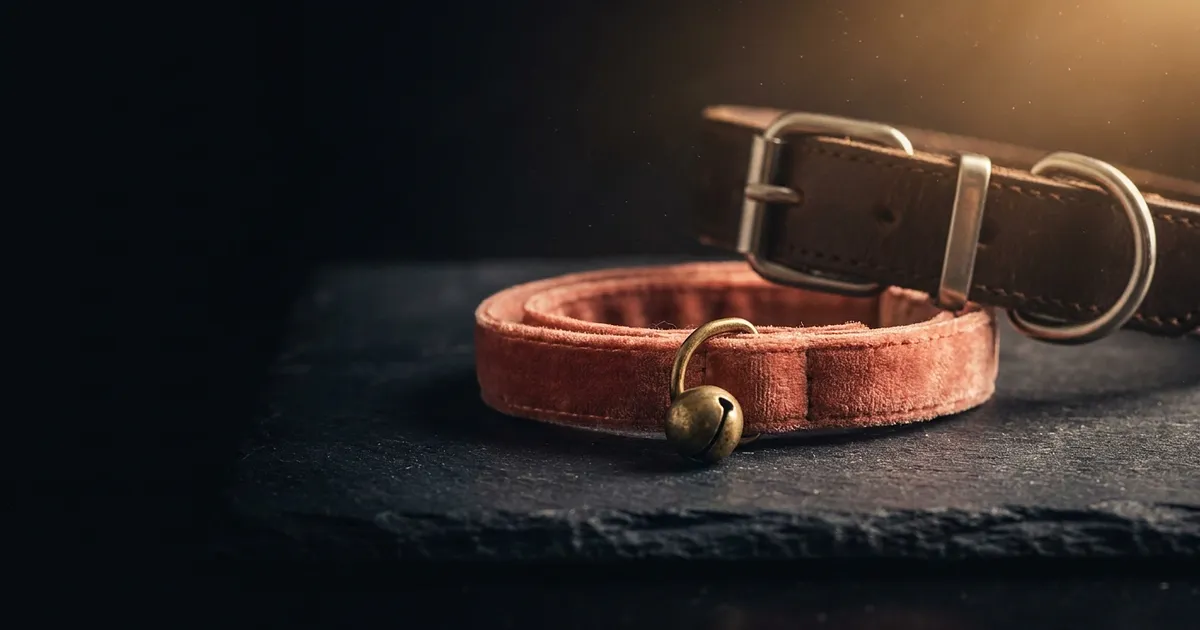
Most people who search for pet play aren't looking for instructions. They're checking whether it means the thing they're quietly worried it means.
So that part gets answered first, because everything after it reads more easily once it's out of the way. Pet play is roleplay between consenting adults, where one person takes on the mannerisms and headspace of an animal (a puppy, a kitten, a pony, occasionally something stranger) and often, though not always, a second person takes the handler role opposite them. Real animals are not involved at any point, in any way, in any version of this. As The Frisky puts it flatly: "Actual animals are not involved."
That's the short version. The longer one is more interesting, and I'd argue more useful, because pet play covers a far wider range of practice than most explainers let on.
What pet play actually is
Strip away the gear and the vocabulary and you're left with something fairly simple. An adult sets down the job of being an adult for a while and inhabits a simpler persona instead. Some people call it human puppy play. Some write it as one word, petplay. The community shorthand for the mental state you drop into is headspace, or "pup space" if you're in the pup corner of it.
Headspace is the point. Not the collar, not the leash, not the sex. For the short-form definition, see our pet play glossary entry; this guide goes deeper into headspace, roles and getting started.
This isn't a fringe internet thing that nobody has looked at properly, either. A 2022 community survey of 733 pup-play participants published in Archives of Sexual Behavior put real numbers to a practice that had previously only been studied through small qualitative interviews. Most respondents in that 2022 survey reported that pup play had improved their mental health. That's self-reported, not a clinical outcome, and it's worth saying plainly that nothing here is medical or therapeutic advice. But it tells you what participants themselves think they're getting out of it, which isn't nothing.
Is pet play sexual?
Sometimes. Often not. And the honest answer is that it sits on a spectrum rather than landing on one side.
At one end there are people who use pet play as a private wind-down ritual: gear on, phone off, an hour of moving and thinking differently, gear back in the drawer. At the other end it's woven into an erotic dynamic between partners. Plenty of people move between both depending on the day and the company.
One pup told OUT FRONT Magazine that being in a different headspace "really helps people disassociate from their issues." Another described the group dynamic in one line: "everybody's there for each other's wellbeing." Neither of those is a description of sex. They're descriptions of relief and of being looked after.
So if you've been assuming pet play is a sex act with a costume attached, the assumption is doing you a disservice. Sexual content is optional. The headspace is the constant.
No, it has nothing to do with animals
I want to be blunt here, because vagueness helps nobody.
Pet play is roleplay between adult humans. Nobody is pretending an animal consented to anything, because no animal is present, referenced as a partner, or involved. The conflation with bestiality is the misconception the community pushes back on hardest, and a practitioner quoted in that same OUT FRONT Magazine piece called the association "a blatant display of ignorance."
It's also worth separating pet play from furry fandom, which overlaps socially in places but is a different thing with different roots. Wikipedia's overview of pup play traces the practice through leather and BDSM community history rather than through fandom.
Pet play and pet regression are not the same practice
This one causes genuine confusion. It's the reason a lot of people end up in the wrong forum asking the wrong question.
Pet play is an activity you enter deliberately and leave deliberately. It has a start, an end, usually a partner or a group, and often an erotic dimension. Pet regression, which sits closer to littlespace and age-regression communities, is generally described as a non-sexual coping and self-regulation state that a person drops into rather than performs.
They can overlap in one individual. They aren't interchangeable, and treating them as one topic muddles the consent conversation, because you negotiate a scene very differently from the way you support someone in a regressed state.
The roles: pet, handler, and the space between
Pet play has two named roles and a lot of room inside each.
The pet
The pet is the one in animal headspace. What that looks like varies enormously: some pets are vocal and bouncy, some are quiet and still, some barely move at all and just want to lie somewhere warm while someone else handles the world.
"Each puppy's headspace is completely different than another's, and that's the beauty of it, too," one pup told OUT FRONT Magazine. That's a useful thing to hold onto if you're new, because there's no correct way to be a pet and comparing yourself to a video is a fast route to feeling like you're doing it wrong.
The animal persona you choose matters less than most beginners expect. Here's roughly what's out there:
Puppy play / pup play. Far and away the most visible version, and the one with the most organised community around it. Puppy play tends toward the social and energetic: play-fighting, fetch, pack dynamics, group meets. Because the pup scene grew out of gay male leather culture, most of the writing about it online is written from inside that scene, which can make it look narrower than it is.
Kitten play. Usually quieter and more independent than pup play. Kittens tend to be described as choosing when to be affectionate rather than being reliably eager, and kitten play skews toward softer aesthetics: velvet, bells, bows.
Pony play. More formal and more posture-focused than the other two, with its own equipment traditions and its own vocabulary. If it interests you, our pony play encyclopedia entry covers it as its own practice.
Everything else. Foxes, bunnies, wolves, and a long tail of personas people arrive at because it simply feels right. Nobody polices this.
And plenty of people never settle on one. Drifting between personas is normal.
If you're wondering where you fit: you probably don't need to decide before you start. Most people find out by trying, the same way you'd find out about any other roleplay dynamic. If persona-based roleplay generally appeals to you, the maid roleplay entry in our encyclopedia is a useful comparison point, since it runs on a similar mechanic with a completely different flavour.
The handler
The handler (also called the owner, or the trainer, depending on the pairing) is the human half of a pet play dynamic. And this is where a lot of beginner-facing content gets it wrong, because it frames the handler as the one giving orders.
In practice, handling looks a lot more like caretaking than command. A pet in deep headspace has given up a chunk of their normal decision-making and, in some cases, most of their normal verbal communication. Someone has to hold the practical world while that happens: watching the room, noticing when a knee is hurting, spotting the moment the mood turns from playful to overwhelmed, and getting them a glass of water afterwards.
Handling is a responsibility. I'd argue it's the harder of the two roles to do well. Being playful is easy. Staying attentive for two hours while someone else is not tracking their own limits is not.
A few things a good handler is doing throughout:
- Watching for physical strain, particularly in the knees, wrists and neck, since pet postures put weight where it doesn't usually go
- Tracking time, because the person in headspace often isn't
- Noticing shifts in energy and checking in before things tip
- Keeping water and something to eat within reach
- Staying reachable and un-distracted, which mostly means not scrolling through your phone while someone is depending on you
Collars: the object is easy, the meaning is the work
A collar is the single most recognisable piece of pet play gear. It's also the most misunderstood. It's tempting to treat it as a costume item you buy and put on. It usually isn't.
The symbolism of a collar, as one overview of BDSM collars explains, comes from what partners agree it means rather than from the object itself. The same strip of leather can mean "we're playing right now," or "I belong to this person," or "I'm claiming this identity for myself," or absolutely nothing at all beyond looking good. What decides it is the conversation, not the price tag.
That conversation is worth having explicitly, and it's the part most people skip. Who puts it on. Who takes it off. Whether it can be worn outside a scene. Whether it means anything about exclusivity. Whether removing it in an argument would be a devastating gesture or a shrug. Couples who never discuss this find out the answer at the worst possible moment.
Two broad categories come up repeatedly in community language. A scene collar or formal collar is worn for play, or for occasions, and often looks like what you'd picture. A day collar is subtler, closer to jewellery, sometimes with a discreet ring, designed to be worn to work without a colleague asking questions.
Soft collars and the kitten aesthetic
Velvet, bows and a small bell is a whole visual language, mostly associated with kitten play, and it's what most people picture first when they imagine a pet play collar. It reads playful rather than heavy, and it's what a lot of people reach for first because it doesn't feel like committing to anything.
Bell Choker Collar Necklace, Lolita Bow Cat Kitty Velvet
The bell is doing something practical as well as decorative, incidentally. It makes the pet audible, which changes how a handler tracks them around a room without needing to look up constantly.
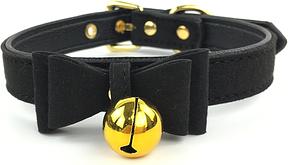
Bell Choker Collar Necklace, Lolita Bow Cat Kitty Velvet
View at Amazon (as of Aug 28)Affiliate link. Buying through it earns us a commission; the price stays the same for you.
The same idea in leather
Swap velvet for leather or PU with rivets and the signal changes. It reads less like dress-up and more like BDSM gear, which some people want and others specifically don't.
FM42 PU Leather Bell Rivets Neckband Choker Collar
That difference is worth noticing before you pick something, because a collar is a statement about tone as much as it's an object. A soft one and a hard one used in the same dynamic will pull the mood in different directions.
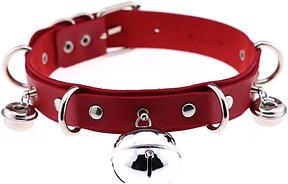
FM42 PU Leather Bell Rivets Neckband Choker Collar
View at Amazon (as of Aug 28)Affiliate link. Buying through it earns us a commission; the price stays the same for you.
Lace, and why material is a message
Lace sits somewhere else again: softer than leather, more deliberate than a plain choker, and closer to lingerie in feel.
None of these is more "correct" than the others in pet play. What matters is that you and your partner know what you're each reading into it.
How to get started with pet play
Here's the part the shopping guides skip. The first step isn't gear.
The conversation comes first
Before anything else, there's a talk. Consent Culture's glossary is blunt about it: "Consent and communication are crucial" to making pet play a positive experience for everyone involved.
Things worth putting on the table before a first attempt:
What you each actually want out of it. Stress relief? Erotic charge? Something to do together on a Sunday? These lead to very different scenes.
Whether it's sexual, and if so, at what point.
What's off the table. Humiliation, for instance, is a component some people want and others find genuinely upsetting, and it does not go without saying which one you are.
How you'll signal that you want to stop, given that a pet in headspace may not be talking.
How long you're going to try it for. An hour is plenty for a first go.
Who else, if anyone, is ever going to know.
Writing this down helps more than people expect. A yes/no/maybe list turns a vague conversation into a document you can both point at later.
Pet play for beginners: start smaller than you think you need to
You do not need gear to try pet play. You can try the headspace alone, in your own home, with nothing on at all, and plenty of practitioners describe doing exactly that as a solo stress-relief practice with no partner and no sexual context anywhere in it. That's a completely legitimate version of this, not a rehearsal for a "real" one.
If you do want one object to anchor it, a collar is usually the one people start with. It's low-commitment, it's the clearest signal that play has started, and it's easy to put away.
PU Leather Bow Bell Collar Choker, Cat Cosplay Kitty
Then stop there for a while. The instinct to buy a full kit before the first attempt is very strong and almost always wrong, because you don't yet know what kind of pet you are.
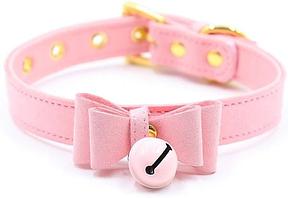
PU Leather Bow Bell Collar Choker, Cat Cosplay Kitty
View at Amazon (as of Aug 28)Affiliate link. Buying through it earns us a commission; the price stays the same for you.
Adding gear later
Once you know the headspace works for you, a leash is often the second thing. It changes the dynamic more than its size suggests: it makes the connection physical and continuous, and it hands a lot of the steering over to the handler.
Hoods, tails, mitts and harnesses exist too, and gear ownership is genuinely widespread among people who stick with this. In that same 2022 survey of 733 participants, 90.9% owned pup-related gear. But note the order of operations there. Those were people already in the practice, not people buying their way into it.
Restraint is a separate negotiation
Cuffs and restraints turn up in pet play often enough that they're worth naming, but they belong to a different conversation with a different risk profile.
Restraining someone means they can't remove themselves from a situation, which raises the stakes on everything else you agreed. If restraint is going to be part of your pet play, negotiate it on its own terms, not as a footnote to the pet play talk.
Pet play safety, consent, and the bits that actually matter
Safewords when the pet can't speak
This is the pet-play-specific safety problem, and it deserves more attention than it usually gets. A pet deep in headspace may be non-verbal by design. Barking, mewing, or silence. A spoken safeword is useless if speaking is the thing you've set aside.
The standard workaround is a physical signal that's impossible to produce by accident: dropping an object held in the mouth or hand, a specific number of taps on the floor or on the handler, or a distinctive noise that isn't part of the persona. Agree on it in advance, and agree that it stops everything immediately, no clarification round. For the non-pet-specific mechanics, colour systems, tap-outs, check-in phrasing, see our guide to BDSM safewords and communication.
Check in during, not just after
Handlers should be reading the room continuously rather than waiting for a signal that may never arrive. A pet who has gone quiet may be blissful or may be somewhere much less good, and from the outside those two can look identical.
Short verbal check-ins that don't break the scene work well. A hand on the back and a "you good?" that only needs a nod is usually enough.
Aftercare isn't optional
Coming out of a deep headspace after pet play can leave people foggy, emotional, or unexpectedly flat, and that's true whether or not anything sexual happened. Water, warmth, food, and a bit of quiet company do most of the work. Talking about how it went, ideally the next day rather than while someone is still coming back to themselves, does the rest.
Choosing who you do this with
Pet play asks you to be vulnerable in a fairly specific way: less articulate, less mobile, less in control. That's a lot to hand to someone.
Local community groups exist partly for this reason. Organised pet-play groups, some of them running for well over a decade, run meets and teach gear safety to newcomers precisely so that people's first experience isn't a stranger from an app. If there's one near you, it's a better on-ramp than most of the internet.
And if there isn't, solo practice still counts. Nobody is checking your credentials.
Where to go from here
Pet play gets written about badly, mostly. Either as a punchline, or as a product category, or as a shopping list, or as one specific subculture's in-group content that quietly assumes you're already in the room. It's none of those things. It's a way of putting down a load for an hour, with or without someone else holding it for you.
If it appeals to you, the first move isn't a purchase. It's the conversation, and then an hour of trying it with no audience and no expectations. Everything else can wait until you know whether the headspace is yours.
Our kink encyclopedia covers the neighbouring practices if you want to see where pet play sits alongside everything else.
SparkChambers publishes educational material for consenting adults. Nothing here is medical, legal or therapeutic advice.
All products from this post
The ones we named above are marked; the rest are alternatives in the same category.
Affiliate notice: As an Amazon Associate, we earn from qualifying purchases. Product prices and availability are subject to change.
Frequently Asked Questions
Is pet play sexual?
Not necessarily. It runs on a spectrum from entirely non-sexual stress relief through to an explicitly erotic dynamic, and many people move between both. The headspace is the constant; sexual content is optional. Research participants frequently describe the appeal in terms of relief and community rather than sex.
What is the difference between pet play and puppy play?
Pet play is the umbrella term for all animal-persona roleplay. Puppy play, also written pup play, is the specific version where the pet takes a dog persona. It's the most visible and most organised branch, which is why the terms often get used interchangeably, but kitten play and pony play sit under the same umbrella.
Do I need gear to try pet play?
No. You can try the headspace alone with nothing at all, and plenty of practitioners describe solo, gearless practice as a regular stress-relief ritual. If you want one object, a collar is the usual starting point. Buying a full kit before your first attempt is the most common beginner mistake.
Is pet play the same as pet regression or littlespace?
No. Pet play is a roleplay activity entered and left deliberately, usually with a partner or a group. Pet regression is a different, non-sexual coping state a person drops into rather than performs, closer to littlespace than to a scene. They can overlap in one person, but they're negotiated very differently.
What does a collar mean in pet play?
Whatever the people involved agree it means. It might mark that a scene is active, signal belonging to a partner, or simply be an aesthetic choice. The meaning is negotiated, not inherent to the object, which is why the conversation about who puts it on and when it comes off matters more than the collar itself.
Is pet play only for gay men?
No. The most-studied sample skewed that way, with 60.3% of that 2022 survey's 733 respondents identifying as homosexual men and 58.1% aged 18 to 30, but the researchers noted that earlier work had over-focused on that group. Kitten play, pony play, and mixed-gender pairings are all well documented.
How do you safeword if you're not speaking?
Agree a physical signal in advance. Dropping an object held in the mouth or hand, a set number of taps on the floor or on your handler, or a noise that isn't part of your persona all work. The rule is that it must be impossible to produce by accident and that it stops everything immediately.
Sources
- The Frisky thefrisky.com
- 2022 community survey of 733 pup-play participants published in *Archives of Sexual Behavior* research.brighton.ac.uk
- OUT FRONT Magazine outfrontmagazine.com
- Wikipedia's overview of pup play en.wikipedia.org
- as one overview of BDSM collars explains en.wikipedia.org
- Consent Culture's glossary consentculture.community