Trying Pet Play for the First Time: What Surprised Us
 9 min read
We circled pet play for about two months before either of us said the words out loud in daylight. It came up at midnight, half as a joke, the way slightly embarrassing things usually do. Then it didn't come up again for a week. Then it did.
If you're stuck somewhere in that loop, this is the part almost nobody writes down. Not the definition. The middle bit, between reading about something and actually trying it.
Honest headline first: nearly everything we assumed going in was wrong. Not scandalously wrong. Just off, in the way a picture built out of search results and half-remembered jokes tends to be off.
What we thought pet play was
Costumes, mainly. Ears, a tail, some sort of performance we'd both feel ridiculous doing at eleven on a Tuesday.
And underneath that, quietly, the worry curious people almost always arrive with. So let's clear it out of the way. Pet play has nothing to do with animals. Kink educator Quincy Young puts it flatly on the European Puppy and Handler Contest's education hub: it's "not bestiality, no animals involved, ever," and it isn't about losing your humanity or your intelligence either. Two consenting adults, one of whom chooses, deliberately and temporarily, to play a role. That's the whole shape of it.
We also assumed we were odd for being curious at all. Probably not. In Justin Lehmiller's survey of 4,175 Americans on sexual fantasy, only 4% of women and 7% of men said they'd never had a BDSM-themed fantasy of any kind. That's a general kink figure and not a pet play one, and I don't want to stretch it into something it isn't. It just means the door you think you're standing at alone has a queue.
If you want the actual mechanics, collars and roles and how a first scene gets structured, our pet play guide here on SparkChambers covers that ground properly. This isn't that. This is what it felt like.
The conversation we should have had sooner
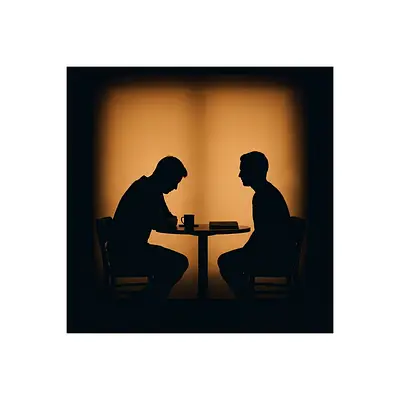
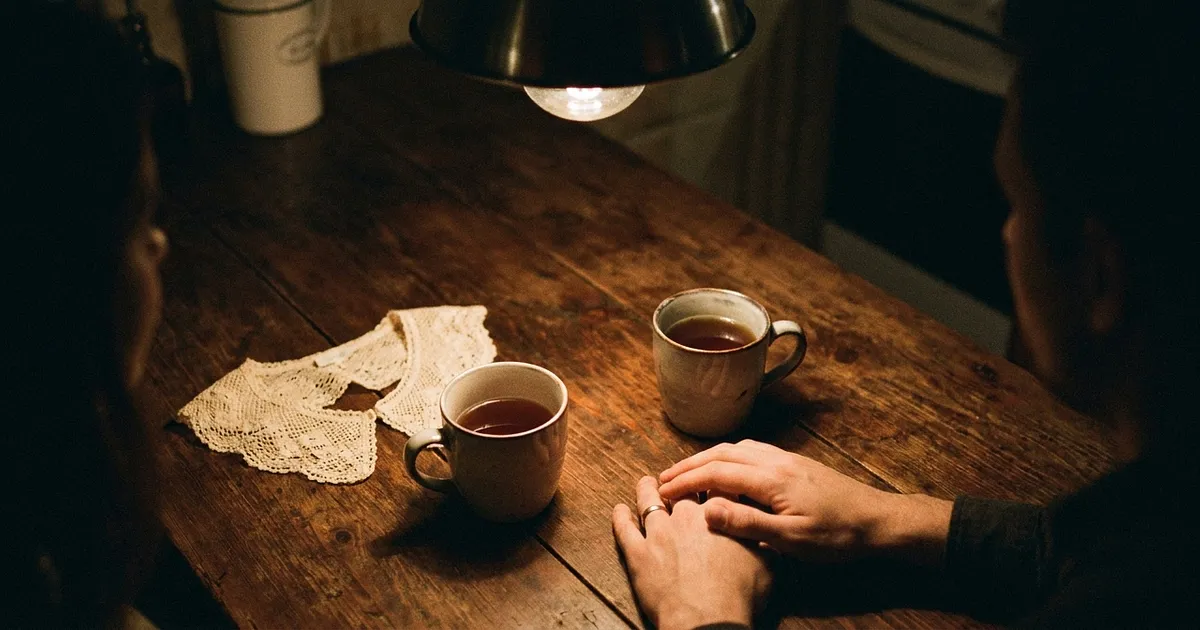
We had it at the kitchen table. That detail matters more than it sounds like it should, because the bedroom version of this conversation is loaded before anyone opens their mouth.
Community guidance keeps coming back to two questions, and I think they're the right two. Are you after full immersion, going properly non-verbal and staying in role, or light roleplay with a collar and a bit of play? And is this about training, structure and rewards, or free play with nothing attached?
We answered the second one differently. Useful to find out over tea rather than mid-scene. If your kitchen-table version needs more scaffolding than ours did, our guide to planning a first BDSM scene walks through boundaries, safewords and timing in more detail.
The gear conversation took maybe four minutes by comparison. We picked out one thing together, a simple lace collar, and left it at that.
What actually surprised us about pet play
The headspace. Not the outfit. Not the roleplay. The headspace.
I don't have a tidy way to describe it, and I'm a little suspicious of anyone who does. Closest I can get: a set of ordinary social obligations switched off for a while. No conversation to hold up. No decisions. Someone else was responsible for what happened next, and being allowed to put that down turned out to be the actual point.
Which is more or less what the research says. A 2019 phenomenological study in Archives of Sexual Behavior, built from 68 written accounts and 25 interviews, found relaxation, therapy and "escape from self" coming up more often than sexual pleasure as a reason people give for pet play. Sexual pleasure is on the list. It just isn't the top of it, which flatly contradicted what we'd both walked in believing.
Sex therapist Stefani Goerlich frames it as one of a family of caregiving kinks in her book Kink-Affirming Practice. The draw isn't the costume. It's structured, unconditional care inside a container both people agreed to build.
And we weren't outliers. Researchers who ran a community survey of 733 people who engage in pup play found a wide spread of ages, relationship styles and reasons for showing up.
The gear turned out to be the least of it
We'd picked up a leash too, and I'd assumed it would be central to everything.
It sat in the drawer through the first two attempts. When it finally came out, it worked less as equipment and more as a switch. Clip, and we're somewhere else. Unclip, and we're back. Same with the collar, honestly. From what I've seen since, that's most of what gear does.
There's a whole vocabulary underneath this that we had no idea existed. Play collars versus protection collars versus ownership collars, packs, handlers, community events with their own etiquette. Variants too, so if a puppy frame doesn't fit, pony play is its own thing with its own culture, and our kink encyclopedia has the rest of the map. None of that was on our radar the first time. You need none of it to start.
Aftercare, and who it is actually for
Here's the bit I had wrong for months.
Every beginner-facing piece I read framed aftercare as something the handler does for the pet. Water, a blanket, reassurance, grounding.
All true, and the pet partner genuinely needs it, because coming out of a non-verbal headspace can leave you oddly raw for reasons that don't announce themselves at the time.
But the handler drops too.
You've just spent an hour holding responsibility for another adult's safety and emotional state while they held none of it. When the scene ends, that doesn't evaporate. My partner needed to hear, out loud, that it had gone well and nothing had gone wrong. Not vanity. Same nervous system, same evening, coming back down. Community writing is consistent about this, though I'll admit I couldn't find a study specifically on pet play aftercare, so treat it as practice consensus rather than a finding.
Two people, two sets of needs, equal weight. That's the version I wish we'd read first. It's the same dynamic BDSM communities call sub drop and top drop. Our guide to aftercare for both partners goes deeper into supporting each other once the scene ends.
If you are curious, where I would start
Not with shopping. That's the one thing I'd say with real confidence.
Licensed counsellor Alex Conway writes that play like this "activates the release of endorphins" and can work as a genuine mindfulness practice, not strictly a bedroom activity. That framing would have saved us weeks of overthinking. We'd been treating it as a sex thing we might turn out to be bad at. It's closer to play, which nobody is bad at, and which most adults quietly stop doing somewhere around twenty-three.
So: talk somewhere neutral, agree the word that stops everything, and plan the unglamorous hour afterwards when you're both slightly wrung out and somebody should have thought about food.
Expect pet play to feel ridiculous for the first ten minutes. We did. Then we didn't, and neither of us can tell you exactly when that flipped.
Frequently Asked Questions
Is pet play weird?
It feels odd for the first ten minutes or so, and then it mostly doesn't. What surprised us was how ordinary it becomes once the self-consciousness burns off. Plenty of people describe it as closer to play than to performance. If you're worried about looking silly in front of a partner who already agreed to try it with you, that worry tends to outlive the awkwardness by about one evening.
Does pet play have to be sexual?
No, and this splits the community right down the middle. Some people want an explicitly sexual dynamic, others firmly don't, and both are treated as normal. Research on pup play found relaxation and escape from self cited more often than sexual pleasure. Work out which version you're both after before a first scene, because two people expecting different things is the most common way an evening goes flat.
What gear do you actually need to start pet play?
Nothing, strictly. Educators are clear that gear is optional. A collar helps as a psychological switch, something that marks where a scene begins and ends, but it isn't the point and it isn't required. We bought a leash we barely used. It sat in a drawer for two sessions before it did anything at all. If you're going to spend money on one item, make it something simple and comfortable you can put on and take off in under a minute.
How do I bring pet play up with my partner?
Somewhere neutral, and not in bed. We used the kitchen table. Frame it as curiosity rather than an announcement about who you are, then work through two questions: full immersion or light roleplay, and structure and training or free play. Answering those differently isn't a problem. It's information you'd rather have over tea than mid-scene.
Who needs aftercare after a pet play scene?
Both of you. The pet partner needs grounding and reassurance after a vulnerable, often non-verbal headspace. The handler carries an hour of responsibility for someone else's safety and comes down from that too, so they need to hear that it went well. One practical marker: if the handler is still asking an hour later whether it really went fine, that's the drop talking, not doubt about the scene. Plan for both, and agree what it looks like before you start.
Sources
- European Puppy and Handler Contest's education hub epahc.eu
- Community guidance subinthecity.com
- 2019 phenomenological study in Archives of Sexual Behavior pmc.ncbi.nlm.nih.gov
- Stefani Goerlich en.wikipedia.org
- community survey of 733 people who engage in pup play pmc.ncbi.nlm.nih.gov
- Alex Conway writes lgbtqjoy.com